



Destination Hub
Private Jet Charter to Istanbul

Arriving by private aircraft at Istanbul Airport (IST) is a study in controlled contrast: the Bosphorus ahead, the schedule held to your timing, and the primary gateway organized around your arrival. From there, the day can move directly into a waterfront transfer, a boardroom engagement, or a quiet hotel check-in without the friction of airline timetables.
Quick facts
Why charter a private jet to Istanbul?
Private flying into Istanbul gives travelers direct control over arrival timing, airport selection, and the pace of the day.
Why charter privately
Commercial travel often asks you to build the trip around published schedules. A private flight reverses that order: departure time, passenger list, baggage profile, catering, and ground coordination are shaped around the itinerary you actually need to keep.
Most charter plans center on IST because it is the primary airport for the city. That creates a clear default for flight planning, handling requests, and onward transfers, while still allowing the charter desk to review secondary airports when a different arrival point better supports the day.
Time savings are not only measured in the air. They show up in fewer connection points, a more direct boarding process, and the ability to leave when meetings end rather than when the next airline seat is available.
For senior executives, families, and discreet leisure travelers, the value is in control. The aircraft becomes part of the schedule, not a constraint on it.
“For firm spring and fall dates, our charter desk secures preferred IST handling and aircraft availability first, then keeps secondary-airport options ready if the ground plan changes. Early confirmation widens aircraft choice during peak weeks.”

When is the best time to fly to Istanbul?
The best time to visit Istanbul depends on whether your priority is mild weather, waterfront leisure, cultural momentum, or aircraft availability.
Peak months
April, May, June, September, and October are the strongest months for demand. Spring and fall bring comfortable conditions for Bosphorus days, terrace dining, gallery visits, and walking between historic districts, while conferences and cultural programming add pressure to aircraft supply.
Travelers with fixed meeting dates or family schedules should book early during these periods. Lead time gives the charter desk more room to compare aircraft, review alternates, and secure a smoother handling plan.
Value months
January, February, and March bring cooler, wetter weather and softer leisure demand. For travelers who prize availability over peak-season atmosphere, these months can offer more flexibility in aircraft choice and departure timing.
A winter itinerary also suits a more private rhythm: museums, hammams, long lunches, and hotel-based meetings rather than a schedule built around outdoor waterfront hours.
Where our clients stay and go
Essential Istanbul is a city of water, stone, and shifting light, set where Europe and Asia meet across the Bosphorus.
The city’s character is not contained in one view. Morning can begin with gulls over the strait and the call to prayer moving across domes and minarets; afternoon may mean a launch along the water, a walk through Karaköy, or a private visit arranged around the historic peninsula.
A city shaped by the Bosphorus
The water gives the place its rhythm. Ferries cross between shores, bridges draw the skyline together, and the light changes quickly over palaces, mosques, glass towers, and hillside neighborhoods.
For private travelers, that geography is part of the appeal. A single day can move from a discreet business meeting to a waterside lunch, then on to a gallery opening, a hammam, or dinner overlooking the channel between continents.
Historic depth with a contemporary pace
Hagia Sophia, the Blue Mosque, Topkapi Palace, the Grand Bazaar, and the Spice Bazaar give the city its familiar icons. Yet the pleasure of a well-planned stay often lies between them: tea in a quiet courtyard, a late crossing to the Asian shore, or a tailored retail appointment in a polished neighborhood.
Luxury here does not need to announce itself. It is more often found in access, timing, privacy, and the ability to move through a large, layered city with a plan that feels calm.
What determines the cost of a flight to Istanbul?
Charter pricing for Istanbul is shaped by the aircraft selected, routing structure, airport charges, seasonal demand, and aircraft availability.
What determines the cost
Aircraft class is one of the core variables. Cabin size, range profile, baggage needs, passenger count, and onboard service expectations all influence which aircraft are suitable for a quote.
Routing structure also matters. A one-way trip may require aircraft positioning before or after your flight, while a round trip can sometimes keep the aircraft and crew tied to the same overall itinerary. The more efficient the operating plan, the more favorable the charter structure can become.
IST positioning and fees are reviewed as part of the quote. Airport charges, handling, parking, crew logistics, and local operating requirements can all affect the final charter proposal.
Seasonal demand changes aircraft availability. April, May, June, September, and October tend to draw stronger demand because of mild weather, Bosphorus leisure trips, conferences, and cultural events, while January, February, and March can bring softer leisure demand and more flexibility.
Empty-leg availability may occasionally create value when an aircraft is already moving in the right direction at the right time. These opportunities are schedule-dependent and less flexible than a dedicated charter, so they work best when your timing can adjust.
Which airports serve Istanbul?
The city is served by Istanbul Airport (IST) as the primary gateway, with Ataturk International Airport (ISL), Sabiha Gokcen International Airport (SAW), and Corlu Airport (TEQ) considered when an alternate better fits the operating plan.
IST
IST is the default starting point for most private itineraries because it is the named primary airport. For travelers who want the most straightforward charter plan, the first quote review usually begins here: arrival timing, handling request, ground transfer, and onward schedule can all be organized around a single primary gateway.
This is often the cleanest choice when the itinerary is centered on central hotels, major meetings, or a first arrival into the city. If demand is high, the charter desk can still compare alternates before the trip is finalized.
ISL
ISL is best treated as a secondary option to review with a specific purpose. It may be worth considering when the ground schedule, permissions, or handler guidance suggest that using the primary airport is not the most efficient plan for that flight.
Because private aviation depends on aircraft type, timing, local permissions, and handling arrangements, suitability should be confirmed before building the itinerary around this airport.
SAW
SAW can make sense when the traveler’s meetings, residence, hotel, or onward plans line up more naturally with that side of the region. It may also be reviewed when a secondary airport gives the charter team a cleaner operating window than the primary plan.
For a private flight, the question is not simply which airport is available. The better test is whether the airport supports the full day: arrival slot, handling, customs process where applicable, baggage needs, and the drive that follows.
TEQ
TEQ is a secondary regional option to keep in view when the itinerary extends beyond the core city pattern or when an alternate airport could reduce pressure on the day’s operating plan. It is not usually the first airport a traveler imagines, but it can be part of a practical review when flexibility matters.
A charter advisor should compare it against IST, ISL, and SAW based on schedule, passenger requirements, ground destination, and aircraft availability before recommending it for a quote.
Common questions about Istanbul charter
Which airport do private flights use for Istanbul?
Istanbul trips most often use IST, with ISL, SAW, and TEQ considered when your ground itinerary or operating plan favors an alternate.
Can I request Sabiha Gokcen instead of IST?
For Istanbul, SAW can be reviewed when it better matches your ground schedule, subject to handler availability and the operating plan for that flight.
What determines the cost of chartering into Istanbul?
The cost of chartering into Istanbul depends on aircraft class, routing, one-way or round-trip structure, IST positioning and fees, seasonal demand, and empty-leg availability.
When should I book a private flight?
Istanbul demand is strongest in April, May, June, September, and October, so earlier booking gives the charter desk more aircraft options for firm dates.
What information helps the charter desk quote accurately?
For Istanbul, the charter desk needs your route, passenger count, preferred timing, baggage profile, airport preference, and any ground-transfer requirements.
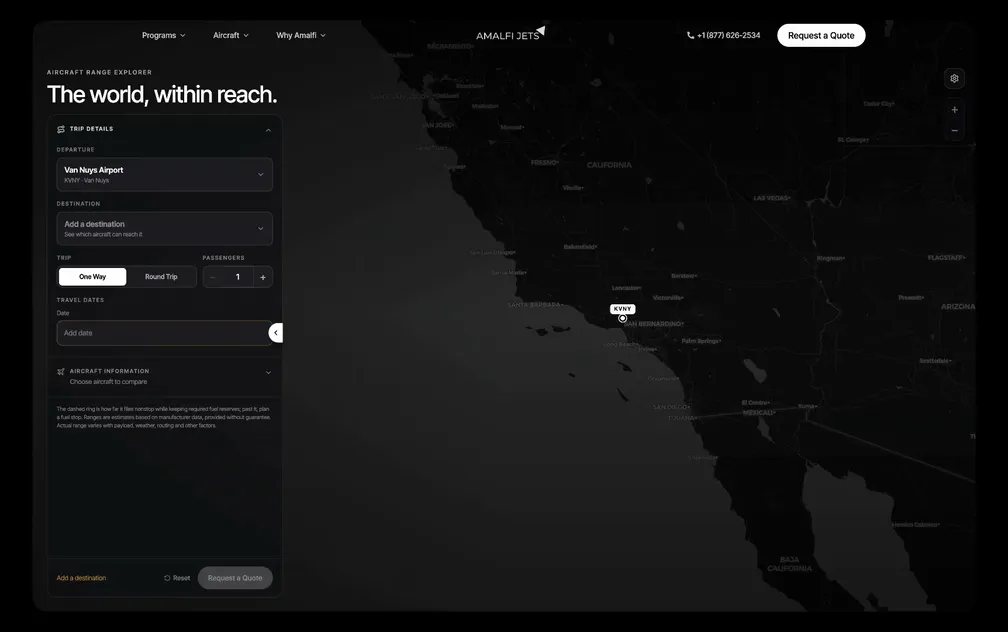
Try Range Explorer
See how far you can fly nonstop
Explore aircraft range, compare options, check flight times, and better understand which aircraft fits your trip.

Ready to fly to Istanbul?
Request a charter and our team will tailor an itinerary for your next journey.
*Takes only about 40 seconds to request your quote.
