



Destination Hub
Private Jet Charter to Indianapolis
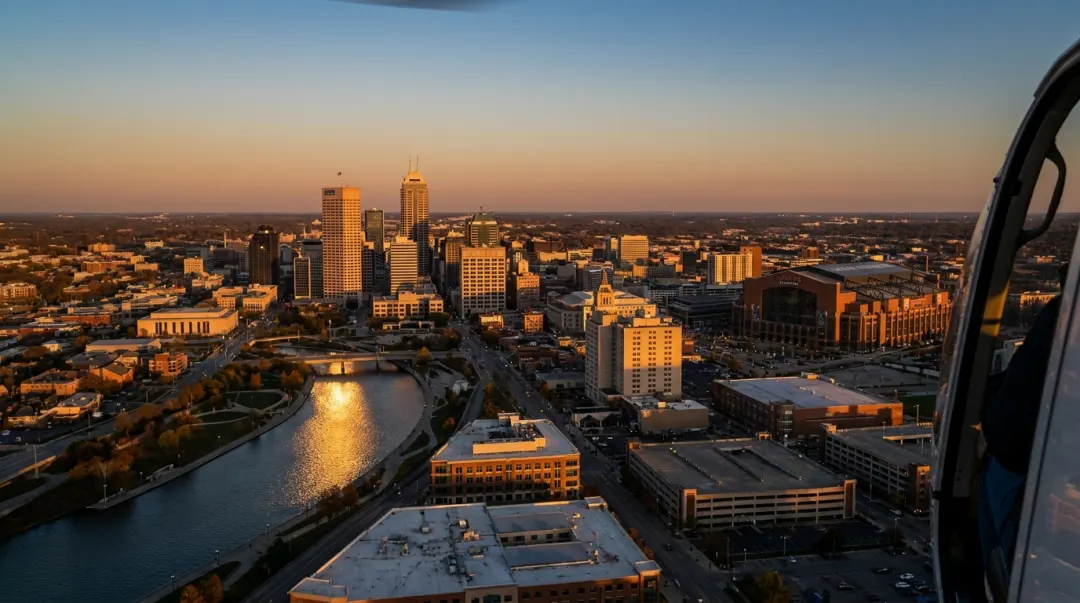
Arriving by private flight at Indianapolis Executive Airport places the city within reach without the friction of airline schedules or connections. From TYQ, the day can be shaped around meetings, race-week hospitality, family commitments, or a quiet arrival before the next obligation.
Quick facts
Why charter a private jet to Indianapolis?
Private flying into Indianapolis is about reclaiming the parts of a travel day that commercial service tends to absorb: connections, fixed departure banks, terminal dwell time, and the uncertainty of moving with a crowd.
Why private travelers choose TYQ
For many clients, Indianapolis Executive Airport is the preferred starting point because it keeps the itinerary focused on a private-arrival plan rather than a commercial-airport routine. The experience is simpler: confirm the aircraft, set the departure window, coordinate ground transportation, and move directly into the schedule that brought you here.
At TYQ, a charter itinerary can be built around the traveler rather than the other way around. Morning meetings, same-day turns, sports weekends, campus visits, and multi-city business days all become easier to organize when the aircraft waits for the passenger instead of the passenger waiting for the network.
Flexibility that protects the day
Because private aviation is scheduled around your party, the value is not only privacy; it is control. Depart earlier if the calendar moves, stay later when dinner runs long, or plan a return after an evening event without being tied to the last airline departure.
Travelers also gain the ability to evaluate alternate airports across the metro area when the trip calls for it. That can matter during major event weeks, when ramp planning, aircraft parking, ground access, and preferred arrival windows should be secured before the city fills.
Time saved, quietly
A well-planned charter reduces friction before and after the flight. Instead of building a day around commercial departure times, luggage cutoffs, and airport transfers designed for everyone, the itinerary can be built around one party, one aircraft, and one purpose.
That efficiency is especially valuable for executives moving between Midwest markets, families arriving for race month, ownership groups attending sports events, and travelers who need a discreet arrival before a packed evening downtown.
“We secure preferred TYQ handling and aircraft parking first, then compare alternates if your meetings or event plans point elsewhere. Firm dates in March, May, and August should be placed early to widen aircraft choice.”

When is the best time to fly to Indianapolis?
The strongest charter months for Indianapolis are March, May, and August, when sports, racing, and convention demand can make preferred aircraft and arrival windows more competitive.
May is the signature month for race travel, with Indy 500 activity drawing private travelers who want tight schedule control and smooth ground coordination. Fixed arrival and departure times should be planned early, especially when hospitality, hotel, and driver arrangements are tied to the same weekend.
August brings Gen Con demand, which can tighten premium travel plans around downtown and convention schedules. March can also be busy as NFL Combine traffic brings executives, scouts, media, and fans into the market.
Winter often creates better value outside major event weeks. January, February, and December can see softer leisure and convention demand, giving flexible travelers more room to compare aircraft options and timing.
For the best experience, treat firm event dates differently from flexible travel. Peak weeks reward early commitment; value periods reward travelers who can shift departure windows or consider alternate airports when the schedule allows.
Where our clients stay and go
Indianapolis gives private travelers a polished Midwestern arrival: organized, accessible, and quietly energetic, with a downtown that moves easily from business appointments to restaurants, sports, and cultural districts.
Set near the center of Indiana, the city has the feel of a practical crossroads rather than a coastal showcase. The skyline rises cleanly above broad streets, the White River and Central Canal bring water and green space into the urban core, and the rhythm of the place changes noticeably when race month, football, or convention traffic arrives.
Downtown is compact enough to make a short stay productive. Hotels, meeting venues, the convention district, stadium areas, and restaurants sit within a city center that rewards precise ground planning rather than elaborate logistics.
Glass towers and civic monuments share the frame with trails, sports venues, and neighborhoods that each have their own tempo. Mass Ave leans creative and social, Fountain Square carries an older neighborhood edge, and the canal district offers a slower walk between commitments.
For private travelers, the appeal is often less about spectacle than dependability. The city works well for board meetings, investor visits, college and medical travel, professional sports, motorsports hospitality, and long weekends built around major events.
The motor-racing identity is unmistakable, but it does not overwhelm the place. Sports, conventions, museums, steakhouse dinners, and late flights home all fit naturally into the same itinerary.
Beyond the center, the metro spreads into business corridors, residential suburbs, campuses, and event sites that can make airport selection an important part of the charter plan. Choosing the right arrival point can make the difference between a clean day and one that loses time on the ground.
Evenings tend to feel relaxed rather than theatrical. After meetings or hospitality, a private departure lets the traveler leave on a quieter schedule, often after the city’s commercial options have stopped fitting the plan.
What determines the cost of a flight to Indianapolis?
The cost of chartering into Indianapolis depends on the aircraft selected, the route flown, the timing of the trip, and the operating details required at TYQ or another suitable airport.
Aircraft class and itinerary design
A larger cabin, longer sector, additional passengers, or more complex schedule will generally influence the quote. The right aircraft is matched to the route, passenger count, luggage profile, onboard preferences, and the level of cabin comfort expected for the mission.
A round trip may price differently from a one-way itinerary because the aircraft’s next assignment matters. If the crew and aircraft remain in position for the return, the quote will reflect that plan; if the aircraft must reposition, those movements can affect the final structure.
Positioning, airport fees, and handling
Routing is only part of the cost picture. TYQ positioning, ramp arrangements, overnight requirements, parking availability, handling services, and applicable airport fees can all shape the final quote.
If an alternate airport is better suited to the ground plan, the charter desk can compare the practical tradeoffs. A different arrival point may reduce surface travel for your party, but it may also change aircraft positioning or handling details.
Demand and empty-leg opportunities
Seasonal demand has a direct effect on availability. March, May, and August tend to require earlier planning because major sports, racing, and convention traffic can tighten aircraft supply.
Availability can also change quickly when empty-leg opportunities appear. An empty leg may offer value when your timing, routing, and passenger requirements align with an aircraft that already needs to move, but those opportunities are limited and rarely suit fixed plans perfectly.
An accurate quote begins with the essentials: preferred dates, passenger count, departure city, arrival airport preference, baggage needs, and any timing that cannot move.
Which airports serve Indianapolis?
Indianapolis is served by TYQ as the primary private-aviation gateway, with several secondary airports that can be considered when a different ground route or operating plan is more convenient.
TYQ is usually the starting point for a private itinerary because it allows the charter plan to be organized around a dedicated arrival, coordinated handling, and a direct transition to the traveler’s vehicle. The airport is well suited to clients who want the simplest private-flight structure for meetings, events, or a same-day return.
-
TYQ: Indianapolis Executive Airport. This is the default recommendation for many private arrivals because it keeps the focus on efficiency, privacy, and schedule control. When the goal is a polished arrival with minimal friction, the team will usually evaluate TYQ first.
-
EYE: Eagle Creek Airpark. Eagle Creek can be useful when the traveler’s plans are better served by that side of the metro area or when an alternate private-airport plan helps simplify the surface route. It is worth considering for trips where the final destination matters more than defaulting to the primary field.
-
MQJ: Indianapolis Regional Airport. MQJ gives the charter desk another way to shape the arrival around the broader region rather than only the downtown core. It may make sense when meetings, residences, or event logistics point away from the primary arrival pattern.
-
UMP: Indianapolis Metropolitan Airport. UMP can be a practical alternate when the preferred ground plan is closer to its part of the metro area. For private travelers with firm appointments and limited tolerance for extra surface time, it gives the operations team another option to compare.
-
IND: Indianapolis International Airport. IND may be appropriate when the itinerary benefits from using the area’s major commercial airport, such as coordinated travel with airline passengers or a preference for that airport’s location in the overall ground plan. It can also serve as a sensible alternate when operational considerations make it the better fit.
The best airport is not always the most familiar name. A good charter plan weighs arrival time, aircraft parking, handling requirements, passenger privacy, baggage, ground transportation, and the address that actually matters after landing.
Common questions about Indianapolis charter
Which airport should I use for a private flight into the city?
Most private flights for Indianapolis use TYQ as the primary airport, though the best choice depends on your arrival time, ground destination, aircraft parking, and handling needs.
Can I choose an alternate airport instead of TYQ?
Indianapolis Executive Airport (TYQ) is the primary choice, but EYE, MQJ, UMP, and IND can be considered when an alternate better supports your ground plan or availability.
What determines the cost of chartering into the city?
Costs for Indianapolis charters depend on aircraft class, routing, one-way or round-trip structure, positioning, airport fees, seasonal demand, and any empty-leg availability that matches your schedule.
When should I book for major event travel?
For Indianapolis event weeks in March, May, and August, earlier booking helps secure preferred aircraft, arrival windows, parking plans, and coordinated ground transportation.
Is IND an option for private travelers?
Indianapolis International Airport (IND) can make sense when the area’s major commercial airport fits the itinerary, especially if airline coordination or that location supports the broader plan.
Try Range Explorer
See how far you can fly nonstop
Explore aircraft range, compare options, check flight times, and better understand which aircraft fits your trip.

Ready to fly to Indianapolis?
Request a charter and our team will tailor an itinerary for your next journey.
*Takes only about 40 seconds to request your quote.
