



Destination Hub
Private Jet Charter to Gulf Shores
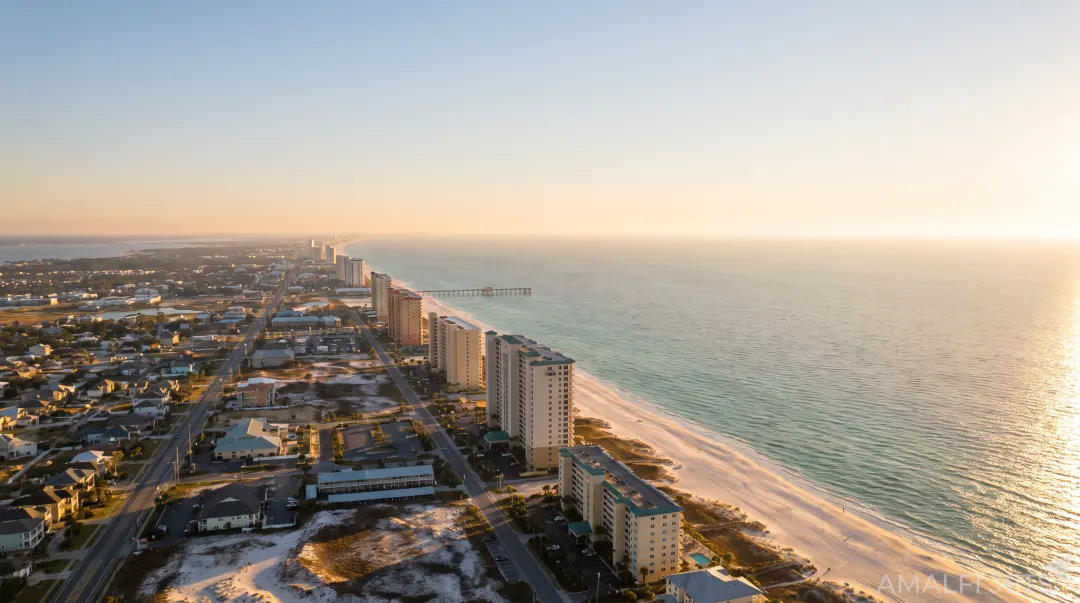
Private arrivals into Gulf Shores are simplest when the itinerary is built around Jack Edwards Airport (GUF), the city’s primary airport. From there, the day can move at a private pace: one arrival plan, coordinated ground timing, and no reliance on airline schedules.
Quick facts
Why charter a private jet to Gulf Shores?
Chartering privately into Gulf Shores gives travelers control over arrival timing, airport choice, and the shape of the day.
A cleaner arrival
Jack Edwards Airport (GUF) is the primary airport for the city, making it the natural starting point for most private-flight planning. Instead of designing the trip around commercial departure banks, luggage connections, and fixed airline schedules, your itinerary can be organized around the hour you want to leave and the moment you want to arrive.
Flexibility that matters on the coast
Beach trips are often built around house check-ins, boat reservations, family arrivals, weather windows, and school calendars. Private aviation allows the schedule to flex around those details, so the aircraft supports the trip rather than dictating it.
Time saved before and after the flight
A private charter reduces the friction that typically surrounds a coastal vacation: crowded terminals, long security queues, missed connections, and rigid return times. GUF keeps the flight plan focused on the destination, while secondary airports can be considered when the broader itinerary points toward Pensacola, Mobile, or another part of the region.
A more discreet travel day
For families, executives, and groups traveling together, the value is not only speed. It is privacy, fewer handoffs, and a calmer transition from aircraft to ground transportation.
“For peak summer weeks, our charter desk confirms GUF handling and aircraft availability first. Firm dates early in the process widen aircraft choice, especially for June, July, and August beach travel.”

When is the best time to fly to Gulf Shores?
The best time to visit Gulf Shores depends on how much you value warm Gulf water, summer energy, and family beach weeks versus quieter off-season days.
June, July, and August are the peak months, driven by summer vacations, warm water, Independence Day travel, and families gathering on the coast. These dates reward early planning, particularly for travelers who need specific departure times, larger cabins, or coordinated arrivals from multiple cities.
November, January, and February tend to offer better value for flexible travelers. Cooler weeks bring lighter beach crowds and often improve aircraft availability, making the off-season well suited to long weekends, remote-work stays, and quieter coastal escapes.
Spring and fall can be appealing for travelers who want a balance of comfortable coastal atmosphere and less intense demand. For any firm holiday, school-break, or event-driven itinerary, the best aircraft choices usually appear earlier in the planning cycle.
Where our clients stay and go
Gulf Shores is an Alabama Gulf Coast escape defined by pale sand, open water, and an easy rhythm that begins where Highway 59 meets the beach.
The setting is straightforward and deeply coastal: the Gulf of Mexico to the south, back bays and inlets nearby, and a low skyline shaped more by sunlight and water than by formality. Mornings tend to start with beach walks and coffee on balconies; afternoons drift between the surf, casual seafood tables, marina plans, and time on the sand.
What gives the area its staying power is the way it accommodates different kinds of trips without losing its relaxed character. Families come for wide beaches and simple logistics. Couples find sunset dinners, quiet stretches of shoreline, and weekends that do not need a heavy agenda. Executives use the coast as a reset point after meetings in the broader Mobile and Pensacola region.
Gulf State Park adds a protected natural counterpoint to the vacation strip, with dunes, trails, water, and open sky close to the center of the visit. Farther out, the Fort Morgan side of the coast feels more spread out and residential, while Orange Beach brings another layer of restaurants, boating, and resort energy.
For private travelers, the appeal is less about spectacle than control. Arrive close to the coast, step into a prepared ground transfer, and let the itinerary settle into the pace of the water.
What determines the cost of a flight to Gulf Shores?
The cost of chartering into Gulf Shores is shaped by aircraft selection, trip structure, airport planning, seasonal demand, and market availability.
Aircraft selection
Aircraft class is one of the primary drivers of charter cost. Cabin size, luggage needs, passenger count, range, crew requirements, and onboard service preferences all influence which aircraft best fits the itinerary.
One-way versus round trip
A round trip may price differently from a one-way because the aircraft and crew schedule are planned differently. If the aircraft needs to remain nearby, reposition elsewhere, or return without passengers, that movement can affect the final quote.
GUF positioning and airport fees
Jack Edwards Airport (GUF) is the primary airport to evaluate first, but the aircraft’s starting point and next assignment matter. Positioning, handling, parking, crew logistics, and airport-related fees are reviewed as part of the overall charter plan.
Seasonal demand
June, July, and August typically bring stronger beach-travel demand, especially around Independence Day and family vacation periods. During these weeks, desirable aircraft and crew schedules can tighten, which may influence availability and routing.
Empty-leg availability
Empty legs can create value when an aircraft already needs to fly a compatible route, but they are schedule-dependent and less flexible than a dedicated charter. They work best for travelers with adaptable timing, light itinerary constraints, and a willingness to move with the aircraft’s existing plan.
Which airports serve Gulf Shores?
The airports that serve Gulf Shores are GUF as the primary arrival point, with CQF, PNS, BFM, and MOB available as secondary options when the itinerary calls for an alternate.
Jack Edwards Airport (GUF)
GUF is the primary airport for private arrivals into the city, making it the first airport the charter desk evaluates for most beach-focused itineraries. For travelers staying near the coast, that primary status keeps the plan straightforward: confirm aircraft availability, coordinate handling, and align ground transportation around the most direct arrival strategy.
HL Sonny Callahan Airport (CQF)
CQF gives advisors another Alabama Gulf Coast option when the primary plan is not the cleanest fit. It may be considered when aircraft positioning, ramp planning, timing, or the passenger’s ground itinerary makes a secondary airport more practical than concentrating every movement through GUF.
Pensacola Regional Airport (PNS)
PNS can make sense for itineraries that connect the beach trip with the Pensacola side of the region or when the charter desk wants another airport to compare for availability and handling. For groups with guests arriving from different places, it can also be part of a broader arrival strategy rather than a simple fallback.
Mobile Downtown Airport (BFM)
BFM is useful when the trip includes time in Mobile or when a downtown-side stop belongs naturally in the schedule before or after the coast. As a secondary airport, it gives the advisor another way to shape the day around meetings, pickups, or a regional itinerary that does not begin and end at the beach.
Mobile Regional Airport (MOB)
MOB offers an additional Mobile-area alternative for travelers approaching the Alabama coast from a wider regional plan. It may be evaluated when aircraft availability, passenger origins, or the onward ground route point toward Mobile rather than the primary airport.
In practice, the best airport is chosen after the schedule, passenger count, luggage profile, and final destination on the coast are understood. A good charter plan starts with GUF, then uses the secondary airports only when they improve the overall day.
Common questions about Gulf Shores charter
Which airport should I use for a private flight to the coast?
For Gulf Shores, GUF is usually evaluated first because it is the primary airport for the city, while CQF, PNS, BFM, and MOB can be considered when another regional arrival point better fits the itinerary.
Can Amalfi Jets compare alternate airports for my trip?
Yes, for Gulf Shores our charter advisors can compare GUF with CQF, PNS, BFM, and MOB based on aircraft positioning, handling, passenger pickup points, and ground plans.
What determines the cost of chartering into the area?
The cost of chartering into Gulf Shores depends on aircraft class, trip structure, aircraft positioning, airport fees, seasonal demand, and any suitable empty-leg availability.
When should I book for a summer beach trip?
For Gulf Shores, June, July, and August bring the strongest beach-travel demand, so confirming firm dates earlier can improve aircraft choice and scheduling flexibility.
Are off-season trips easier to arrange?
In Gulf Shores, November, January, and February often bring lighter beach crowds and better aircraft availability, which can help flexible travelers build a smoother charter plan.
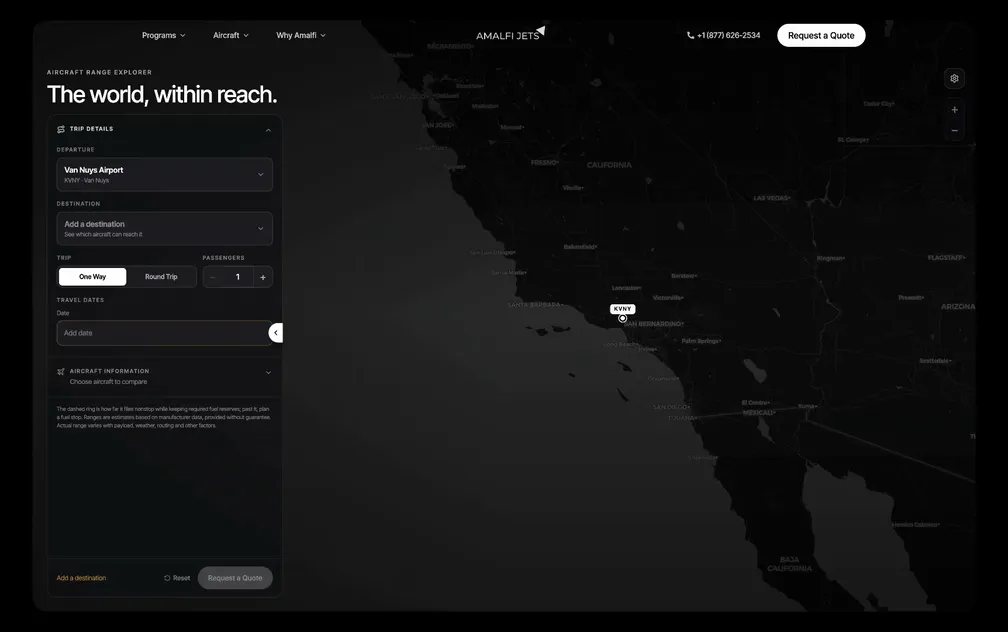
Try Range Explorer
See how far you can fly nonstop
Explore aircraft range, compare options, check flight times, and better understand which aircraft fits your trip.

Ready to fly to Gulf Shores?
Request a charter and our team will tailor an itinerary for your next journey.
*Takes only about 40 seconds to request your quote.
