



Destination Hub
Private Jet Charter to Guapi
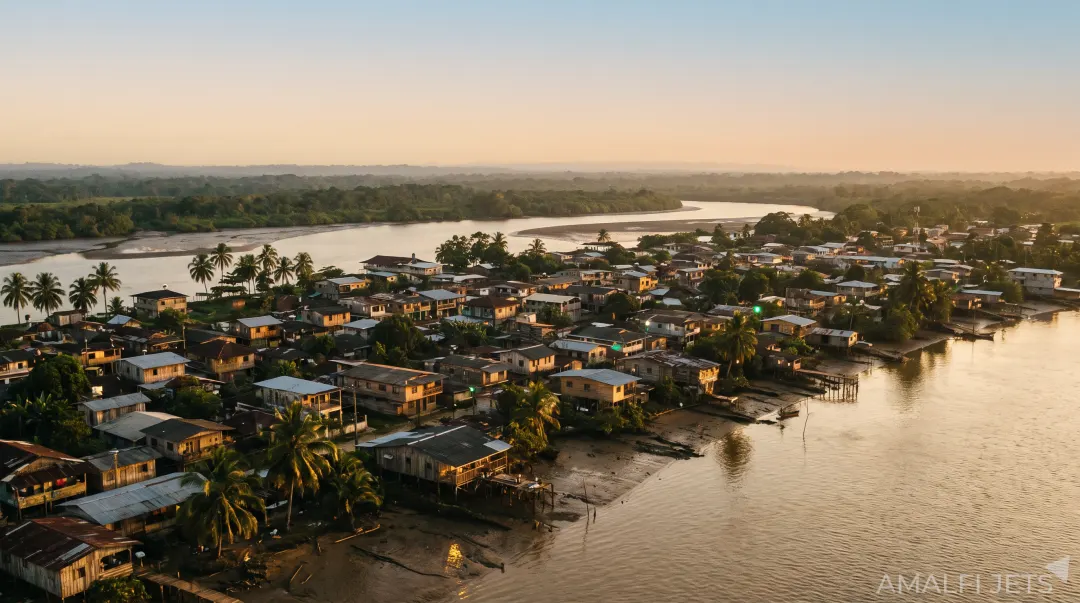
Most private flights into Guapi arrive through Juan Casiano Airport (GPI), keeping the first day focused on the river, the coast, and the people waiting on the ground. With one primary gateway to coordinate, the charter plan can be built around your preferred departure time, aircraft sourcing, and onward transfers rather than an airline timetable.
Quick facts
Why charter a private jet to Guapi?
Chartering privately into Guapi gives travelers a cleaner route to Colombia’s Pacific coast, with GPI as the natural focal point for arrivals.
For guests visiting Gorgona, river communities, craft workshops, or coastal eco-lodges, the advantage is not spectacle; it is control. A private itinerary lets the departure time, passenger list, baggage profile, and onward transfer plan move together, rather than requiring the trip to conform to published connections.
Why private aviation works here
- Direct planning around GPI: Your charter advisor can build the flight brief around the primary airport, then coordinate ground and water transfers in the order the day requires.
- Fewer schedule compromises: Early departures, family timing, staff travel, and specialty baggage can be organized in one plan.
- More privacy on arrival: Travelers who value discretion can move from aircraft to local transfer with a quieter, more controlled process.
- A better use of time: The charter day is shaped around meetings, tides, lodge check-ins, or boat departures, not an airline bank.
A private flight also creates useful contingency room. If weather, aircraft positioning, or airport availability changes the operating picture, BUN, PPN, and CLO give the charter desk additional ways to protect the journey without redesigning the entire trip.
“For peak whale-watching months, our charter desk secures GPI handling and aircraft availability first; firm dates arranged early usually widen cabin choice and backup options.”

When is the best time to fly to Guapi?
The best time to visit Guapi depends on whether the trip is built around whale watching, cultural immersion, or more flexible Pacific coast travel.
July, August, September, and October are the peak planning months, with Gorgona whale-watching season drawing eco-tourism demand and tightening aircraft options for firm dates. Travelers who need specific lodge nights, boat departures, or school-holiday timing should begin early so the charter desk can secure aircraft, handling, and alternates before the most requested weeks compress availability.
February, March, April, May, and June are the value-minded months for a different rhythm of travel. Outside the whale and festival peaks, itineraries often lean into crafts, cuisine, river communities, and slower community-based stays, with more room to shape departure times and aircraft sourcing.
Weather on Colombia’s Pacific coast can be part of the journey, so the best itineraries leave space for practical adjustments. Private aviation helps preserve that flexibility, especially when water transfers, local guides, or multi-stop regional plans are involved.
Where our clients stay and go
Guapi is a river-and-Pacific destination for travelers drawn to Colombia’s quieter coast, where arrival feels less like entering a resort corridor and more like joining the daily movement of water, music, and community.
The town sits in Cauca’s Pacific world, shaped by the river, mangrove edges, boat traffic, and the humid light that softens the shoreline. Mornings tend to begin with movement at the water: supplies, conversations, departures, and the steady rhythm of a place where the river is not scenery but infrastructure.
This is also a cultural landscape. The South Pacific tradition of marimba, drums, and call-and-response singing gives the region a distinct sound, while local food reflects the coast through seafood, coconut, plantain, and preparations that reward travelers who slow down long enough to eat where residents eat.
For private travelers, the appeal is access with intention. A journey may begin with a controlled aircraft arrival, then continue by road or boat toward Gorgona, nearby communities, craft encounters, or days organized around conservation and coastal interpretation.
The destination suits guests who prefer texture over polish. There is no need to overscript every hour; the better approach is to secure the critical logistics, leave room for weather and water, and let the place reveal itself at the pace of the Pacific.
What determines the cost of a flight to Guapi?
The cost of chartering into Guapi is determined by aircraft selection, itinerary structure, GPI logistics, seasonal demand, and whether a suitable empty leg is available.
Aircraft class and sourcing
Aircraft class is one of the main cost drivers, but the right choice depends on the mission rather than a generic category. Passenger count, baggage, departure airport, desired cabin experience, and operating requirements all influence which aircraft are presented for review.
One-way versus round trip
A one-way charter may require the aircraft to reposition before or after your flight, while a round trip can sometimes keep the same aircraft and crew aligned with your schedule. The more time the aircraft must wait, reposition, or return empty, the more the overall quote can change.
GPI positioning, handling, and fees
Because GPI is the primary arrival point, the quote must account for aircraft positioning, airport handling, parking, crew logistics, and any local operating fees confirmed for the requested dates. These elements are checked before a firm proposal is issued, since they can vary by aircraft, timing, and airport availability.
Seasonal demand
Demand rises during the July through October whale-watching period for Gorgona, especially when travelers need firm weekend or lodge-aligned dates. February through June can offer easier availability for trips centered on cuisine, crafts, river life, and community stays.
Empty-leg availability
An empty leg can improve value when an aircraft is already moving in the right direction at the right time. Availability is never guaranteed, and these opportunities are less flexible than a fully tailored charter because the aircraft’s existing schedule sets the framework.
Which airports serve Guapi?
The airports serving Guapi are led by GPI, with BUN, PPN, and CLO used as alternates when the wider itinerary points to another part of the region.
Juan Casiano Airport (GPI)
Juan Casiano Airport is the primary choice when the traveler’s destination is the city itself or the nearby Pacific-coast program. It keeps the arrival closest to the core itinerary, which can simplify passenger handling, luggage coordination, and onward arrangements with local hosts.
For most private travelers, GPI is the first airport the charter desk evaluates because it aligns the flight plan with the purpose of the trip: reaching the coast efficiently and avoiding unnecessary overland complexity.
Gerardo Tobar López Airport (BUN)
BUN is an alternate for travelers whose plans connect better through the Buenaventura side of the Pacific region. It may make sense when the itinerary includes that port area, when operational planning favors a different coastal gateway, or when a recovery option is needed during periods of limited availability.
This airport is not a substitute chosen casually; it belongs in the plan when the traveler’s ground program, timing, or contingency strategy points naturally toward Buenaventura.
Guillermo León Valencia Airport (PPN)
PPN can be useful when the journey includes Popayán, inland Cauca, or a broader cultural itinerary before or after the coast. In that context, the airport can support a split program where the traveler does not need every segment to move through the same arrival point.
Advisors may also consider PPN when schedule resilience is more important than using the nearest coastal gateway, especially for travelers combining several stops in southwestern Colombia.
Alfonso B. Aragon Airport (CLO)
CLO is the broadest alternate in the group for travelers whose plans are tied to the Valle del Cauca side of the region. It can be helpful when an itinerary begins or ends with business, hospitality, or ground arrangements outside the immediate Pacific coast.
For a purely coastal stay, GPI remains the cleaner first choice. For a more complex regional program, CLO gives the charter desk another way to structure the trip around the traveler’s full schedule rather than a single point on the map.
Common questions about Guapi charter
Which airport should I use when flying privately to Guapi?
For Guapi, GPI is the primary airport and usually the first option reviewed for a private arrival. BUN, PPN, and CLO may be considered if aircraft logistics, handling, or the wider itinerary make an alternate more practical.
What determines the cost of chartering into Guapi?
The cost for Guapi depends on aircraft class, routing, one-way versus round trip structure, aircraft positioning, GPI handling and fees, seasonal demand, and any empty-leg availability. Quotes are built around the specific mission rather than a fixed fare.
When should I book for whale-watching season?
For Guapi, July through October brings stronger demand because of Gorgona whale watching. If your dates are firm, book early so the charter desk can secure aircraft options, airport arrangements, and backup plans before peak weeks fill.
Can I use an alternate airport instead of GPI?
For Guapi, alternates such as BUN, PPN, and CLO can be useful when the operating plan calls for a different gateway. The right choice depends on aircraft availability, handling confirmation, and the ground or water transfer after landing.
Is a one-way charter practical for this route?
A one-way flight to Guapi can be practical, but it may require aircraft repositioning before or after the trip. Your advisor will compare that structure with a round trip and check whether any empty-leg options match your timing.
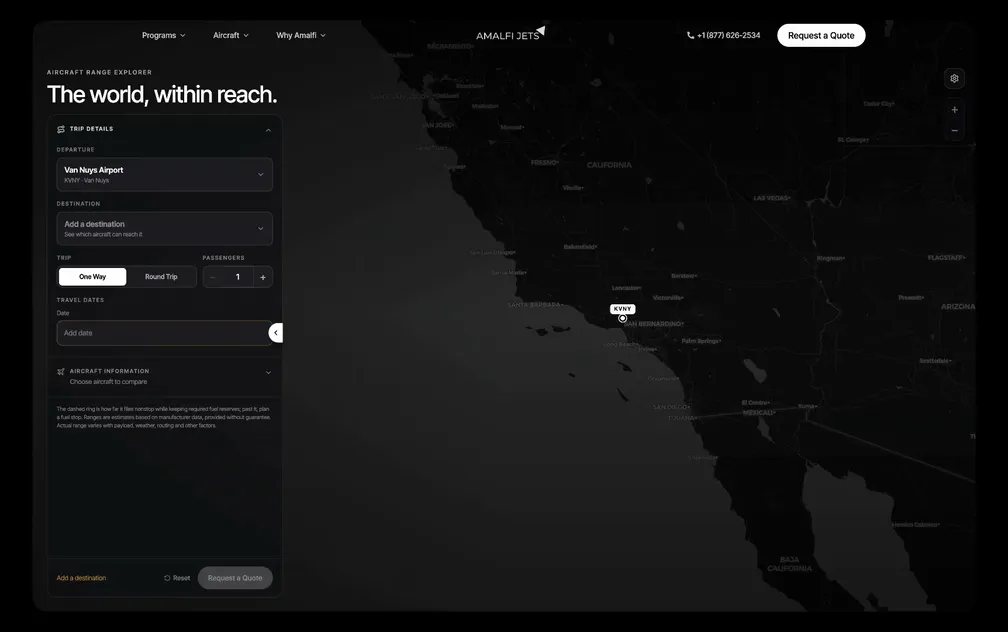
Try Range Explorer
See how far you can fly nonstop
Explore aircraft range, compare options, check flight times, and better understand which aircraft fits your trip.

Ready to fly to Guapi?
Request a charter and our team will tailor an itinerary for your next journey.
*Takes only about 40 seconds to request your quote.
