



Destination Hub
Private Jet Charter to Gstaad
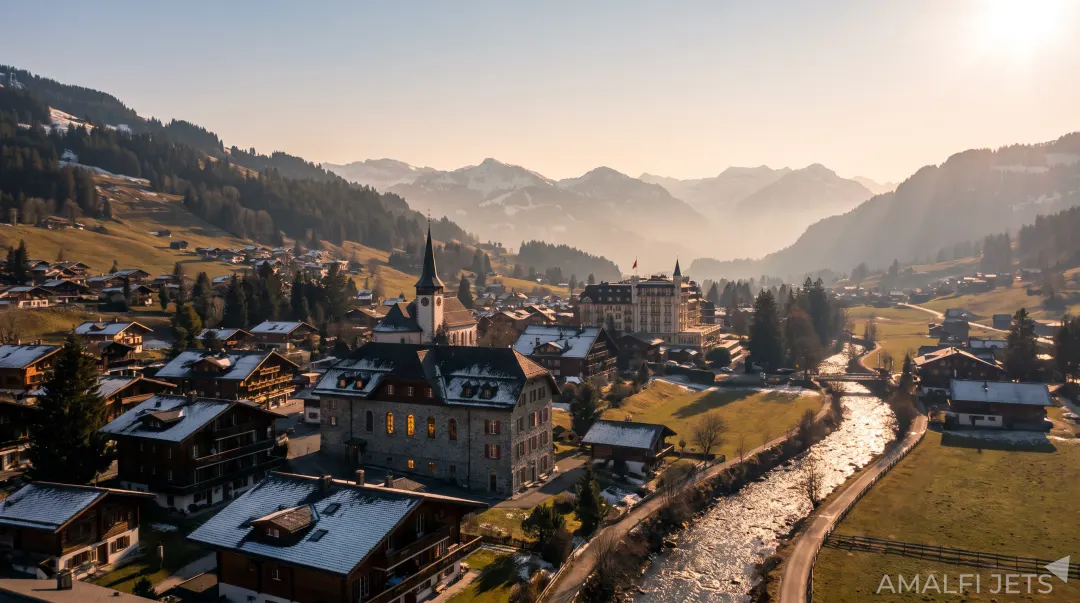
Most private arrivals for Gstaad are planned through Saanen Airport (LSGK), giving the trip a quiet Alpine rhythm from touchdown to transfer. On a charter, the day is organized around your chalet check-in, hotel plans, and weather window rather than an airline timetable.
Quick facts
Why charter a private jet to Gstaad?
Private flying into Gstaad is about control: a direct plan into Saanen Airport (LSGK), a schedule built around the traveler, and a ground transfer timed to the actual arrival.
Why travelers choose a charter plan
Commercial travel often adds connection points, fixed departure times, and airport time that has little to do with the pace of the trip. A private itinerary keeps the focus on the day itself: arrive when the house is ready, depart after the last meeting or lunch, and adjust around guests, luggage, and onward plans.
LSGK also gives the charter desk a clear operational starting point. Once the preferred date and passenger profile are known, the team can review aircraft options, coordinate handling, and consider alternates when the trip calls for more flexibility.
Time saved without making the day feel rushed
The value is not only in flying direct. It is in removing friction before and after the flight:
- Fewer schedule compromises when traveling for ski weeks, family holidays, or summer events.
- Simpler group movement for guests arriving from different homes or offices.
- More discreet transitions from aircraft to vehicle, with fewer public touchpoints.
- Cleaner recovery plans if weather, demand, or airport availability shifts.
A well-built charter itinerary does not try to force the mountain to fit the aircraft. It starts with the desired arrival and works backward, aligning aircraft availability, airport planning, crew timing, and ground coordination into one manageable plan.
“For peak winter and July–August trips, our charter desk secures aircraft availability and the preferred airport plan first, then confirms alternates. Firm dates shared early usually widen aircraft choice.”

When is the best time to fly to Gstaad?
The best time to visit Gstaad depends on whether the trip is built around snow, summer events, or a quieter shoulder-season stay.
Peak months
December, January, and February are the classic winter window, when ski holidays and festive travel place the strongest pressure on aircraft availability. Travelers with fixed chalet dates, school-holiday plans, or high-profile hotel arrivals should secure the flight plan early, because the best aircraft options tend to move first.
July and August form the summer peak. Tennis, polo, and music programming bring a different energy to the valley: longer evenings, dressed-up terraces, and a social calendar that rewards precise timing. For these months, a strong charter plan accounts for both arrival day and departure day, since weekend patterns can tighten quickly.
Value months
April and May are calmer after the winter season, while October and November sit before the holiday build-up. These shoulder periods can suit travelers who want space, privacy, and more choice in aircraft sourcing.
Flexibility is the advantage. When the itinerary is not tied to a marquee week or a sold-out house date, the charter desk can compare more aircraft, review alternate airports more calmly, and shape the trip around comfort rather than scarcity.
Where our clients stay and go
Gstaad is a Swiss Alpine village with an unusually polished sense of quiet, where timber chalets, clean mountain air, and a car-free center set the tone before the first appointment or dinner reservation.
The village sits in the Saanenland, framed by meadows, ridgelines, and the kind of winter light that turns roofs and pastures into a soft monochrome. Its image is glamorous, but the feeling on arrival is more measured than showy: shutters, flower boxes, church bells, discreet shopfronts, and hotel terraces that seem designed for unhurried arrivals.
A village with a social calendar
Summer changes the pace without changing the manners. Warm afternoons bring tennis, polo, and music into the rhythm of the valley, while evenings stretch out over restaurant terraces and private houses. The guest list may be international, yet the village keeps its scale, which is part of the appeal for travelers who want access without theater.
Winter is more ceremonial. Ski plans, family gatherings, and holiday weeks give the season its structure, and many visitors return to the same chalets and hotels year after year. The appeal is not a single view or venue, but the ease of moving between mountain days, polished service, and a village center small enough to feel personal.
Why it suits private travelers
The destination rewards precise timing. A private flight can be aligned with house staff, ski-school schedules, spa appointments, or a late lunch that should not be sacrificed to a commercial connection. That is why the best itineraries are built as a full day of movement, not just as an aircraft reservation.
Discretion also matters here. The setting has long attracted travelers who value privacy, but its luxury is not loud. Arrivals are smoother when the aircraft, handling, vehicles, and luggage plan are coordinated before the traveler leaves home.
What determines the cost of a flight to Gstaad?
The cost of chartering into Gstaad is shaped by aircraft selection, routing, airport planning at LSGK, seasonal demand, and aircraft availability on the requested dates.
Aircraft class and cabin requirements
Aircraft class is usually the largest driver because it affects cabin size, range, crew planning, baggage capacity, and operating profile. A couple traveling light for a short Alpine stay may not need the same solution as a family with ski equipment, staff luggage, pets, or multiple passengers joining from different cities.
The right aircraft is not chosen on prestige alone. It is matched to the route, passenger count, luggage profile, schedule, and the operator’s approved plan for the selected airport.
One-way, round trip, and positioning
A one-way itinerary can price differently from a round trip because the aircraft may need to reposition before or after the passenger flight. If the same aircraft and crew can remain with the trip efficiently, the economics may be more favorable; if not, the quote reflects the additional movements required to place the aircraft where it needs to be.
Positioning is especially important for mountain itineraries. The aircraft may not be based near LSGK, and the most sensible plan can depend on where the aircraft is coming from, where it goes next, and how long the traveler intends to stay.
Airport fees, handling, and local coordination
Airport-related charges vary by itinerary and are built into the charter quote rather than treated as an afterthought. Handling, parking, crew arrangements, permissions, passenger services, and any required local coordination can all influence the final structure.
For a refined trip, these details matter as much as the flight time. The charter desk reviews the full movement rather than quoting the aircraft in isolation.
Seasonal demand and empty legs
December, January, and February bring holiday ski demand, while July and August draw summer travelers around tennis, polo, and music events. During those periods, preferred aircraft and peak-time slots can tighten, which may affect both availability and quote structure.
April, May, October, and November can be more flexible because they sit between the major winter and summer travel waves. Empty-leg opportunities may appear when an aircraft is already moving near the desired route, but they are never guaranteed and usually require flexibility on timing, direction, and airport choice.
Which airports serve Gstaad?
Gstaad is served primarily by Saanen Airport (LSGK), with Bern Belp Airport (BRN), Sion Airport (SIR), and Geneva Airport / Aeroport de Geneve (GVA) used as practical alternates when the itinerary calls for a different operational plan.
LSGK: the direct Alpine choice
LSGK is the primary airport for the resort, so it is the first point the charter desk reviews when a traveler wants the most direct arrival. Its appeal is simplicity: one local arrival plan, coordinated handling, and a transfer that begins in the Saanenland rather than from a larger city gateway.
This choice works best when the aircraft, operator, weather, permissions, and schedule all align. Because mountain airport planning can be sensitive to several moving parts, the desk confirms suitability before treating the airport as final.
BRN: a Bernese-region alternate
BRN can make sense when the trip benefits from a broader regional airport plan rather than a direct local arrival. Travelers combining the resort with time in Bern, the wider Bernese Oberland, or business in the Swiss capital may find it a useful alternative to consider.
It can also be part of a contingency plan. If demand, weather, or operational review makes LSGK less attractive on the preferred date, BRN gives the advisor another Swiss option to compare without moving the entire journey into a major international hub.
SIR: useful for Valais-linked itineraries
SIR is often considered when the traveler’s plans lean toward Valais, another Alpine resort, or a route that benefits from approaching the region from the south and west. It is not simply a fallback; it can be a deliberate choice when the ground itinerary points that way.
For private travelers, the value lies in flexibility. If the preferred aircraft or timing is better served through SIR, the charter desk can compare the total journey rather than focusing only on the closest airport by name.
GVA: the large international gateway
GVA is the most familiar option for many long-haul travelers and for groups connecting from multiple countries. It can suit itineraries that require larger airport infrastructure, broader airline connectivity for accompanying guests, or a more conventional international arrival plan.
The tradeoff is that the journey continues by ground after landing. For peak winter and summer periods, the advisor weighs airport availability, passenger comfort, luggage volume, and onward timing before recommending GVA over a more local Swiss airport.
Common questions about Gstaad charter
Which airport should I use when flying privately into Gstaad?
For Gstaad, Saanen Airport (LSGK) is the primary airport, and the charter desk reviews it first before considering BRN, SIR, or GVA as alternates.
When should I book a winter charter for Gstaad?
For Gstaad, December, January, and February should be planned early because holiday ski demand can reduce preferred aircraft choice and tighten airport planning.
What determines the cost of chartering into Gstaad?
The cost for Gstaad depends on aircraft class, passenger and luggage needs, one-way versus round-trip routing, aircraft positioning, airport fees, seasonal demand, and empty-leg availability.
Can I use Geneva instead of the local airport?
Many travelers use GVA for Gstaad when they want a larger international gateway, need broader connection options, or prefer an alternate plan to LSGK.
Are there better-value months for a private flight?
For Gstaad, April, May, October, and November can bring softer demand between the main ski and summer-event periods, which may improve sourcing flexibility.
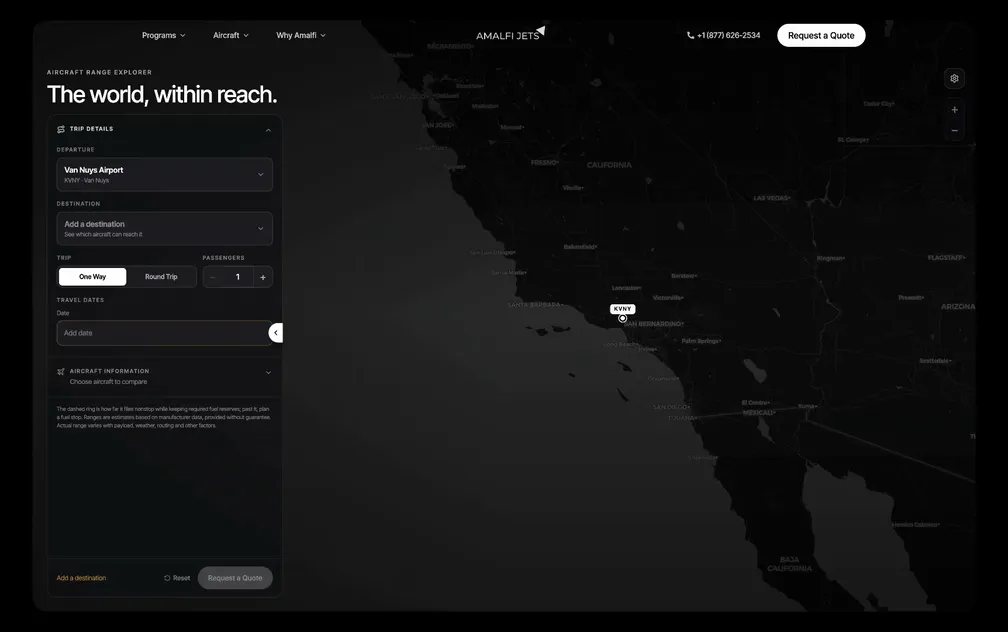
Try Range Explorer
See how far you can fly nonstop
Explore aircraft range, compare options, check flight times, and better understand which aircraft fits your trip.

Ready to fly to Gstaad?
Request a charter and our team will tailor an itinerary for your next journey.
*Takes only about 40 seconds to request your quote.
