



Destination Hub
Private Jet Charter to Grand Canyon
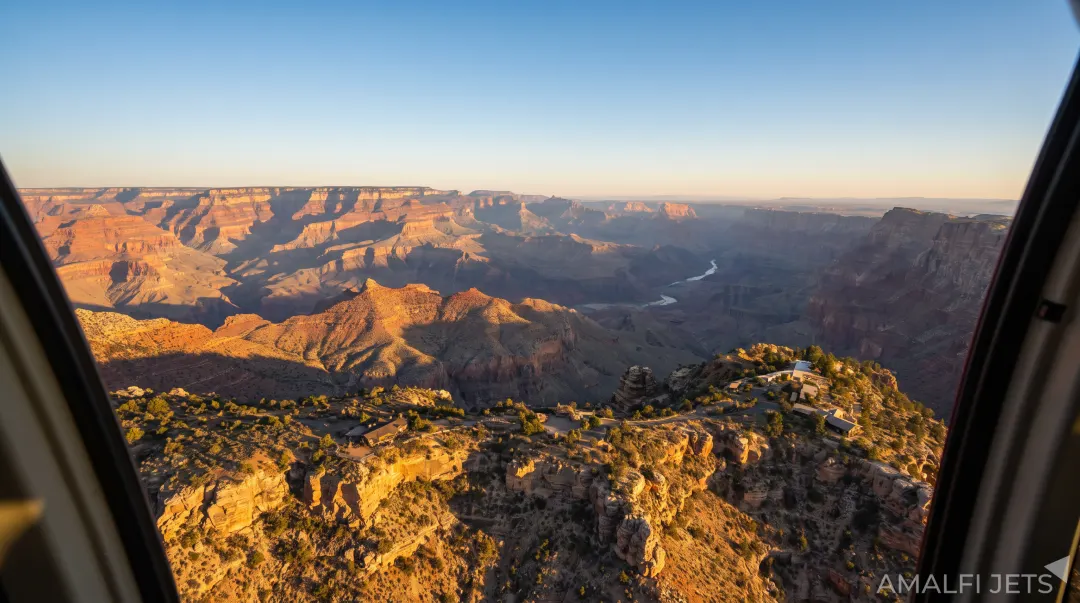
Most private flights into the canyon region center on Grand Canyon National Park Airport (GCN), keeping the arrival plan simple and close to the South Rim experience. From touchdown, the day can move on your schedule: ground transport, guide timing, lodging arrivals, and return flights all organized around a single private itinerary.
Quick facts
Why charter a private jet to Grand Canyon?
Chartering privately into Grand Canyon is about controlling a remote, time-sensitive journey rather than adapting it to airline schedules.
Commercial routings can add connections, fixed departure times, and extra ground movement before the canyon ever comes into view. A private itinerary lets travelers select the departure time, align arrival with lodge check-in or a guided afternoon, and preserve the energy of the trip for the landscape itself.
Direct access with fewer moving parts
Grand Canyon National Park Airport (GCN) is the primary airport for the area, which gives many itineraries a clear operating focus from the start. Instead of building the day around a distant hub, the charter plan can be shaped around the airport, the receiving schedule on the ground, and the pace of the traveler.
Flexibility for a landscape-driven itinerary
Weather, daylight, rim access, and guiding windows can all affect how a canyon trip feels. Private travel makes it easier to depart earlier, hold later, or adjust the return around a morning viewpoint, a Colorado River plan, or a family schedule that would be difficult to match to a published timetable.
Time saved before and after arrival
The value is not only in the flight itself. The larger advantage is the removal of unnecessary wait time: no airline connection, no crowded terminal transfer, and no schedule built for everyone else. For travelers coming in for a short stay, that recovered time can define the trip.
“We secure GCN handling and parking first, then compare CMR, FLG, SDX, and PGA if peak summer dates compress availability. Firm dates early widen aircraft choice.”

When is the best time to fly to Grand Canyon?
The best time to visit Grand Canyon depends on whether the priority is full summer access, lighter crowds, or a quieter cold-weather rim experience.
June, July, and August are the peak months, driven by school vacations, North Rim access, rafting demand, and scenic-flight interest. Travelers with fixed summer dates should plan earlier than usual, particularly when the itinerary involves guides, premium lodging, or a tight return schedule.
January, February, and November can offer better value for flexible travelers. Cold South Rim weather keeps some visitors away, and lighter crowds can improve aircraft availability while giving the rim a more contemplative atmosphere.
Spring and autumn often appeal to travelers who want to avoid the height of summer while still building an active outdoor itinerary. The charter desk should align flight timing with daylight, ground plans, and any rim-specific access considerations before the aircraft is confirmed.
Where our clients stay and go
Grand Canyon rewards travelers who understand that its scale is not seen all at once; it is felt in changing light, long shadows, and the quiet distance between rim and river.
The South Rim gives the classic first impression: layered rock, open sky, and viewpoints that shift from amber to violet as the sun moves. Mornings can feel crisp and spare, while late afternoon brings depth to the cliffs and a sense of theater that no photograph quite contains.
Private travelers are often drawn here because the destination is both iconic and logistically demanding. A short stay benefits from precision: arrive with the ground plan already arranged, move directly toward the rim or lodge, and leave enough space in the schedule for silence rather than constant transfers.
The Colorado River is the hidden line that makes the place legible, carving below the overlooks and anchoring rafting itineraries, helicopter perspectives, and multi-day adventures. Above it, the rims feel like separate worlds, with forested plateaus, desert edges, and weather that can change the mood of the view in minutes.
Luxury here is not excess. It is a clean arrival, a well-timed guide, a vehicle waiting at the right door, and an itinerary that leaves room for the canyon to do what it has always done: make people lower their voices.
What determines the cost of a flight to Grand Canyon?
The cost of chartering into Grand Canyon is determined by the aircraft selected, the trip structure, airport logistics at GCN, seasonal demand, and the availability of repositioning opportunities.
Aircraft selection
Aircraft class is one of the central variables. Cabin size, baggage requirements, passenger count, range, and preferred onboard experience all influence which aircraft are proposed. The right recommendation balances comfort with the specific routing, runway planning, crew logistics, and the overall schedule.
One-way or round trip structure
A one-way itinerary is priced differently from a round trip because the aircraft and crew may need to continue, wait, or reposition after the passengers arrive. When travelers return within a practical operating window, a round trip can sometimes create a more efficient plan; when the stay is longer, the aircraft may be released and sourced again for departure.
GCN positioning and airport-related fees
Positioning matters. If the best aircraft is not already near the departure point or the arrival airport, the movement required to place it for the trip becomes part of the quote. Fees associated with using the airport, arranging ground handling, crew timing, and parking can also influence the final charter proposal.
Seasonal demand
June, July, and August bring strong summer vacation travel, North Rim access, rafting interest, and scenic-flight demand. During those weeks, preferred aircraft and arrival times can tighten more quickly, so flexibility and early planning may improve the range of options.
Empty-leg availability
Empty legs can occasionally reduce the overall charter outlay when an aircraft already needs to move along a compatible route. They are highly schedule-dependent and usually less flexible than a dedicated charter, so they work best for travelers who can adapt departure time, airport choice, or travel date.
Which airports serve Grand Canyon?
Grand Canyon is primarily served by GCN, with CMR, FLG, SDX, and PGA considered when the broader Arizona itinerary calls for a different ground approach.
GCN
Grand Canyon National Park Airport is the natural first choice for most private arrivals focused on the South Rim area. Its value is simplicity: one primary arrival point, a straightforward handling conversation, and a ground plan built around reaching the park experience without routing through a larger city first.
GCN also makes sense when travelers want the cleanest possible schedule for a short stay. If the aircraft, crew plan, parking, and handling are suitable for the requested dates, it keeps the charter centered on the destination rather than the transfer.
CMR — H.A. Clark Memorial Field Airport
CMR is a practical alternate when the ground itinerary favors a different approach to the region or when the primary airport is not the best operational fit for the requested timing. For private travelers, it can be useful as a pressure valve: the charter team can compare aircraft availability, parking, and onward driving plans before deciding whether it improves the day.
This airport is best considered early rather than as an afterthought. If a traveler is staying outside the immediate rim area or building a wider northern Arizona trip, CMR may help the route feel more deliberate.
FLG — Pulliam Field
FLG is the Flagstaff-area option, valuable when the trip includes time in that mountain city or when services, lodging, or ground logistics point south of the rim experience. It may also be considered if the aircraft selection or schedule aligns more cleanly there than at GCN.
For private itineraries, the appeal is not simply having another airport on the map. It gives the charter desk another way to balance arrival timing, crew planning, and the traveler’s actual destination after landing.
SDX — Sedona Airport
SDX belongs in the conversation when Sedona is part of the journey, either before or after the canyon. Its red-rock setting changes the character of the trip, making it a strong choice for travelers pairing desert resort time, spa days, or scenic touring with a northern Arizona itinerary.
Choosing SDX is usually about the trip design rather than proximity alone. If the first night is in Sedona or the traveler wants to turn the arrival into part of the experience, the airport can support a more fluid regional plan.
PGA — Page Municipal Airport
PGA is the logical alternate for itineraries oriented toward Page, Lake Powell, Horseshoe Bend, Antelope Canyon, or Colorado River touring. When the focus shifts northeast, it can reduce backtracking and place the aircraft closer to that part of the region.
For multi-stop private travel, PGA can be especially useful as a second airport in the plan rather than a substitute for GCN. The charter desk can structure an arrival into one airport and a departure from another when the ground route naturally moves across northern Arizona.
Common questions about Grand Canyon charter
Which airport should I use for a private arrival?
For Grand Canyon, GCN is usually the primary choice because it keeps the flight plan focused on the South Rim area and limits unnecessary ground movement.
When would an alternate airport make sense?
An alternate can make sense for Grand Canyon when aircraft availability, parking, weather planning, or the traveler’s lodging location points more naturally toward CMR, FLG, SDX, or PGA.
What determines the cost of chartering into Grand Canyon?
Cost for Grand Canyon is shaped by aircraft type, trip structure, positioning, airport fees, seasonal demand, and whether an empty leg matches the requested route.
Are summer trips harder to secure?
June, July, and August are the busiest months for Grand Canyon because of vacation travel, North Rim access, rafting demand, and scenic-flight interest, so earlier planning is wise.
Can I arrive at one airport and depart from another?
Yes, Grand Canyon itineraries can be planned with different arrival and departure airports when the ground route moves through Sedona, Flagstaff, Page, or another part of northern Arizona.
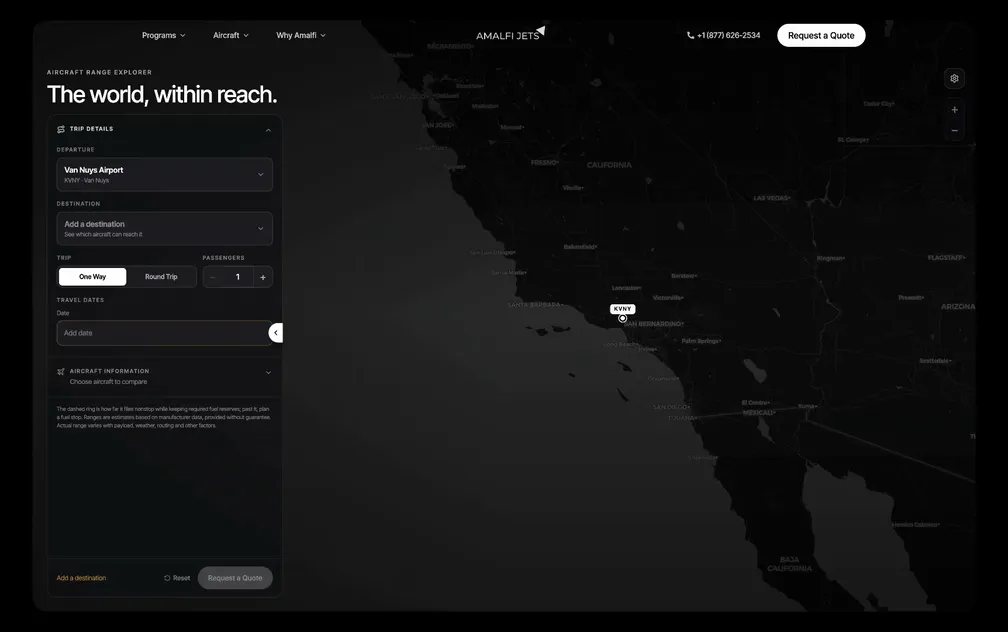
Try Range Explorer
See how far you can fly nonstop
Explore aircraft range, compare options, check flight times, and better understand which aircraft fits your trip.

Ready to fly to Grand Canyon?
Request a charter and our team will tailor an itinerary for your next journey.
*Takes only about 40 seconds to request your quote.
