



Destination Hub
Private Jet Charter to Ft. Worth
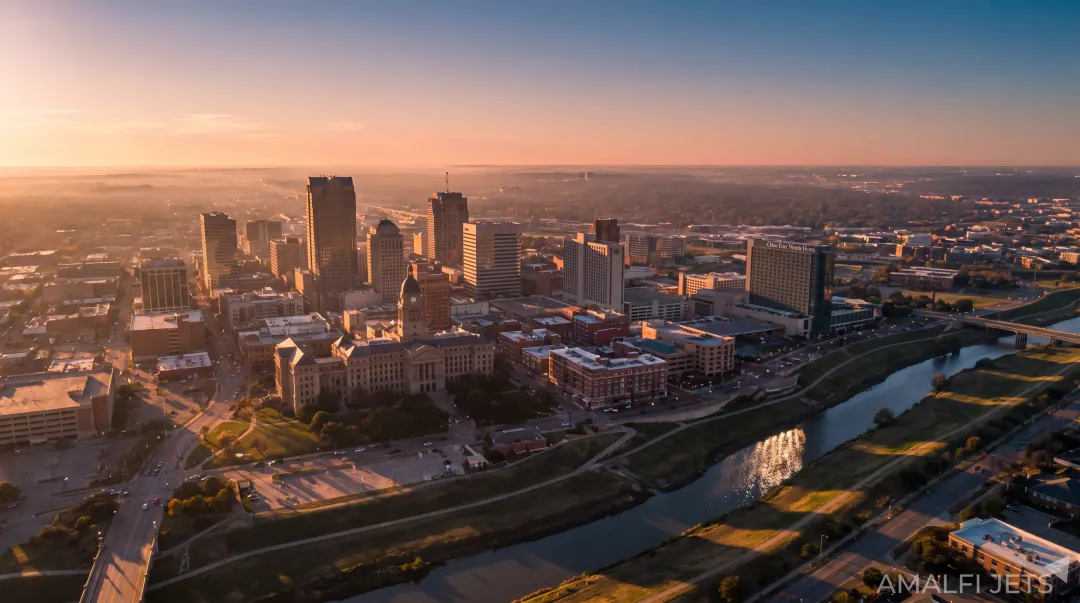
Arriving by private aircraft in Ft. Worth is simplest when the day is built around Meacham International Airport (FTW). The aircraft, ground transfer, and timing can be organized around a single private arrival point, keeping the trip focused on your calendar rather than an airline schedule.
Quick facts
Why charter a private jet to Ft. Worth?
Private aviation gives Ft. Worth travelers control over timing, routing, and arrival experience from the first planning call.
Why clients choose a private arrival
Commercial flying can make a North Texas trip feel larger than it needs to be: fixed departure banks, terminal time, connections, and schedule padding. A charter itinerary is built from the opposite direction, starting with where you need to be and when you want to arrive.
Most Amalfi Jets itineraries into the city center on FTW, the primary airport for the trip. That focus allows the charter desk to coordinate the aircraft, crew schedule, ground handling, and onward transfer around one clear arrival plan.
For clients comparing Ft. Worth private jet charter options, the real advantage is not spectacle; it is control. Meetings can begin earlier, family travel can move at a calmer pace, and multi-stop regional schedules can be arranged without surrendering the day to airline timetables.
Flexibility beyond the first plan
Private travel also leaves room for intelligent alternates. Spinks Airport (FWS), Perot Field Fort Worth Alliance Airport (AFW), Arlington Municipal Airport (GKY), and Dallas Love Field (DAL) give the charter team additional ways to align the aircraft with the traveler’s ground itinerary when FTW is not the best operational or logistical fit.
That choice matters most during firm-date travel, major social weeks, and rodeo season. Early planning gives the desk more time to compare aircraft availability, airport handling considerations, and routing efficiency before presenting the most refined option.
“We secure the preferred arrival airport and handling plan first, then build aircraft options around your firm dates. During January, February, November, and December, earlier confirmation usually widens aircraft choice.”

When is the best time to fly to Ft. Worth?
The best time to visit Ft. Worth depends on whether the trip is built around rodeo season, equestrian commitments, holiday travel, or a quieter summer schedule.
Peak periods
January and February are among the strongest planning windows because the Stock Show & Rodeo and related equestrian travel bring concentrated demand. November and December also require earlier coordination, with holiday schedules and fall social travel tightening aircraft choice and preferred arrival times.
During these months, travelers with fixed dates should confirm early. A firm itinerary allows the charter desk to secure the right aircraft, review airport options, and protect the arrival sequence before the most desirable schedules narrow.
Value-oriented months
July, August, and September can be more favorable for flexible travelers. North Texas heat softens leisure demand, which may improve aircraft availability and create more room to compare routing options.
Summer trips still benefit from disciplined planning, especially for travelers coordinating family schedules, business meetings, or onward ranch and lake travel. The advantage is usually choice: more room to adjust departure times, evaluate alternates, and shape the trip around comfort rather than scarcity.
Where our clients stay and go
Ft. Worth gives private travelers a distinctly North Texas arrival: polished, spacious, and still closely tied to its Western heritage.
The city sits where broad prairie light meets a modern downtown skyline, with the Trinity River threading green space through the urban core. Its character is not borrowed from Dallas; it moves at its own pace, with a strong civic center, a serious arts scene, and an unmistakable ranching legacy.
A city with texture
The Stockyards remain the most recognizable symbol: brick streets, cattle history, live music, and a public sense of theater that still feels rooted in place. Downtown and Sundance Square add another rhythm, with restaurants, hotels, offices, and evening foot traffic concentrated in a walkable district.
West of downtown, the Cultural District draws travelers for museums, gardens, and performance venues rather than spectacle alone. Official tourism materials also highlight the Trinity River and downtown streets as part of the city’s event life, which helps explain why weekends can feel especially active during major gatherings. (fortworth.com)
Why private travelers come
Many trips are practical: executive meetings, family weekends, ranch visits, equestrian schedules, and sports or entertainment itineraries across the broader Metroplex. The appeal is that Ft. Worth can support a full agenda without losing its sense of ease.
A private arrival keeps that ease intact. Instead of adapting the trip to airline hubs, travelers can move directly into the city’s own pattern: morning meetings, an afternoon in the Cultural District, dinner downtown, or an evening in the Stockyards without spending the day in transit.
What determines the cost of a flight to Ft. Worth?
The cost of chartering into Ft. Worth is shaped by aircraft selection, routing, airport planning, seasonal demand, and market availability.
What shapes the quote
Aircraft class is one of the first variables. Cabin size, baggage needs, passenger count, onboard service expectations, and the length of the itinerary all influence which aircraft are suitable for the trip.
One-way versus round trip planning can also change the economics. A same-aircraft return may be efficient when the schedule is compact, while a one-way itinerary may require repositioning or a different aircraft solution.
FTW positioning and fees are part of the planning review. The charter desk evaluates where the aircraft is coming from, how it will be handled, and what airport-related charges apply before presenting a final recommendation.
Seasonal demand matters in North Texas. January, February, November, and December can bring stronger request volume tied to the Stock Show & Rodeo, equestrian travel, holidays, and fall social calendars, while July, August, and September may offer softer leisure demand and broader availability.
Empty-leg availability can occasionally improve value when an aircraft is already scheduled to move in the right direction at the right time. These opportunities are never guaranteed, and they work best for travelers with flexible timing rather than immovable commitments.
Which airports serve Ft. Worth?
Ft. Worth is served primarily by FTW, with several secondary airports that may suit different ground plans across the wider Dallas-Fort Worth region.
Meacham International Airport (FTW)
FTW is the primary choice for most private arrivals into the city. For travelers whose plans center on downtown, the Stockyards, the Cultural District, or a straightforward corporate itinerary, starting with the primary airport keeps the plan simple: one preferred arrival point, one handling strategy, and one coordinated transfer.
Spinks Airport (FWS)
FWS can be evaluated when the traveler’s schedule is better served by an alternate field rather than the primary airport. It may be useful for itineraries that benefit from separating aircraft movements, reducing pressure on a preferred arrival window, or matching the ground plan to a different part of the local schedule.
Perot Field Fort Worth Alliance Airport (AFW)
AFW is a practical consideration when the itinerary points toward the Alliance side of the region or when a corporate, logistics, or multi-stop North Texas schedule calls for an alternate to FTW. Its value is not in replacing the primary airport by default, but in giving the charter desk another way to align aircraft movement with the traveler’s real destination.
Arlington Municipal Airport (GKY)
GKY can make sense when plans are oriented toward Arlington or the mid-cities area between Dallas and the western side of the metroplex. For private travelers, the benefit is geographic fit: if the day’s meetings, lodging, or event schedule sit closer to Arlington, this airport may reduce unnecessary backtracking.
Dallas Love Field (DAL)
DAL is often considered when a trip combines Dallas commitments with time in the western side of North Texas. It is not the natural first choice for every itinerary, but it can be the right answer when the traveler’s schedule begins or ends closer to Dallas, or when aircraft availability and ground logistics point east.
Common questions about Ft. Worth charter
Which airport should I use for a private flight into the city?
Ft. Worth is usually planned around FTW as the primary private-arrival airport, with alternate airports reviewed when the schedule or ground itinerary points elsewhere.
What determines the cost of chartering into the area?
The cost of chartering into Ft. Worth depends on aircraft class, routing, one-way or round-trip structure, airport planning, seasonal demand, and any empty-leg opportunities that match the schedule.
Can Amalfi Jets use airports other than FTW?
Ft. Worth trips can also be evaluated through FWS, AFW, GKY, or DAL when one of those airports better supports the traveler’s timing, pickup location, or regional plans.
When should I book peak-season travel?
For Ft. Worth, January, February, November, and December merit earlier booking because rodeo, equestrian, holiday, and social travel can tighten aircraft availability.
Is Dallas Love Field a good choice for my itinerary?
Dallas Love Field can make sense for Ft. Worth trips when meetings or hotel plans extend toward Dallas, but FTW remains the primary planning point for city-focused arrivals.
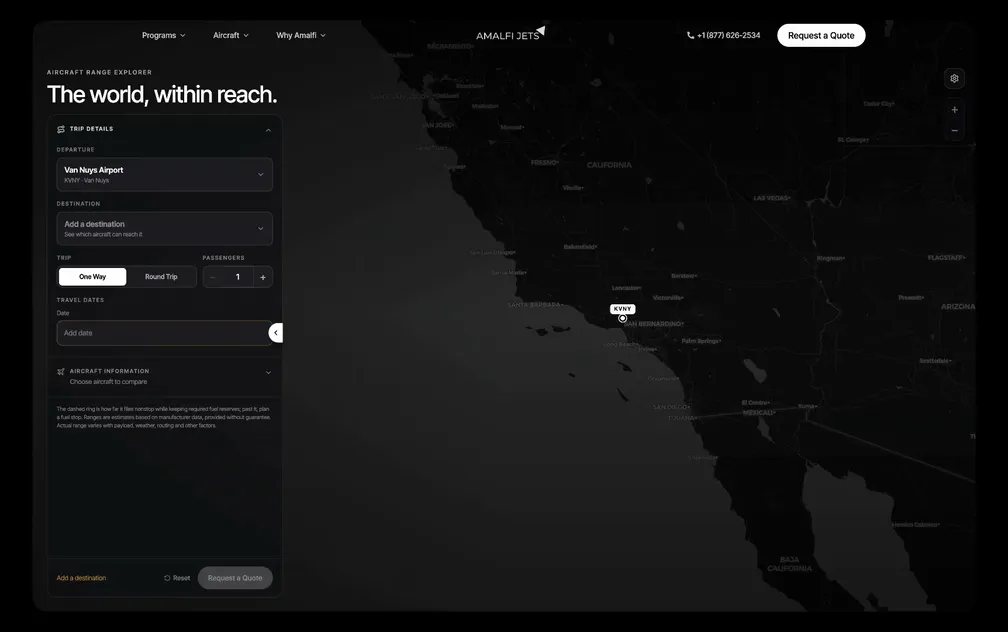
Try Range Explorer
See how far you can fly nonstop
Explore aircraft range, compare options, check flight times, and better understand which aircraft fits your trip.

Ready to fly to Ft. Worth?
Request a charter and our team will tailor an itinerary for your next journey.
*Takes only about 40 seconds to request your quote.
