



Destination Hub
Private Jet Charter to Dublin
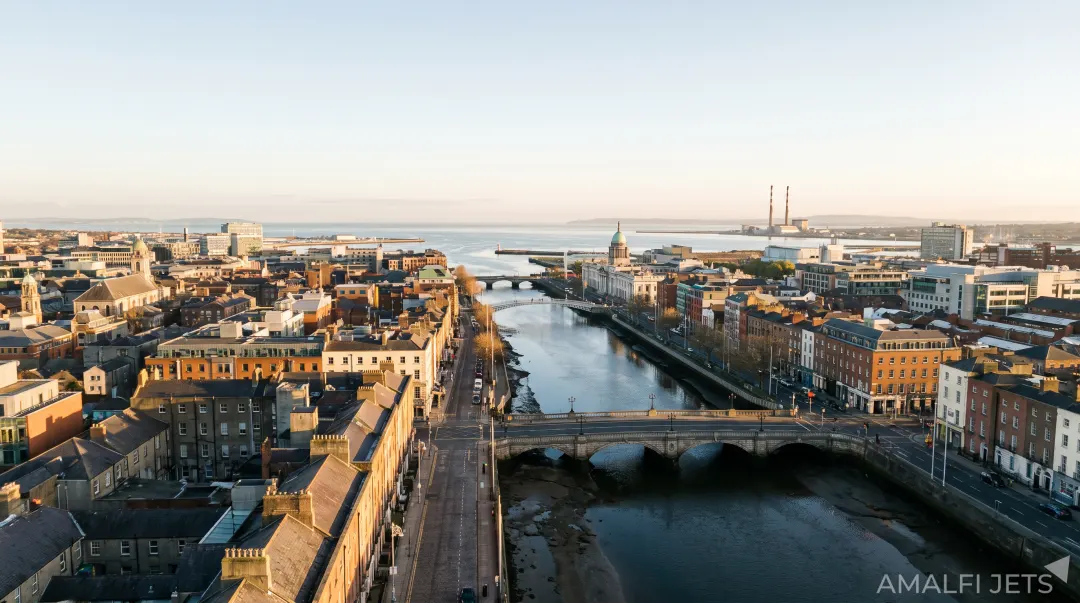
Arriving by private aircraft through Dublin Airport keeps the start of the trip focused, private, and on your schedule. Your crew, ground team, and onward arrangements are aligned before landing, so the day moves cleanly from ramp to hotel, meeting, estate, or links course.
Quick facts
Why charter a private jet to Dublin?
Private travel into Dublin is valuable because it turns the arrival day into a controlled part of the itinerary rather than a connection to endure.
Most private flights are planned through Dublin Airport, giving the charter team a clear primary gateway for passengers, luggage, ground transportation, and schedule coordination. Once DUB is selected, the flight plan can be organized around the traveler’s calendar, not around airline frequencies or missed connections.
For a private jet charter Dublin itinerary, the real advantage is control over the day rather than a louder arrival. Departure time, passenger list, catering preferences, luggage needs, and onward transfers can be coordinated as one movement, which is especially useful for executive trips, family travel, golf groups, and multi-stop Ireland itineraries.
Commercial travel often asks travelers to build the day around the airport. Charter reverses that order: the aircraft is scheduled around the commitment, and the arrival can be timed to preserve a dinner reservation, board meeting, match time, or countryside transfer.
Why private travelers choose charter
- Schedule authority: Depart when the itinerary requires, subject to aircraft availability, airport permissions, crew duty limits, and weather.
- Simpler arrivals: Coordinate passengers, baggage, and ground transport through one plan instead of multiple airline segments.
- Regional flexibility: Use DUB for the capital, or review EIWT, SNN, ORK, and BHD when the trip extends beyond the city.
- Discretion: Keep the movement quiet, organized, and focused on the purpose of the journey.
- Time preservation: Reduce the friction of connections, fixed airline timetables, and public terminal routines where private handling is available.
“For peak summer weeks, our charter desk secures the preferred departure window and handling plan first, then compares aircraft options. Firm dates booked early usually widen cabin choice.”

When is the best time to fly to Dublin?
June, July, and August are the busiest months around the Dublin Horse Show and the city’s summer tourism, concerts, festivals, and golf trips.
Peak summer suits travelers who want long evenings, a full cultural calendar, and easy pairing with coastal drives, country houses, or links golf. Aircraft choice can narrow as firm dates approach, so the best strategy is to secure the preferred travel window early and let the charter desk monitor aircraft options.
January, February, and November are useful value periods for private flyers who care more about access and availability than high-season atmosphere. Colder, wetter weather reduces leisure demand, and that can create better aircraft availability for travelers with flexible schedules.
Spring and fall sit between those poles: less compressed than the heart of summer, but still attractive for business travel, university visits, hospitality weekends, and Ireland-wide itineraries. For any fixed event date, treat the flight like the hotel suite or dinner reservation: confirm early, then refine the details as the trip takes shape.
Where our clients stay and go
For private travelers, Dublin is a compact, cultured capital where waterfront light, Georgian streets, and a lively social calendar sit close together.
The city is shaped by the River Liffey, with quays, bridges, and changing skies giving each crossing a different mood. Toward the bay, the air feels open and maritime; inland, the tone shifts to brick terraces, leafy squares, hotel lobbies, club rooms, and restaurants that reward an unhurried evening.
This is a place where history remains close to daily life. Trinity College, Georgian doorways, the libraries and museums, traditional pubs, and the Docklands all belong to the same urban rhythm, so a visitor can move from formal appointments to a private dinner without the city ever feeling unwieldy.
Luxury here is often quiet rather than theatrical. A good itinerary might pair a suite near a Georgian square with a gallery visit, a tailored whiskey tasting, a coastal drive, or a transfer west for golf and country-house time.
Dublin also works as a beginning or ending point for a wider Ireland journey. The capital can hold the first night, the final dinner, or the business portion of a trip before the schedule turns toward the west, the south, or Northern Ireland.
What determines the cost of a flight to Dublin?
The cost of chartering into Dublin is determined by the aircraft, routing, airport handling, season, and live aircraft availability.
No single factor sets the quote on its own. A charter price is built from the aircraft selected, the requested schedule, where the aircraft begins and ends, how long it waits, and what airport services are required for the movement.
Aircraft category and cabin requirements
Aircraft class affects the overall cost because cabin size, range profile, luggage capacity, crew requirements, and operating economics vary by aircraft. A short executive hop with a small group may call for a different cabin than a family trip with golf equipment, a larger delegation, or a long international sector.
The right aircraft is not simply the largest available option. The charter team weighs passenger count, luggage, onboard comfort, routing, runway and airport suitability, and schedule priorities before presenting appropriate choices.
One-way versus round trip structure
A one-way itinerary can price differently from a round trip because the aircraft may need to reposition before pickup or after drop-off. If the same aircraft and crew remain with the passengers, waiting time, crew logistics, parking, and the return sector all become part of the planning picture.
Round trips may be more efficient when the schedule is firm and the aircraft can remain sensibly positioned. Open-ended stays can require a different approach, particularly if keeping the aircraft nearby would be less efficient than sourcing another option for the return.
DUB positioning and airport-related fees
Airport-specific handling, landing, parking, security, and local operating requirements can influence the final quote. DUB is the primary airport in the plan, so the charter desk reviews slot or permission requirements, handling arrangements, and ground timing before confirming the proposed itinerary.
Positioning also matters. If the best aircraft is not already nearby, the cost may reflect the movement required to bring it into place or send it on to its next assignment after the flight.
Seasonal demand
June, July, and August typically place more pressure on aircraft availability because summer tourism, concerts, festivals, golf travel, and the Horse Show draw more visitors. During these periods, preferred departure times and preferred cabin categories can tighten sooner.
January, February, and November often bring fewer leisure movements and better availability, especially for travelers with flexible dates. Weather and daylight still deserve thoughtful planning, but the aircraft market is often less compressed than in peak summer.
Empty-leg availability
Empty legs can reduce the cost of a suitable charter when an aircraft is already scheduled to reposition in the right direction. Their value depends on timing, routing, passenger needs, and flexibility.
Because empty legs are tied to another aircraft movement, they are less predictable than a dedicated charter. They work best for travelers who can adjust departure windows and accept that the opportunity may change if the underlying aircraft schedule changes.
Which airports serve Dublin?
Dublin is served by DUB as the primary gateway, with EIWT, SNN, ORK, and BHD available as alternates when the wider itinerary points elsewhere.
Dublin Airport (DUB)
DUB is the natural first choice when the capital is the focus of the trip. It keeps the air plan centered on the city, simplifies coordination for hotels and meetings, and gives the charter desk one primary arrival point for passengers, baggage, handling, and onward ground transportation.
This option is especially sensible for travelers staying in the city center, attending meetings, joining a hosted weekend, or beginning an Ireland itinerary with a night in the capital. When demand is high, the desk confirms handling, timing, and any required permissions before the schedule is treated as firm.
Weston Airport (EIWT)
EIWT can be reviewed when the surface itinerary favors an alternate field rather than the main airport. For some private travelers, that may mean a more convenient plan for a specific residence, estate, countryside transfer, or western-side routing, subject to suitability for the aircraft and trip.
The value of this airport is not assumed; it is tested. The charter team checks aircraft compatibility, operating permissions, handling arrangements, and passenger logistics before recommending it over DUB.
Shannon Airport (SNN)
SNN makes sense when the itinerary reaches toward the west of Ireland rather than remaining centered on the capital. A traveler combining city time with golf, coastline, country houses, or business in the west may find that using SNN for one direction of the journey creates a cleaner ground plan.
It can also be considered as part of an open-jaw itinerary, arriving through one airport and departing through another. That structure is often useful when the trip is designed around Ireland as a whole, not a single hotel base.
Cork International Airport (ORK)
ORK is the logical alternate to review when the journey points south. It may suit travelers whose principal engagements, family plans, hospitality weekends, or leisure time are closer to Cork and the surrounding region than to the capital.
Rather than forcing every movement through DUB, the charter desk can compare ORK against the full itinerary. The better airport is the one that reduces unnecessary surface travel while still meeting aircraft, handling, and schedule requirements.
George Best Belfast City Airport (BHD)
BHD is most relevant when the trip includes Belfast, Northern Ireland, or a northbound itinerary after time in the capital. For travelers with meetings, private events, golf, or family plans in that direction, it can be evaluated as a practical alternate or second airport in a multi-city plan.
This airport can also support a split itinerary in which passengers arrive through DUB and depart from BHD, or the reverse, if the ground route makes that more efficient. As with any alternate, the recommendation depends on live aircraft suitability, permissions, handling, and passenger convenience.
Common questions about Dublin charter
Which airport should I use for a private flight to the city?
Dublin is usually planned through DUB, the primary gateway for the capital, while EIWT, SNN, ORK, and BHD can be reviewed if the ground itinerary points elsewhere.
Can I use an alternate airport instead of DUB?
Dublin trips can sometimes be structured around EIWT, SNN, ORK, or BHD when an alternate better supports the passenger’s final destination, schedule, or wider Ireland routing.
What determines the cost of my charter?
Dublin charter pricing depends on aircraft category, routing, one-way or round-trip structure, positioning, airport handling and local fees, seasonal demand, and any suitable empty-leg availability.
When should I book for summer travel?
Dublin demand is strongest in June, July, and August, so travelers with fixed dates should book early to preserve aircraft choice and preferred departure times.
Is winter a good time to charter privately?
Dublin can be attractive in January, February, and November for travelers who prioritize aircraft availability and schedule flexibility over peak-season atmosphere.

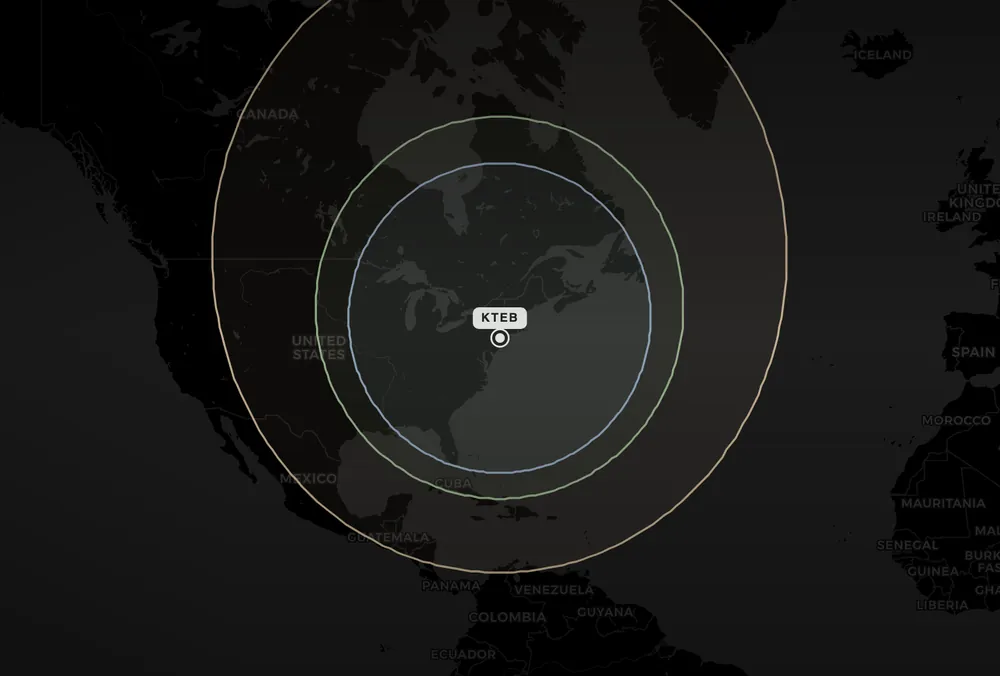
Try Range Explorer
See how far you can fly nonstop
Explore aircraft range, compare options, check flight times, and better understand which aircraft fits your trip.

Ready to fly to Dublin?
Request a charter and our team will tailor an itinerary for your next journey.
*Takes only about 40 seconds to request your quote.
