



Destination Hub
Private Jet Charter to Colorado Springs
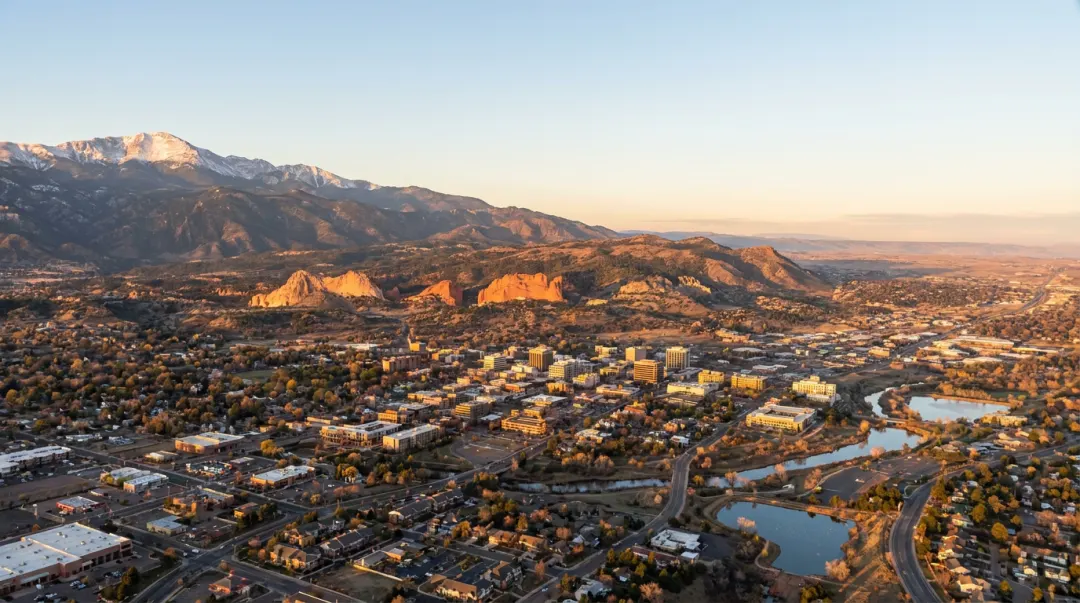
Most private flights into Colorado Springs arrive through Colorado Springs Airport, giving the day a single, straightforward aviation plan. From COS, the Front Range, Pikes Peak, Garden of the Gods, and the city’s resort and business districts feel close to the rhythm of your own schedule rather than an airline timetable.
Quick facts
Why charter a private jet to Colorado Springs?
Private aviation makes Colorado Springs easier to reach on your own terms, with COS serving as the natural arrival point for most itineraries.
Why fly privately
A charter flight replaces fixed airline schedules with a departure built around your calendar. That matters for travelers coming in for Pikes Peak weekends, resort stays, military or defense-related meetings, family retreats, and mountain itineraries that do not fit neatly into a commercial connection.
Arriving at Colorado Springs Airport keeps the plan direct and legible: one primary gateway, one coordinated handling plan, and a ground transfer arranged around the aircraft’s arrival rather than a baggage carousel. After the first touchpoint, COS is simply the reference point your advisor uses to align aircraft availability, passenger details, catering, and onward transportation.
Time saved without theatrics
The value is not only the flight itself. It is the ability to leave closer to when your meeting ends, avoid unnecessary connections, and keep the return flexible if dinner runs late or weather changes the mountain schedule.
For principals, families, and executive teams, the privacy of the charter environment also matters. Conversations continue in the cabin, luggage moves with the group, and the itinerary can be adjusted through a single charter desk rather than rebuilt through a commercial airline system.
“For peak summer weeks, we secure the arrival airport and preferred departure window first, then match aircraft options to passenger count and baggage. Firm dates early usually widen the cabin choices.”

When is the best time to fly to Colorado Springs?
June through September is the strongest season for private travel into Colorado Springs, driven by summer mountain itineraries, outdoor tourism, the Hill Climb, and Labor Day Lift Off.
Peak months
Summer brings the city into its most kinetic stretch. Pikes Peak draws drivers, hikers, cyclists, and spectators; Garden of the Gods fills earlier in the day; and resort weekends tend to compress aircraft demand around favored arrival and departure windows.
June, July, August, and September are the months to plan ahead if the trip depends on a specific aircraft, cabin size, or arrival time. Firm dates are especially useful when the itinerary includes family groups, event hospitality, or coordinated ground transportation into the foothills.
Value months
January, February, and November can be quieter from a charter-planning perspective. The post-holiday winter period and late-fall lulls often bring softer demand and better aircraft availability, which can give travelers more choice when the schedule is flexible.
That does not make last-minute planning effortless. Mountain weather, crew duty timing, and aircraft positioning still shape the flight plan, but value-season travelers often have more room to refine the details before committing.
Where our clients stay and go
Colorado Springs is a Front Range city defined by mountain light, red sandstone, and the immediate presence of Pikes Peak.
The feel of the place
The city has a different cadence from Denver: more sky, more exposed rock, and a closer relationship with the mountains to the west. Morning light can turn Garden of the Gods a deep rust color, while late afternoon often draws a clean line between the plains and the Front Range.
Pikes Peak is not a backdrop so much as a compass point. It shapes how travelers organize the day, from summit drives and trail plans to dinners that begin after the sun drops behind the ridge.
Why private travelers come
Colorado Springs appeals to travelers who want altitude and access without giving up polish. The Broadmoor has long anchored the city’s luxury-hospitality identity, while Manitou Springs, Old Colorado City, and downtown add layers of galleries, cafés, historic storefronts, and a more relaxed local texture.
The city is also known for its Olympic and Paralympic identity, military presence, and outdoor culture. That mix draws executive teams, families, athletes, alumni groups, and weekend travelers who may arrive for one reason and extend the itinerary once they see how much sits within a compact regional plan.
How to shape the stay
A strong itinerary usually respects the terrain. Build mountain activities early, leave room for weather shifts, and avoid overloading the first day if guests are arriving from sea level.
Even a short visit can feel substantial here: red rock walks before breakfast, a Pikes Peak drive, a long lunch, and an evening that stays casual without feeling underdone. The best trips do not try to make the city behave like a resort enclave; they use its open space, western edge, and clean horizon as part of the experience.
What determines the cost of a flight to Colorado Springs?
The cost of chartering into Colorado Springs is shaped by aircraft selection, routing, seasonality, airport planning, and same-day market availability.
Aircraft and itinerary structure
Aircraft class is one of the primary variables. Cabin size, range needs, baggage volume, passenger count, onboard service expectations, and crew planning all influence which aircraft are appropriate for a given trip.
Routing also matters. A one-way itinerary may require the aircraft to reposition before or after your flight, while a round trip can sometimes create a more efficient aircraft schedule if the timing works. The most favorable plan is often the one that balances comfort with practical aircraft availability rather than selecting a cabin category in isolation.
COS planning and local operating variables
For arrivals at COS, the quote reflects the full operating picture: aircraft positioning, crew timing, airport-related charges, handling arrangements, ground time, and any special requests tied to the passenger experience. Catering, pets, skis, golf clubs, oversize luggage, or additional ground coordination can change the final charter plan.
Seasonal demand and empty legs
Summer demand is firmer, especially around Pikes Peak trips, outdoor travel, the Hill Climb, and Labor Day Lift Off. During those periods, early firm dates usually widen aircraft choice and reduce last-minute compromises.
Empty-leg availability can create attractive opportunities, but it is never something to build an immovable trip around. These flights depend on another aircraft’s existing schedule, so they work best for travelers with flexible timing, route alignment, and a willingness to move if the aircraft plan changes.
Which airports serve Colorado Springs?
Colorado Springs is primarily served by Colorado Springs Airport (COS), with Meadow Lake Airport (FLY), Pueblo Memorial Airport (PUB), Centennial Airport (APA), and Rocky Mountain Metropolitan Airport (BJC) available as alternates when the wider ground itinerary supports them.
COS for the most direct city arrival
For most private travelers, COS is the cleanest plan because it is the primary airport for the city. It keeps the flight, handling, and ground-transfer plan centered on the destination rather than adding unnecessary regional complexity.
Choose COS when the schedule is built around downtown meetings, resort stays, Pikes Peak plans, Garden of the Gods, or a simple arrival-and-departure rhythm. It is also the first airport your advisor will typically evaluate before considering alternates.
FLY for a more localized general-aviation option
Meadow Lake Airport can make sense when the final destination sits better with that side of the regional map or when a smaller-field general-aviation environment is useful for the trip plan. It is not a substitute to assume automatically; it is an alternate to review against aircraft, passenger needs, handling preferences, and the final ground address.
For certain itineraries, FLY may reduce the amount of time spent crossing the city after landing. The charter desk will weigh that convenience against aircraft suitability, service requirements, and current availability.
PUB for southern Front Range itineraries
Pueblo Memorial Airport is the logical alternate when the trip extends south of the city or when Pueblo is part of the same ground program. It can be useful for travelers who are not ending the day in the central resort or business districts and would rather align the aircraft with the next stop.
A PUB plan should be chosen because the ground itinerary supports it, not because it appears on an airport list. Your advisor will compare the arrival point with drive patterns, aircraft logistics, and the timing of the return leg.
APA for Denver-side planning
Centennial Airport is best considered when the trip combines the Pikes Peak region with the southern Denver metro area. It may be practical for travelers whose meetings, residences, or onward plans pull the schedule north before or after time in Colorado Springs.
APA can also be a useful alternate when aircraft availability, positioning, or passenger pickup makes the Denver side of the Front Range more efficient. The tradeoff is ground time, so the decision should be made with the full day’s itinerary in view.
BJC for northwest metro connections
Rocky Mountain Metropolitan Airport belongs in the conversation when the broader trip includes the northwest side of the Denver area or a Front Range routing that does not center on COS. For some travelers, it can serve as a strategic start or finish point rather than the main gateway.
BJC is most valuable when it prevents backtracking. If the aircraft schedule, passenger location, and ground plan all point northwest, your advisor may evaluate it alongside the other alternates before confirming the final airport.
Common questions about Colorado Springs charter
What airport should I use when flying privately into Colorado Springs?
Colorado Springs is usually planned through COS because it is the primary airport for the city, with alternates considered when your ground itinerary points south, north, or toward the Denver side of the Front Range.
What determines the cost of a charter flight into Colorado Springs?
Colorado Springs charter pricing depends on aircraft class, routing, one-way versus round-trip structure, aircraft positioning, airport-related planning, seasonal demand, and whether a suitable empty leg is available.
When should I book a summer charter to Colorado Springs?
Colorado Springs demand is strongest from June through September, especially around Pikes Peak travel, outdoor tourism, the Hill Climb, and Labor Day Lift Off, so firm dates should be secured early.
Can I use an alternate airport instead of COS?
Colorado Springs itineraries can sometimes use FLY, PUB, APA, or BJC when the final address, aircraft availability, or broader Front Range schedule makes an alternate more practical.
Are empty legs available for flights to or from Colorado Springs?
Colorado Springs empty legs may appear when another aircraft is already repositioning through the region, but they work best for flexible travelers because timing and routing depend on the aircraft’s existing schedule.
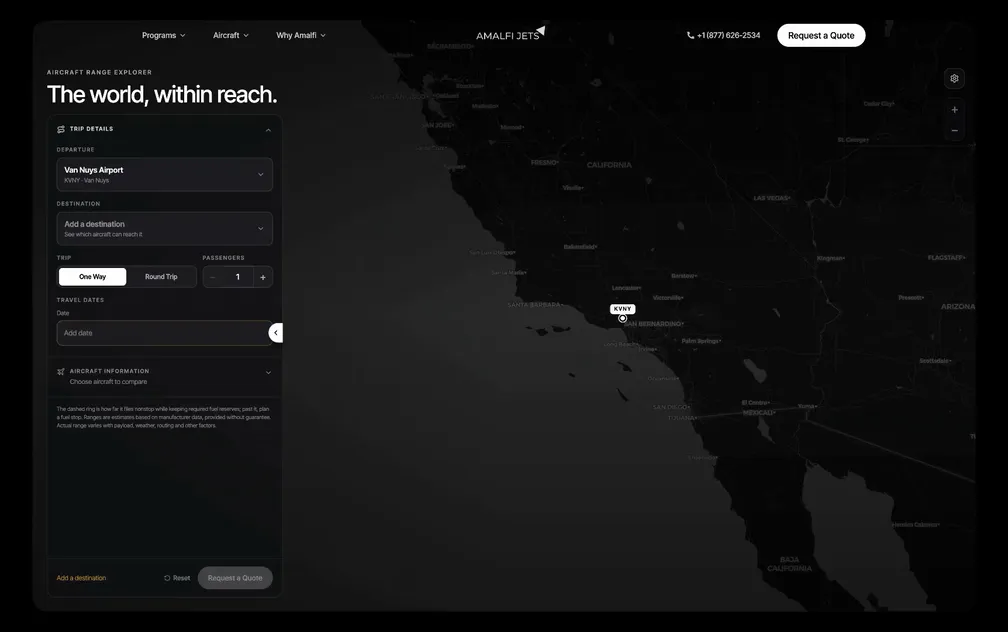
Try Range Explorer
See how far you can fly nonstop
Explore aircraft range, compare options, check flight times, and better understand which aircraft fits your trip.

Ready to fly to Colorado Springs?
Request a charter and our team will tailor an itinerary for your next journey.
*Takes only about 40 seconds to request your quote.
