



Destination Hub
Private Jet Charter to Centennial
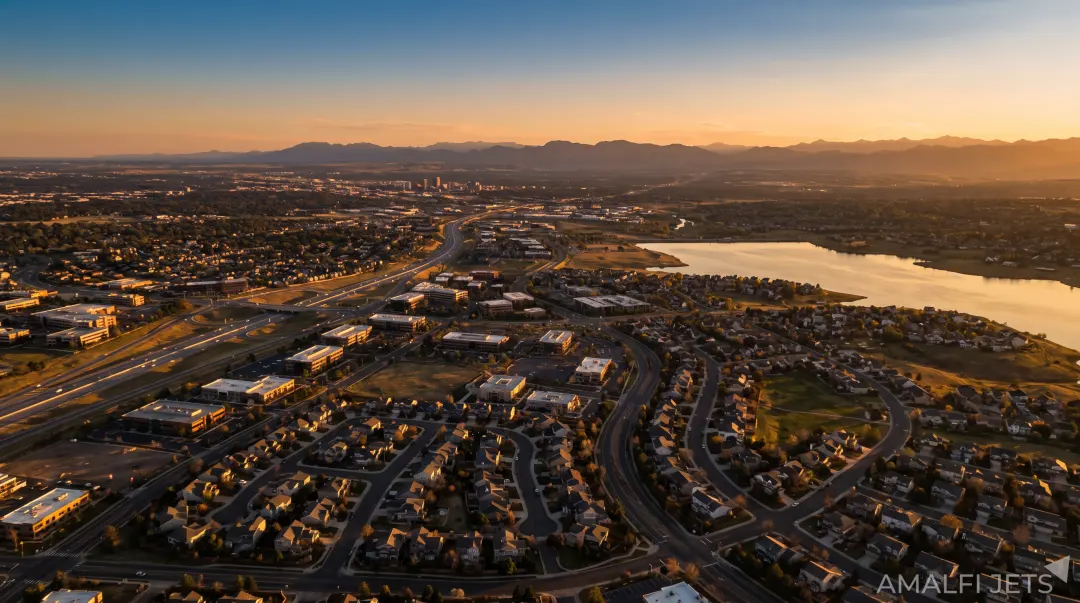
Most private flights into Centennial arrive through Centennial Airport — one primary gateway, one coordinated arrival plan, no airline connection to protect. The appeal is simple: step from aircraft to ground transport on your own schedule, with the day organized around meetings, mountain plans, or a quiet return home.
Quick facts
Why charter a private jet to Centennial ?
Chartering privately into Centennial gives travelers direct control over a Denver-area arrival without building the day around airline schedules.
APA is the natural focal point for most arrivals because it is the primary airport for the city, allowing the itinerary to be planned around one preferred handling point instead of a commercial terminal connection.
Why private travelers choose this arrival
- Schedule control: Depart when the principal, family, or team is ready, then adjust the return if meetings run long or weather changes the mountain plan.
- Efficient ground movement: Arrivals can be coordinated around the south metro area, Denver Tech Center engagements, Cherry Creek plans, or onward travel toward the Rockies.
- Privacy and continuity: The aircraft, crew, ground transport, and luggage plan are aligned before departure, reducing the number of public touchpoints in the journey.
- Regional flexibility: When the primary plan benefits from an alternate airport, the charter desk can compare APA with BJC, DEN, KCFO, or COS based on where the traveler actually needs to be.
Set just south of Denver in Arapahoe County, the city sits within the southern Denver metropolitan area, making it a practical base for business in the Tech Center corridor and leisure itineraries that continue toward the Front Range. (centennialco.gov)
“For peak ski and summer weeks, we secure the preferred airport plan first, then compare aircraft that fit the schedule and luggage profile. Firm dates usually widen aircraft choice when confirmed early.”

When is the best time to fly to Centennial ?
The best time to visit Centennial depends on whether the trip is tied to Colorado’s ski season, summer Rockies travel, or a quieter shoulder-season schedule.
December, January, February, and March are peak months because many travelers use the Denver area as a launching point for ski access. June, July, and August also draw strong demand as warm-weather itineraries expand into the mountains, outdoor dining, Red Rocks evenings, and broader Denver-area events.
Planning around demand
April, May, October, and November often create better charter conditions because they fall between the heaviest ski, summer, and holiday travel periods. Those shoulder-season windows can improve aircraft availability for travelers with flexible dates, especially when departure time and airport preference are not rigid.
Firm peak-period plans should be secured early, particularly for weekend departures, school-break travel, and itineraries that need specific cabin configurations. More flexible travelers can ask the charter desk to compare nearby airports and adjacent travel days before locking the aircraft.
Where our clients stay and go
Centennial is a polished south-metro base with open Colorado light, Front Range views, and fast access to both Denver business and mountain-bound leisure.
The city’s setting is part of its appeal: suburban in pace, metropolitan in reach, and close enough to the Rockies for the horizon to stay present throughout the day. Office parks, residential neighborhoods, trail corridors, and broad arterial roads give the area a practical rhythm that suits travelers who want Denver access without making downtown the center of the trip.
A south Denver stay with room to move
Morning light often arrives clean and high here, catching the plains before the mountains define the western edge of the view. Cherry Creek’s open-space network and nearby parkland add texture to the itinerary, with trails, water, and riparian corridors softening the businesslike geometry of the south metro area. The city identifies regional parks including Cherry Creek State Park and Cherry Creek Valley Ecological Park, while its Parker Jordan open space helps complete a key link in the Cherry Creek Regional Trail. (centennialco.gov)
Private travelers are usually drawn by ease rather than spectacle: a board meeting near the Denver Tech Center, a family base before heading west, a Red Rocks evening paired with a discreet arrival, or a summer trip that uses the metro area as a polished staging point. After landing, the day can unfold in several directions — south toward residential enclaves and golf clubs, north toward Denver dining and arts, or west toward the mountains when the itinerary calls for altitude.
Because the city sits in Arapahoe County just south of Denver, it works especially well for travelers whose commitments are spread across the southern metro corridor rather than concentrated downtown. (centennialco.gov)
What determines the cost of a flight to Centennial ?
The cost of chartering into Centennial is shaped by aircraft selection, trip structure, airport logistics, seasonal demand, and aircraft availability.
A short regional itinerary, a same-day return, a multi-day stay, and a complex family trip can all require different planning even when the destination is the same.
What influences the quote
- Aircraft class: Cabin size, range needs, luggage volume, passenger count, and preferred onboard experience all affect which aircraft are appropriate for a request.
- One-way vs round trip: A round trip may keep the aircraft and crew attached to the itinerary, while a one-way can introduce repositioning considerations before or after the flight.
- APA positioning and fees: The final quote reflects how the aircraft reaches the airport, where it is based, ground handling, parking, crew logistics, and any airport-related charges that apply to the trip.
- Seasonal demand: Ski months, summer Rockies travel, Red Rocks plans, and major Denver-area calendars can tighten availability and influence which aircraft are offered first.
- Empty-leg availability: Empty legs can sometimes reduce positioning inefficiency, but they are schedule-dependent and usually less flexible than a dedicated charter.
For a clean comparison, Amalfi Jets typically reviews the preferred departure time, passenger count, luggage profile, ground schedule, and alternate-airport tolerance before presenting aircraft options.
Which airports serve Centennial ?
Centennial is served primarily by Centennial Airport (APA), with BJC, DEN, KCFO, and COS available as alternates when the ground schedule points elsewhere.
APA: the primary choice
APA is the first airport the charter desk evaluates for most trips because it is the stated primary airport for the city. For private travelers, that usually means the simplest plan: arrive closest to the intended south-metro base, coordinate ground transport directly from the preferred handling point, and avoid routing the day through a large airline terminal.
The FAA describes APA as handling a traffic mix that includes business jets, helicopters, and general aviation, and the airport itself identifies as a major general-aviation field serving the Denver region. That makes it a logical planning anchor for private arrivals, while still requiring the flight crew and charter desk to review current airport materials before operation. (faa.gov)
BJC: useful for the northwest side of the metro area
Rocky Mountain Metropolitan Airport can make sense when the traveler’s destination is closer to the northwest Denver corridor, Boulder-area plans, or a schedule that would be inefficient through the south metro. Jefferson County identifies RMMA as a public-use general aviation reliever airport, so it is a meaningful alternate when geography favors that side of the region. (jeffco.us)
DEN: the commercial hub option
Denver International Airport is best considered when the itinerary needs the resources of the region’s largest commercial gateway or when a traveler is connecting with airline passengers, international airline schedules, or commercial-airport logistics. DEN describes itself as one of the world’s busiest airports, so private travelers choose it deliberately rather than by default when the broader travel plan benefits from that scale. (flydenver.com)
KCFO: an eastern-field alternative
Colorado Air and Space Port may be useful when the day pulls east of Denver or when APA is not the best operational fit for a specific aircraft and schedule. Adams County describes the airport as a public-use general aviation airport and FAA-licensed commercial spaceport, giving it a distinct role from the more central private-airport plan. (adamscountyco.gov)
COS: practical for Colorado Springs and the southern Front Range
Colorado Springs Airport is an alternate when the trip is oriented toward Colorado Springs, the southern Front Range, or a multi-stop Colorado itinerary. The FAA identifies COS as a public civil-military airport southeast of downtown Colorado Springs and notes general aviation activity there, making it worth comparing when the ground destination sits well south of Denver. (faa.gov)
Common questions about Centennial charter
Which airport should I use when flying privately into the area?
Centennial is primarily served by APA, which is typically the first airport evaluated for a private arrival; BJC, DEN, KCFO, and COS may be considered when the ground destination or schedule points elsewhere.
What determines the cost of chartering into Centennial?
Centennial charter pricing depends on aircraft class, passenger and luggage needs, one-way or round-trip structure, aircraft positioning, APA-related fees, seasonal demand, and any empty-leg availability.
When should I book peak travel?
Centennial demand is strongest in the winter ski months and summer travel season, so firm weekend, holiday, and school-break dates should be arranged as early as possible.
Can I use another Denver-area airport instead of APA?
Centennial trips can be planned through alternate airports such as BJC, DEN, KCFO, or COS when those fields better match the traveler’s ground location, connections, or operating plan.
Is the destination better for business or leisure travel?
Centennial works for both: it places travelers near the south Denver business corridor while also serving as a polished base for Rockies access, Red Rocks plans, and regional leisure itineraries.
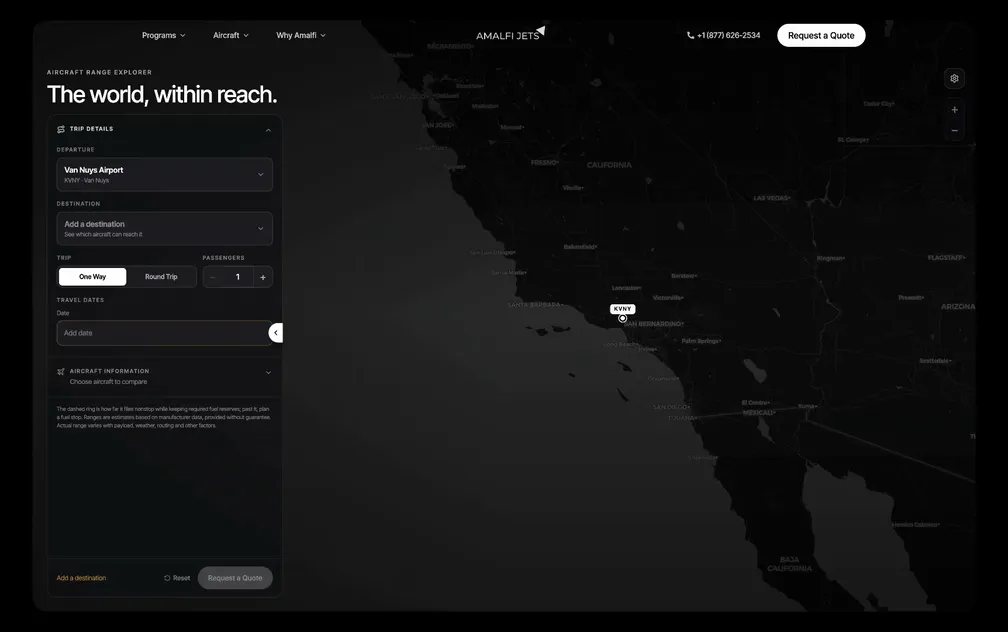
Try Range Explorer
See how far you can fly nonstop
Explore aircraft range, compare options, check flight times, and better understand which aircraft fits your trip.

Ready to fly to Centennial ?
Request a charter and our team will tailor an itinerary for your next journey.
*Takes only about 40 seconds to request your quote.
