



Destination Hub
Private Jet Charter to Buffalo

Arriving by private aircraft places Buffalo within an easy, direct charter day through Buffalo Niagara International Airport. With BUF as the primary gateway, the itinerary can move from touchdown to a waiting ground plan without the compromises of airline schedules.
Quick facts
Why charter a private jet to Buffalo?
Private travel into Buffalo is about protecting the day: land at BUF, step into a prearranged ground plan, and keep the schedule away from airline connections.
A cleaner arrival
For executives, families, owners, and teams moving on firm calendars, private aviation turns the trip into a coordinated sequence rather than a chain of public-flight variables. Departure time, passenger list, baggage needs, catering preferences, and ground transport can be organized around the traveler, not around a published timetable.
Flexibility once the itinerary changes
A Western New York trip often has more than one purpose: a meeting, a game weekend, a family stay, a visit to Niagara Falls, or a waterfront dinner downtown. Flying privately allows the schedule to be revised with more precision when a meeting runs long, a guest list changes, or a same-day return becomes preferable.
Time saved where it matters
The value is not only in the flight itself. It is in avoiding connections, reducing time spent moving through commercial terminals, and having the aircraft and crew aligned with the day’s actual plan. For travelers who measure time in commitments rather than hours, that difference is the reason to charter.
“For firm July–September dates, our charter desk secures aircraft availability and BUF handling in tandem before presenting options; early confirmation widens aircraft choice, especially around Niagara Falls tourism and the Bills season kickoff.”

When is the best time to fly to Buffalo?
The best time to visit Buffalo depends on whether the trip is built around summer water, Niagara Falls, football weekends, or a quieter shoulder-season schedule.
July, August, and September are the peak planning months. Niagara Falls tourism is active, the waterfront has its strongest seasonal pull, and the Bills season kickoff adds pressure to preferred arrival and departure windows. Travelers with firm dates during this period should confirm aircraft and ground plans early.
February, March, and April can offer a calmer rhythm. The weather is colder, fewer marquee events compete for attention, and summer travel has not yet returned in force. For flexible travelers, those months can make it easier to compare aircraft choices and refine timing without the same peak-season pressure.
Spring and fall itineraries work especially well for travelers who want the city without the busiest leisure-travel patterns. When the date matters more than the season, the best strategy is simple: secure the aircraft first, then let the ground plan follow.
Where our clients stay and go
Buffalo gives private travelers a city of water, industry, architecture, and sport, set where Lake Erie meets the Niagara River.
The arrival has a distinct Western New York feeling: low lake light, broad skies, brick warehouses, grain elevators, and a downtown edge that turns toward the waterfront. Canalside and the Outer Harbor have made the water part of the city’s daily life again, with paths, marinas, open space, and a sense of movement along the shore.
There is polish here, but it is not theatrical. The city’s character comes from restored buildings, neighborhood restaurants, old civic confidence, and the kind of hospitality that feels more direct than performative. For travelers used to larger financial or coastal centers, that grounded quality is part of the appeal.
A private itinerary might be anchored by a corporate visit, a family weekend, a Niagara Falls excursion, or a football trip timed to the start of the season. The point of flying privately is that those pieces can be arranged without forcing the traveler through someone else’s calendar.
In summer, the waterfront sets the tone: lake breeze, long evenings, and a downtown that feels closer to the water than many first-time visitors expect. In colder months, the mood shifts inward toward dining rooms, arenas, galleries, and meetings, giving the trip a more deliberate pace.
What determines the cost of a flight to Buffalo?
The cost of chartering into Buffalo is shaped by the aircraft selected, itinerary structure, aircraft positioning, BUF-related charges, seasonal demand, and empty-leg availability.
Aircraft selection
Aircraft category is one of the first cost drivers. Cabin size, onboard amenities, luggage requirements, passenger count, and preferred operating profile all influence which options your advisor presents. The right aircraft is not simply the largest available; it is the one that fits the mission cleanly.
One-way or round trip
A same-day return, overnight stay, or multi-day itinerary can each price differently because the aircraft and crew schedule must be built around the full trip. One-way travel may require a positioning leg, while a round trip may keep the aircraft tied to the itinerary depending on timing and availability.
Positioning and airport-related charges
If the ideal aircraft is not already positioned near the departure point, repositioning can affect the quote. Airport-related fees at BUF, handling requirements, crew logistics, and ground timing are also part of the final charter structure.
Seasonal demand
July, August, and September can bring stronger demand because of Niagara Falls tourism, summer waterfront events, and the Bills season kickoff. When more travelers are competing for preferred aircraft and peak operating windows, early planning can widen the range of suitable options.
Empty-leg availability
Empty legs can sometimes create value when an aircraft is already scheduled to move in the right direction. They are highly timing-dependent, less flexible than a standard charter, and best treated as an opportunity rather than the foundation of an important trip.
Which airports serve Buffalo?
Buffalo is served primarily by BUF, with Niagara Falls, Lancaster, Rochester, and Dunkirk-area alternates available when the wider Western New York itinerary calls for them.
Buffalo Niagara International Airport (BUF)
The primary choice for most private arrivals is Buffalo Niagara International Airport because it keeps the flight plan centered on the city and the surrounding Niagara region. For travelers whose meetings, hotels, game plans, or waterfront reservations are in the core metro area, BUF is usually the first airport an advisor will evaluate.
Niagara Falls International Airport (IAG)
IAG is the alternate to consider when the Niagara Falls side of the trip is the organizing point. It can make sense for itineraries built around the falls, cross-border-adjacent touring, or a regional schedule where approaching from that side creates a cleaner ground plan.
Buffalo-Lancaster Airport (BQR)
BQR may be useful for travelers headed toward the Lancaster side of the metro area or for trips where a smaller-field profile is worth evaluating. The charter desk would confirm aircraft suitability, handling arrangements, and ground access before recommending it over BUF.
Frederick Douglass - Greater Rochester International Airport (ROC)
ROC belongs in the conversation when the itinerary extends toward Rochester or when aircraft availability points east within the region. It is not simply a backup name on a list; for certain Western New York schedules, it can create a more logical day by aligning the aircraft with the traveler’s final destination.
Dunkirk Municipal (DKK)
DKK is best considered for Dunkirk-area plans and lake-shore movements southwest of the city. When the traveler’s real endpoint sits away from the core metro area, an alternate like this can reduce unnecessary ground movement if the aircraft, handling, and timing all support the plan.
How the airport is chosen
The best field is the one that makes the whole itinerary work: aircraft fit, confirmed handling, passenger privacy, ground routing, weather planning, and the exact address after landing. Amalfi Jets evaluates the airport decision as part of the full charter plan, not as a separate checkbox.
Routes to & from Buffalo
Common questions about Buffalo charter
Which airport should I use for a private flight into Buffalo?
Buffalo is most often planned through BUF because it is the primary airport, with alternates considered when the traveler’s ground destination or timing makes them practical.
Can I land closer to Niagara Falls instead of using BUF?
Buffalo itineraries can use IAG when the Niagara Falls side of the trip is the better ground approach and handling can be confirmed for the aircraft.
What determines the cost of chartering into the city?
Buffalo charter pricing depends on aircraft selection, one-way or round-trip structure, aircraft positioning, airport-related charges at BUF, seasonal demand, and empty-leg availability.
When should I book for peak travel dates?
Buffalo demand is strongest in July, August, and September, so firm dates around Niagara Falls tourism, summer waterfront events, and the Bills season kickoff benefit from earlier planning.
Are there practical alternates to BUF for private travelers?
Buffalo trips may also consider BQR, ROC, DKK, or IAG when an alternate better matches the traveler’s final destination, aircraft availability, or a less congested operating window.
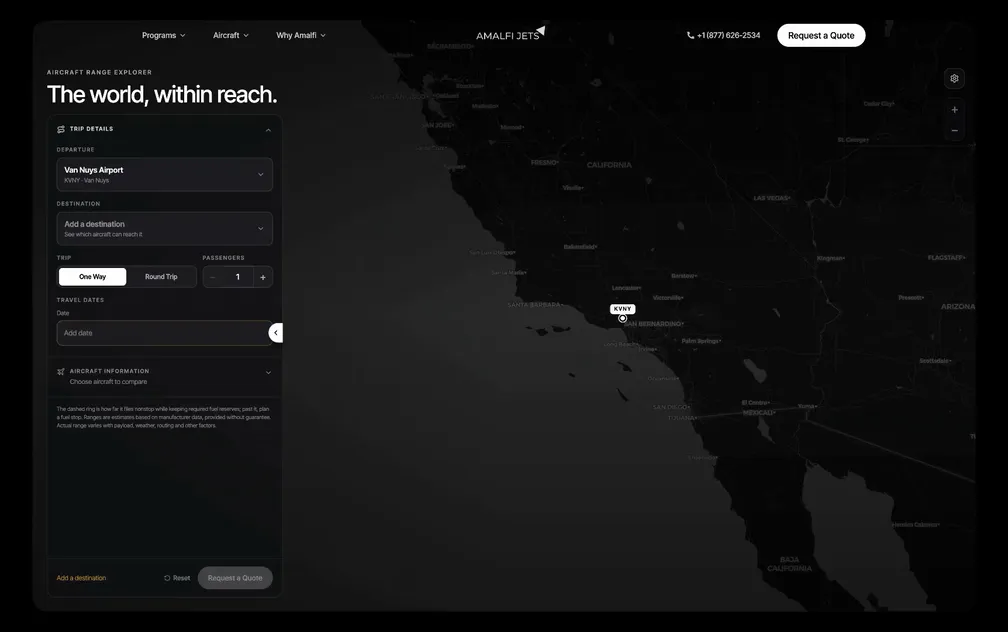
Try Range Explorer
See how far you can fly nonstop
Explore aircraft range, compare options, check flight times, and better understand which aircraft fits your trip.

Ready to fly to Buffalo?
Request a charter and our team will tailor an itinerary for your next journey.
*Takes only about 40 seconds to request your quote.
