



Destination Hub
Private Jet Charter to Augusta

Most private flights into Augusta arrive through Daniel Field, keeping the day focused, direct, and firmly on your schedule. From the ramp, the city’s golf traditions, riverfront districts, and South Carolina borderlands feel close enough for a precise arrival plan without the texture of the trip being rushed.
Quick facts
Why charter a private jet to Augusta?
Private flying into Augusta is about control: fewer schedule compromises, a dedicated arrival plan, and the ability to move around a high-demand city on your own terms.
Why private travelers choose this route
Daniel Field is the primary airport for the city, which gives many itineraries a straightforward focal point for arrival, departure, ground transport, and coordination. Instead of building a trip around published airline schedules, your flight can be organized around tee times, host commitments, estate visits, corporate meetings, or a same-day return.
For travelers coming during the golf calendar’s most watched week, that flexibility matters. Aircraft availability, preferred departure times, and local handling windows can tighten quickly, so a private plan helps preserve the parts of the trip that matter most: when you arrive, when you leave, and who travels with you.
Time saved without theatrics
The advantage is not only the flight itself. A private itinerary reduces the number of public-terminal steps, keeps your party together, and allows the charter desk to coordinate timing around the full day rather than a single airline segment.
That is especially useful for:
- Golf travel where morning and evening timing is often fixed
- Executive visits that require confidentiality and schedule discipline
- Family travel with luggage, clubs, or multiple generations moving together
- Regional stays across Georgia and nearby South Carolina, where the right airport choice can simplify the drive after landing
“We confirm DNL handling and suitable alternates before matching aircraft to the itinerary. Firm April dates should be requested early; during Masters week, earlier notice widens aircraft choice and keeps backup plans realistic.”

When is the best time to fly to Augusta?
The best time to plan private travel to Augusta depends on whether the trip is built around Masters week, a quieter golf visit, or a summer stay with more aircraft availability.
April demand
April is the peak month because the Masters Tournament concentrates global attention and charter demand into a narrow window. Preferred arrival times, departure slots, nearby lodging, and ground arrangements can all become more competitive, so firm plans are best handled early.
Summer value
June, July, and August bring heat, humidity, and a noticeably quieter charter environment after the tournament rush. For travelers who can work around warmer weather, those months may offer better aircraft availability and more flexibility in scheduling.
Planning guidance
For tournament-period travel, settle the passenger list, luggage needs, and preferred airport strategy before aircraft selection. Outside the peak window, it is still wise to confirm the itinerary once dates are firm, especially for groups carrying golf equipment or coordinating multiple arrivals.
Where our clients stay and go
Augusta gives private travelers a polished Southern arrival with river light, golf gravity, and a downtown that still moves at a human pace.
Along the Savannah River
Set on Georgia’s eastern edge beside the Savannah River, the city looks toward South Carolina while keeping its own rhythm: broad streets, old brick, leafy neighborhoods, and water close enough to shape the day. Morning can feel soft and green; late afternoon brings a low shine to the riverfront and a slower cadence after business meetings or a round of golf.
The city’s identity is inseparable from the Masters Tournament, but it is not only a week in April. Historic districts, the riverwalk, cultural venues, and the legacy of James Brown give the place more texture than its global golf reputation alone suggests.
What draws private travelers
Golf is the obvious magnet, especially for clients who want arrival and departure timing to fit a tightly held calendar. Corporate groups come for hospitality, sponsors, and relationship-driven travel; families come for spring traditions, regional visits, and long weekends that pair sport with Southern dining and quiet residential stays.
Private aviation suits this pattern because many trips are short, precise, and date-sensitive. The city rewards travelers who do not want unnecessary movement between connections, terminals, and fixed airline schedules; the best version of the trip is measured in smooth transitions rather than spectacle.
What determines the cost of a flight to Augusta?
The cost of flying privately into Augusta is shaped by the aircraft, the itinerary structure, local operating considerations at DNL, seasonal demand, and the availability of repositioning opportunities.
Aircraft selection
Aircraft class is one of the main cost drivers because each category has a different operating profile, cabin size, baggage capacity, crew requirement, and route suitability. The right choice depends on your departure city, passenger count, luggage, preferred cabin experience, and schedule expectations.
One-way versus round trip
A one-way itinerary may require the aircraft to reposition before or after your flight, while a round trip can sometimes keep the same aircraft and crew aligned with your schedule. The most efficient structure depends on how long you plan to stay, where the aircraft is based, and whether the operator can use the aircraft productively between your legs.
DNL positioning and local charges
Daniel Field is the primary airport, so planning begins there. Final pricing can reflect aircraft positioning, crew logistics, parking, handling, and airport-related charges confirmed for the specific trip. During busy periods, securing the preferred timing early can help preserve better aircraft choice.
Seasonal demand
April carries the strongest pressure because Masters Tournament week dominates private-flight demand. Travelers with firm dates should expect tighter availability and a greater need for advance planning. June, July, and August tend to bring a post-Masters lull, which can improve aircraft options and schedule flexibility.
Empty-leg availability
Empty legs can reduce the cost of a private itinerary when an aircraft already needs to move in the right direction at the right time. They are opportunistic rather than guaranteed, and they usually offer less flexibility on departure time, routing, and changes. For travelers with firm plans, they are best treated as a useful possibility, not the foundation of the trip.
Which airports serve Augusta?
Daniel Field (DNL) is the primary airport for Augusta, with AGS, AIK, and HQU serving as practical alternates when the itinerary calls for a different ground plan.
The best airport is not always chosen by code alone. A strong charter plan weighs the preferred arrival point, private handling arrangements, passenger privacy, crew logistics, ground transportation, and the exact part of the region a traveler needs to reach.
Daniel Field (DNL)
DNL is the first airport evaluated for most private arrivals because it is the designated primary gateway for the city. It keeps the plan direct and focused, especially when the passenger itinerary centers on the core business, golf, medical, university, or residential areas.
It is often the cleanest choice when discretion and simplicity matter. Your advisor can build the aircraft schedule, arrival handling, and car service around a single preferred airport before considering alternates.
Augusta Regional Airport (AGS)
AGS can make sense when a traveler wants an alternate within the same regional airport ecosystem or when the broader travel party includes airline movements. It may also be evaluated if the primary field is not ideal for the requested timing, parking, or handling plan.
For private travelers, the decision is less about the name on the terminal and more about execution. The charter desk confirms whether the airport supports the desired arrival experience before presenting it as the recommended option.
Aiken Municipal Airport (AIK)
AIK is a useful alternate when the passenger’s ground itinerary points toward Aiken or the surrounding side of the region. That can reduce unnecessary driving if the final destination, host property, or meeting location is better aligned with that area.
This airport is considered on a case-by-case basis. Suitability depends on the aircraft, operating plan, ground access, and confirmed private handling arrangements for the day of travel.
Thomson McDuffie County Airport (HQU)
HQU gives planners another regional option when the trip is oriented toward Thomson, McDuffie County, or points beyond the immediate city center. It can be especially helpful when avoiding congestion or shortening the surface transfer matters more than using the primary field.
For a high-touch charter, alternates are never selected casually. Amalfi Jets reviews the airport plan, handling expectations, timing, and onward transportation before recommending HQU as part of a polished arrival.
Routes to & from Augusta
Common questions about Augusta charter
Which airport should I use for a private flight into the city?
Augusta is primarily served by Daniel Field for private arrivals, with AGS, AIK, and HQU considered when the aircraft plan or onward ground route makes an alternate more practical.
When should I book for Masters week travel?
Augusta demand is strongest in April around the Masters Tournament, so firm dates, passenger count, and preferred arrival times should be confirmed as early as possible.
What determines the cost of chartering into the area?
Augusta charter pricing depends on aircraft class, itinerary structure, aircraft positioning, local operating charges, seasonal demand, and whether a suitable empty leg is available.
Can I use a different airport if Daniel Field is busy?
Augusta itineraries can also consider AGS, AIK, or HQU when availability, congestion, or the traveler’s final destination makes a secondary airport a better fit.
Is summer a good time to arrange a private flight?
Augusta is typically quieter for charter demand in June, July, and August after the Masters rush, though travelers should plan for hot, humid conditions.
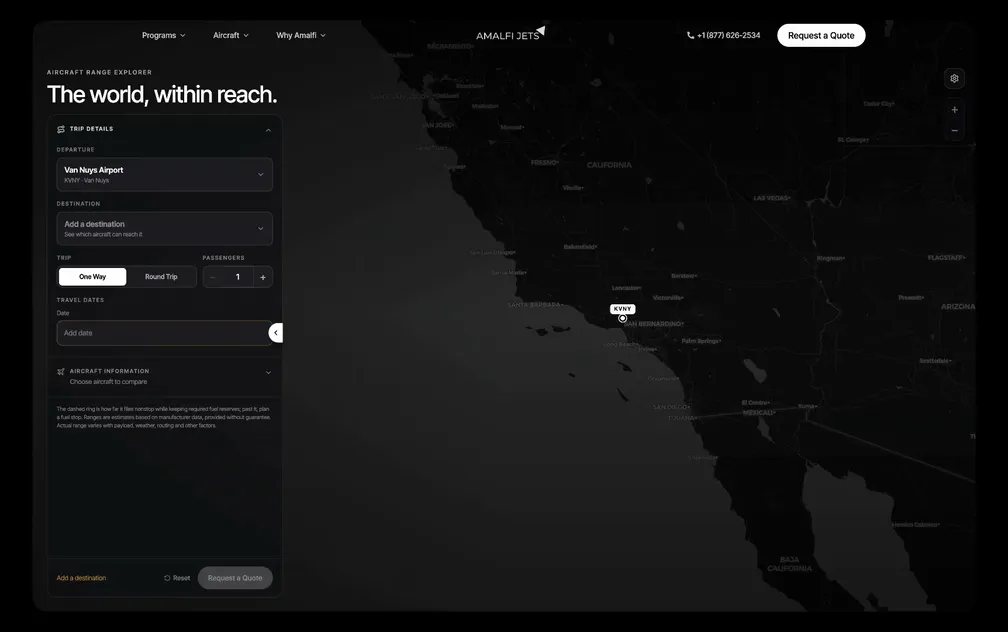
Try Range Explorer
See how far you can fly nonstop
Explore aircraft range, compare options, check flight times, and better understand which aircraft fits your trip.

Ready to fly to Augusta?
Request a charter and our team will tailor an itinerary for your next journey.
*Takes only about 40 seconds to request your quote.
