




Destination Hub
Private Jet Charter to Amsterdam
Most private flights into Amsterdam arrive through Schiphol Airport, giving travelers one primary gateway for a smooth charter day. The appeal is simple: land on your schedule, move directly into a prepared ground plan, and let the city begin at your pace.
Quick facts
Why charter a private jet to Amsterdam?
A private jet charter Amsterdam itinerary is about control: the departure time, the passenger list, the cabin environment, and the way the day unfolds after landing. Instead of building the trip around airline schedules, travelers can organize meetings, hotel arrivals, dinners, and onward travel around the aircraft.
Why private access matters
The main advantage is the ability to treat AMS as part of the itinerary rather than an interruption. A private flight can reduce the friction of commercial connections, crowded terminals, and fixed departure banks, especially when the trip includes senior executives, family members, or guests arriving from different origins.
Flexibility on the ground
For many travelers, the time saved after landing is as important as the time saved in the air. A prepared arrival plan can align the aircraft, luggage, security procedures, and chauffeured transfer so the transition from ramp to residence, hotel, office, or restaurant feels deliberate rather than improvised.
A better fit for complex schedules
Trips to the Dutch capital often combine business, culture, private dining, and onward European movement. Chartering privately allows the schedule to stay fluid when a meeting runs long, a dinner moves later, or a same-day return becomes an overnight stay.
Privacy is part of the value as well. The cabin becomes a quiet working space, a family room, or a place to reset before arrival, without the exposure and tempo of commercial travel.
“For firm April, July, or October dates, our charter desk secures handling and workable alternates before narrowing aircraft options. Early holds widen choice when AMS demand tightens.”

When is the best time to fly to Amsterdam?
The best time to visit Amsterdam depends on whether the priority is atmosphere, event energy, aircraft choice, or a quieter arrival.
April brings tulip-season travel and King’s Day demand, so firm dates benefit from early planning. July carries summer leisure momentum, with longer days and strong interest from travelers combining the city with wider European itineraries. October can be particularly active around ADE and conference traffic, when aircraft, hotels, and preferred arrival windows can tighten.
January, February, and November are the value months for travelers who prize availability over peak-season atmosphere. These colder, darker periods usually bring softer leisure demand, which can widen aircraft options and make schedule planning more flexible.
Travelers with immovable dates should secure the aircraft and airport plan first, then refine hotels, dining, and ground movements around that framework.
Where our clients stay and go
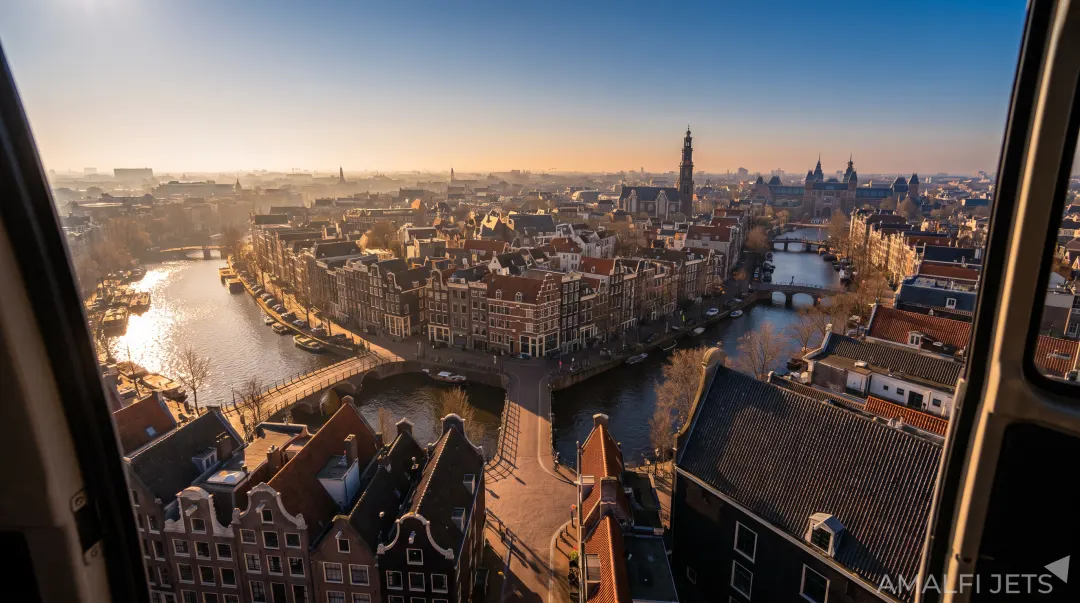
Amsterdam rewards private travelers with a cityscape shaped by water, brick, bicycles, and low northern light.
The canal ring gives the center its rhythm: curved streets, narrow houses, arched bridges, and reflections that shift from silver to amber over the course of a day. It is a compact city for its stature, but never a simple one; behind the postcard geometry are serious museums, discreet hotels, design studios, financial offices, and restaurants that reward advance planning.
From the Museum Quarter to the Jordaan, the experience is best handled at a measured pace. A morning can move from a private gallery appointment to a canal-side lunch, then into an afternoon of meetings or shopping without the feeling of crossing a vast metropolis.
At night, the city becomes more intimate. Windows glow along the water, cyclists pass in soft streams, and the skyline stays low enough for church towers and historic rooftops to remain part of the view.
For travelers arriving privately, that scale is part of the appeal. The right flight plan makes the destination feel close, ordered, and personal from the moment the aircraft lands.
What determines the cost of a flight to Amsterdam?
Charter cost for Amsterdam is determined by the aircraft selected, the route structure, airport-related charges at AMS, seasonal demand, and aircraft availability at the time of booking.
Aircraft category and routing
Aircraft category is one of the largest cost drivers because cabin size, range profile, crew requirements, and operating expenses vary by aircraft type. The departure city matters as well: a straightforward regional hop prices differently from a longer international routing with additional crew planning, handling coordination, or overnight requirements.
One-way versus round trip
A one-way itinerary may require the aircraft to position before pickup or reposition after drop-off. Round-trip planning can be more efficient when the aircraft and crew remain aligned with the client’s schedule, but that depends on timing, airport availability, and how long the aircraft would need to wait.
AMS positioning and fees
Airport charges, handling, parking, crew logistics, and ground-service arrangements all affect the final charter quote. Positioning is also important: if the most suitable aircraft is not already nearby, the cost can reflect the movement needed to bring it into place.
Seasonal demand and empty legs
Seasonality can change both availability and pricing pressure. April, July, and October tend to draw stronger demand because of tulip season, King’s Day, summer leisure travel, and ADE or conference traffic, while January, February, and November can offer softer leisure demand and broader aircraft choice.
Empty-leg availability may improve value when an aircraft is already moving in the right direction at the right time. Because those opportunities are schedule-dependent and can change quickly, they are best treated as a useful advantage rather than the foundation of the trip plan.
Which airports serve Amsterdam?
Amsterdam is served by AMS as its primary gateway, with LEY, RTM, ANR, and BRU available for alternates when a wider regional plan makes them the better fit.
AMS
AMS is the natural first plan for most private arrivals because it is the stated primary airport for the city. For travelers staying near the canal ring, the Museum Quarter, major hotels, or central business addresses, keeping the operation centered here usually creates the cleanest ground plan.
It is also the airport to prioritize when the schedule is built tightly around arrival time, luggage handling, and a prepared transfer. During heavier demand periods, the charter desk may still review alternates in parallel so the itinerary has options if preferred timing becomes constrained.
Lelystad Airport (LEY)
LEY can be worth evaluating when the trip points toward the broader central Netherlands rather than only the historic core. Its role in a private itinerary depends on whether handling, permissions, and ground logistics align with the aircraft and the traveler’s final destination.
This airport may make sense when avoiding pressure at AMS is more important than landing closest to the canal district. The practical question is not the code alone, but whether the total door-to-door plan is smoother.
Rotterdam Airport (RTM)
RTM is a useful alternate when the traveler’s plans extend south of the city or toward Rotterdam. It can support an itinerary that combines Dutch business stops, private residences, or meetings outside the capital’s immediate center.
The charter desk would compare RTM against AMS by looking at aircraft availability, requested timing, and the ground route after landing. If the final address is better served from the south, this airport may improve the day even when the destination page is centered on the capital.
Antwerp International Airport (ANR)
ANR becomes relevant for itineraries that blend the Netherlands with northern Belgium. A traveler with meetings, family plans, or leisure time on both sides of the border may prefer to use this airport as part of a broader Benelux routing.
It is not simply an alternate for its own sake. The decision should come down to private-flight suitability for the aircraft, handling confirmation, and whether the onward drive is materially better than arriving through AMS.
Brussels National Airport (BRU)
BRU is the broader Belgian option, most useful when the trip includes Brussels-side commitments or an onward regional plan. It may be considered when aircraft availability, airport timing, or ground geography makes Belgium the more efficient arrival point.
Because it shifts the itinerary away from the Dutch capital, BRU is best treated as a strategic alternate rather than a default. The charter desk should compare it with AMS and the other secondary airports before presenting the most practical routing.
Common questions about Amsterdam charter
Which airport do private jets use for Amsterdam?
Most private flights to Amsterdam use Schiphol Airport (AMS), the primary airport, while alternates are reviewed when another gateway better fits ground plans or availability.
Can I use an alternate airport instead of AMS?
For Amsterdam trips, LEY, RTM, ANR, and BRU may be considered when they better match the traveler’s final address, aircraft availability, congestion concerns, or onward regional plans.
What determines the cost of chartering into the city?
The cost of chartering to Amsterdam depends on aircraft category, routing, one-way or round-trip structure, AMS charges, seasonal demand, positioning, and empty-leg availability.
When should I book a private flight for peak periods?
For Amsterdam peak months such as April, July, and October, earlier booking helps protect preferred aircraft choice, arrival windows, and alternate-airport flexibility.
Is the destination practical for a mixed business and leisure trip?
In Amsterdam, central meetings, canal-side hotels, major museums, private dining, and onward European travel can be combined efficiently when the flight schedule is built around the traveler.

Try Range Explorer
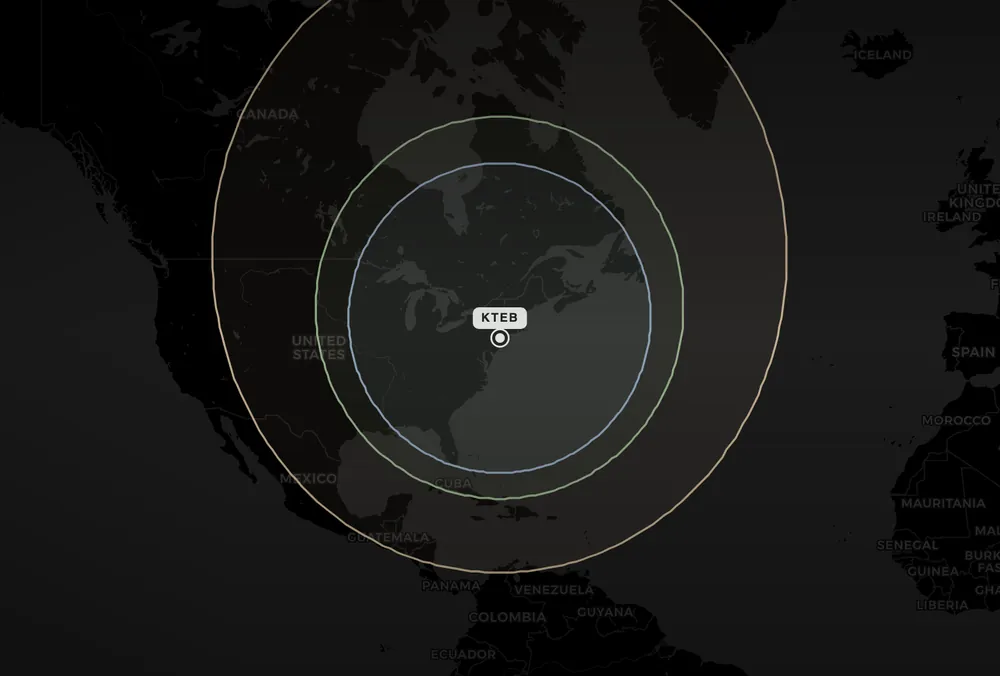
See how far you can fly nonstop
Explore aircraft range, compare options, check flight times, and better understand which aircraft fits your trip.

Ready to fly to Amsterdam?
Request a charter and our team will tailor an itinerary for your next journey.
*Takes only about 40 seconds to request your quote.
