



Why the Taylor Swift private jet story matters
Interest in the Taylor Swift private jet extends well beyond celebrity curiosity. The subject brings together aircraft ownership, public flight data, personal security, aviation emissions, and the operational realities of moving among major cities on a demanding schedule.
Her reported travel history also provides a useful lens through which to understand private aviation for globally active performers, executives, and ultra-high-net-worth travelers. A balanced examination does not require assumptions about any individual journey. Instead, it can show how aircraft capability, privacy expectations, environmental commitments, and itinerary planning intersect.
The Taylor Swift jet and her reported aircraft history
Taylor Swift has long been associated in public reporting with Dassault Falcon aircraft. Reports have connected her with a Dassault Mystère Falcon 900, often described simply as a Falcon 900, bearing registration N898TS, and a Falcon 7X whose registration is frequently cited as N621MM.
The Falcon 900 was reportedly registered through SATA LLC, a company associated with Taylor Swift Productions. In early 2024, Federal Aviation Administration records reportedly indicated that its registration had moved to Triangle Real Estate LLC, prompting coverage that the aircraft had been sold.
That reported transaction left the Falcon 7X as the aircraft most often described as her primary long-range jet. Even so, an aircraft’s association with a person or business entity does not establish who occupied every flight. Aircraft can move for repositioning, maintenance, crew requirements, or travel by other authorized passengers.
This distinction is fundamental to understanding the Taylor Swift airplane discussion. Public records may connect an aircraft with an ownership entity, but they do not provide a complete passenger manifest or explain the operational purpose behind each movement.
From the Mystère Falcon 900 to the Falcon 7X
The Mystère Falcon 900 and Falcon 7X reflect Dassault’s emphasis on long-range business aircraft. The Falcon 7X is a large cabin trijet developed for demanding transcontinental and transatlantic missions, making it relevant to schedules that may involve several distant cities within a compressed period.
Aircraft selection for such missions depends on far more than headline range. Passenger count, baggage, runway requirements, weather, payload, cabin preferences, airport limitations, crew planning, and the possibility of a fuel stop can all influence which aircraft is appropriate.
The Falcon 7X is not placed within every definition of the ultra-long-haul category, although its mission profile overlaps with that segment. Travelers planning especially demanding international itineraries may also evaluate other large cabin and extended range aircraft according to the needs of the trip. Our overview of ultra long haul private jets explains the planning considerations behind extended international missions.
How can the Taylor Swift plane be tracked?
The aircraft tracking controversy centers on Automatic Dependent Surveillance-Broadcast, commonly known as ADS-B. Aircraft equipped with the system transmit information that can include position, altitude, and identifying data to support situational awareness within the aviation system.
Ground-based receivers can collect these broadcasts, while tracking services may aggregate the information into maps and historical movement records. Consequently, a journey that feels private within the cabin can still create an externally visible digital trail.
College student Jack Sweeney attracted widespread attention by operating social media accounts that published movements associated with aircraft used by prominent individuals, including Swift. The accounts relied on publicly available flight information, and some posts reportedly incorporated a one-day delay in response to privacy and security concerns.
The available data has important limitations. It may indicate that an aircraft traveled between two locations, but it does not prove that Swift was aboard, identify other passengers, or establish whether the movement involved a passenger journey, repositioning, maintenance, or another operational need.
Public aircraft data and personal security
Swift’s legal team reportedly sent Sweeney a cease-and-desist letter in December 2023. According to coverage of the dispute, her representatives argued that publishing aircraft movements created personal safety and security concerns.
The episode brought greater attention to an unresolved tension in private aviation. ADS-B information serves an aviation safety purpose and may be publicly accessible, yet reorganizing repeated aircraft movements around a recognizable individual can create a detailed picture of travel patterns.
Legal availability and responsible use are not necessarily the same question. Information may be obtainable through public systems while its repeated distribution still raises concerns involving harassment, personal safety, and the reasonable boundaries of public attention.
For charter clients, the practical lesson is that privacy should not be confused with complete invisibility. Private terminals, controlled passenger coordination, tailored schedules, and thoughtful airport selection can support a more discreet experience than scheduled airline travel, but they do not necessarily prevent an aircraft from appearing on tracking platforms.
A charter broker can coordinate airport choices, scheduling, ground arrangements, and communication with the operating carrier to reduce unnecessary exposure. No responsible broker should promise that the movement of a modern aircraft will remain hidden from every public source.
What emissions estimates for a Taylor Swift private plane reveal
The environmental conversation surrounding the Taylor Swift plane intensified after a widely cited 2022 analysis placed her among prominent celebrity emitters. Later reporting has continued to estimate emissions associated with Falcon 7X movements by combining observed flight records with assumptions about aircraft fuel consumption.
Such calculations can provide broad context, but they are not equivalent to audited emissions records. Results can change according to the period examined, the flights included, assumed fuel use, routing, payload, weather, and whether positioning or maintenance movements are counted.
A typical public estimate begins with an assumed amount of fuel consumed and applies a carbon conversion factor. Recorded aircraft activity then becomes an input, even though the underlying data may not explain why the aircraft moved or identify who traveled aboard it.
For this reason, precise claims about the annual emissions, distance traveled, or flight hours of the Taylor Swift private plane deserve careful treatment unless the original records and complete methodology are available. The broader environmental question is legitimate, but apparent numerical precision can conceal significant assumptions.
Carbon credits, sustainable aviation fuel, and transparency
Swift’s spokesperson has stated that she purchases carbon credits to offset private jet activity. Public reporting has not generally disclosed detailed information about the programs used, the standards applied, the quantity purchased, or how the credits correspond with specific aircraft movements.
Carbon credits are one response to aviation emissions rather than a substitute for understanding or reducing them. Other considerations can include choosing an aircraft appropriately sized for the mission, organizing an efficient itinerary, limiting unnecessary repositioning where practical, and considering sustainable aviation fuel when available.
Sustainable aviation fuel has become more visible in aviation policy and charter planning, particularly for European journeys. Its availability can vary by location and operator, while related fuel or environmental charges may appear as separate components of a charter proposal.
A complete trip budget also extends beyond an aircraft’s quoted rate. Our guide to private jet charter costs in 2026 explains how airport charges, taxes, crew logistics, fuel adjustments, operator policies, and repositioning can influence the final proposal. Itemized review is particularly important when a mission involves multiple cities or international sectors.
Taylor Swift airplane routes and global travel patterns
Coverage of Swift’s movements frequently references Los Angeles, New York, Nashville, and international destinations. Kansas City has also appeared in the wider public discussion, while London represents the type of transatlantic market relevant to an internationally active performer.
These cities should not be interpreted as confirmation of a precise personal itinerary. They instead illustrate the varied mission requirements faced by travelers whose professional and personal commitments span domestic and international markets.
A complex schedule might involve a transcontinental journey between Los Angeles and New York, a regional sequence connecting Nashville and Kansas City, or an overnight transatlantic mission involving London. Long-range private aviation allows each journey to be planned around the traveler’s commitments, subject to aircraft capability, airport suitability, crew requirements, and operating conditions.
This is why searches for the Taylor Swift private plane often lead to broader questions about aircraft performance and mission planning. The defining value is not merely the cabin environment. It is the ability to align the aircraft, airport, passenger requirements, and departure schedule with a complicated itinerary.
Airports for private routes: VNY, TEB, JWN, MCI, and BQH
Van Nuys Airport (VNY) is a prominent business aviation airport serving the Los Angeles area. It offers an illustrative alternative to the scheduled airline environment at Los Angeles International Airport, although no assumption should be made about Swift’s current basing arrangements or preferred facility.
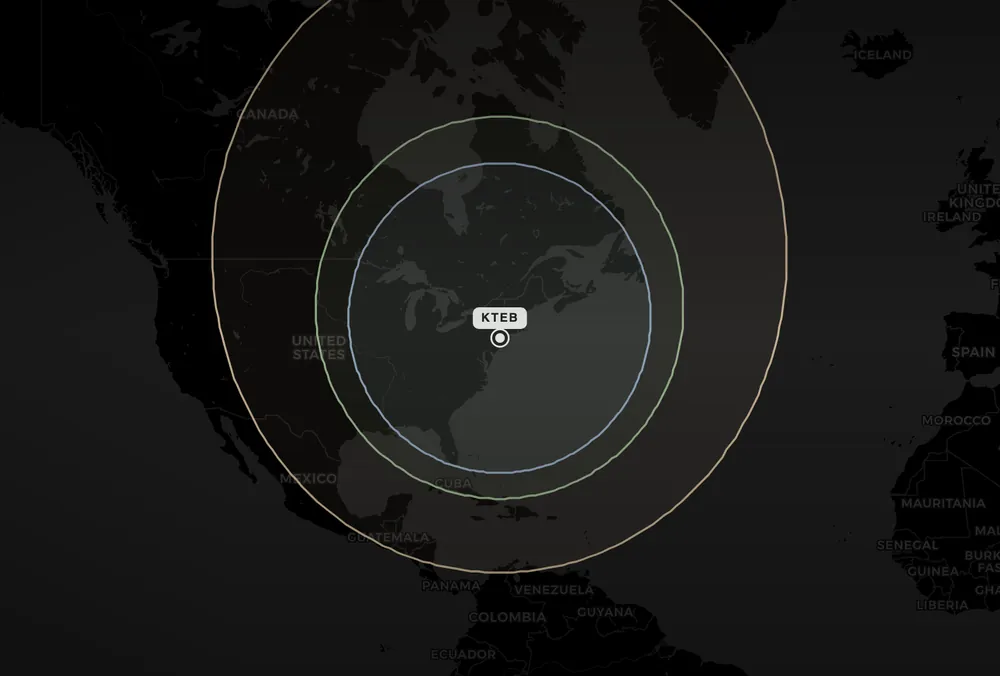
Teterboro Airport (TEB) is commonly considered for private aviation access to the New York area. Its location can make it relevant to travelers connecting New York with West Coast or international destinations, subject to operating conditions and mission requirements.
John C. Tune Airport (JWN) supports business aviation in Nashville. It demonstrates how a reliever airport may bring travelers closer to a final destination while offering an alternative to a city’s principal scheduled airline airport.
Kansas City International Airport (MCI) accommodates both scheduled and private aviation activity. In a multi-city itinerary, Kansas City illustrates why aircraft and airport selection must be considered together, since suitability can depend on runway requirements, local arrangements, passenger plans, and aircraft availability.
Across the Atlantic, London Biggin Hill Airport (BQH) is focused on business aviation and provides an illustrative London option for private aircraft. Actual suitability would depend on the traveler’s destination within the region, operating restrictions, ground transportation requirements, and the capabilities of the selected aircraft.
These airports are examples rather than a record of Swift’s confirmed movements. A VNY to TEB journey or a United States gateway to BQH represents the type of mission for which a large cabin aircraft may be evaluated, but actual routing depends on weather, payload, airport restrictions, crew planning, and other operating considerations.
What the reported travel patterns reveal about private aviation
The reported patterns associated with the Taylor Swift jet show why globally active travelers often require more than a simple nonstop itinerary. A sequence of appearances, meetings, personal commitments, and international obligations can create overlapping demands involving timing, baggage, privacy, ground transportation, and airport access.
They also demonstrate why the largest available aircraft is not automatically the right choice. An effective plan begins with the complete mission, including passenger count, luggage requirements, desired airports, cabin needs, schedule flexibility, and tolerance for a fuel stop.
Environmental preferences can be considered during the same planning process. Travelers may ask about sustainable aviation fuel availability, carbon credit options, fuel-related charges, and whether the itinerary can be structured to reduce avoidable repositioning while preserving the essential schedule.
Early planning is especially valuable for multi-city and intercontinental journeys. It creates additional room to compare aircraft, assess airport options, review operator standards, and understand individual cost components before confirming a trip.
Lessons for planning your own long-range charter
The Taylor Swift private jet discussion offers several practical lessons for anyone arranging frequent or international travel. Aircraft capability matters, but privacy expectations, public data visibility, airport access, operating logistics, environmental preferences, and quote structure are equally significant.
Travelers should also distinguish between aircraft ownership and charter access. Owning or being associated with a particular aircraft can create continuity, but chartering through a broker allows each mission to be matched with an appropriate aircraft and qualified operating carrier.
A well-planned charter begins with the itinerary rather than a predetermined aircraft model. Our team can compare suitable aircraft categories and operating solutions based on the route, passenger requirements, airport considerations, and preferred cabin experience.
Privacy planning should remain realistic throughout the process. Discreet coordination can limit unnecessary exposure, but no itinerary should be built around a promise that aircraft movements will be entirely absent from publicly accessible aviation data.
The role of Amalfi Jets as a private jet charter broker
Amalfi Jets is a private jet charter broker, not an aircraft operator, fractional ownership provider, or prepaid membership program. Our team sources aircraft through vetted operators and curates each trip according to your specific mission requirements.
This broker model provides the flexibility to evaluate multiple aircraft categories and operating solutions. For a Los Angeles to London mission, for example, the review can consider range, cabin configuration, baggage, airport suitability, operator standards, and environmental preferences before appropriate choices are presented.
The Taylor Swift jet story demonstrates that sophisticated private travel involves far more than selecting a recognizable aircraft. Effective planning requires informed decisions across safety, privacy, routing, sustainability, and cost transparency, supported by a clear understanding of what private aviation can and cannot conceal.
If you are preparing a transcontinental itinerary, an international journey, or a demanding sequence of cities, our team can curate an aircraft and operating solution around your schedule. Begin a private charter request with Amalfi Jets to plan the mission from the initial brief through departure.