




A search for “Roger Federer private jet” often begins with a question about ownership. The more useful starting point is a distinction: access to private aviation does not establish that a player personally owns an aircraft, and a photograph or travel association cannot settle that question.
For travelers interested in how tennis champions move between destinations, the practical story is tennis tour travel. Tournament schedules, family commitments, support teams, equipment, and uncertain departure dates all shape the journey. Amalfi Jets approaches those requirements as a charter broker, arranging aircraft options through third-party operators around your itinerary rather than relying on celebrity associations.
Roger Federer Private Jet: Access Is Not Ownership
Does Roger Federer own a private jet? Ownership should not be treated as established here, nor should a particular aircraft model be presented as his personal aircraft. Charter access, a travel partnership, and aircraft ownership are different arrangements, even when they look similar from the passenger’s perspective.
That distinction also limits what a Federer private jet story can tell another traveler. Even a documented journey would describe one movement, not necessarily a permanent travel arrangement or the right aircraft for your own schedule.
For a player, family, or spectator planning an international itinerary, the better question is which aircraft and routing fit the trip. A European tournament transfer and an intercontinental journey place different demands on passenger capacity, baggage space, routing, and departure flexibility.
Federer, Nadal, and How Tennis Players Travel
Federer’s and Rafael Nadal’s career travel should not be reduced to a single aircraft or a permanent choice between private and commercial services. Without details of a particular journey, it would be misleading to assign either player a fixed travel pattern, ownership history, or annual charter bill.
Their careers nevertheless offer a useful frame for understanding the travel challenges associated with elite tennis. Moving between tournament regions can involve coaches, family members, training commitments, and equipment, while the next departure may depend on how long a player remains in competition.
Federer’s career travel also needs to be distinguished from the requirements of players competing on today’s tour. A former champion’s appearances and personal commitments represent a different planning profile than an active competitor’s qualifying rounds, practice sessions, and uncertain match schedule.
The broader interest in tennis player private jets is therefore best approached through access and logistics rather than ownership speculation. A commercial flight may suit one leg, while chartering an aircraft may be appropriate for another, and neither decision establishes how an athlete travels throughout a career.
ATP Private Aviation and the Demands of the Calendar
For ATP private aviation planning, the central consideration is how travel fits around competition. The same practical questions apply to WTA players, whose schedules can also involve international tournament changes, training periods, and commitments away from the court.
A tournament entry does not provide a complete flight itinerary. Players may need to arrive before their first match, accommodate practice arrangements, or remain longer than initially expected. Coaches, physiotherapists, and family members may also have different arrival or departure requirements.
Chartering an aircraft can offer more control over departure timing and the composition of the traveling party, subject to aircraft availability and operating constraints. It may also create more room in your schedule for rest, but no travel arrangement should be presented as a guarantee of recovery or athletic performance.
The contract matters as much as the proposed schedule. An early tournament exit and a run to the final create different travel needs, and changes may affect aircraft availability, crew arrangements, and the final invoice.
Tennis Tour Travel Through London, New York, and Paris
The four Grand Slams take place in Melbourne, Paris, London, and New York, but attending all four does not automatically create a continuous four-stop itinerary. Returns home, other tournaments, training blocks, and separate family travel can substantially change the number and shape of the flights required.
Melbourne illustrates why a clear starting point is essential for your flight planning. A traveler departing from within Australia has a different mission from a party arriving from another continent, and the proposed aircraft must be assessed against the actual route, passenger group, and baggage requirements.
Paris and London require the same discipline, even when a regional transfer appears straightforward. Travel between the two cities may be only one part of a wider schedule, and the aircraft appropriate for that leg may differ from the one considered for an international arrival.
New York adds another decision about what happens after the tournament concludes. The journey may end there, return home, or continue to another commitment, so a useful season plan needs defined origins and destinations rather than four tournament names alone.
London BQH, New York TEB, and Paris CDG
For London, London Biggin Hill Airport (BQH) is a business aviation option to evaluate against your particular flight. Aircraft suitability, operating requirements, arrival timing, and onward transportation should all be considered before selecting it for Wimbledon-related travel.
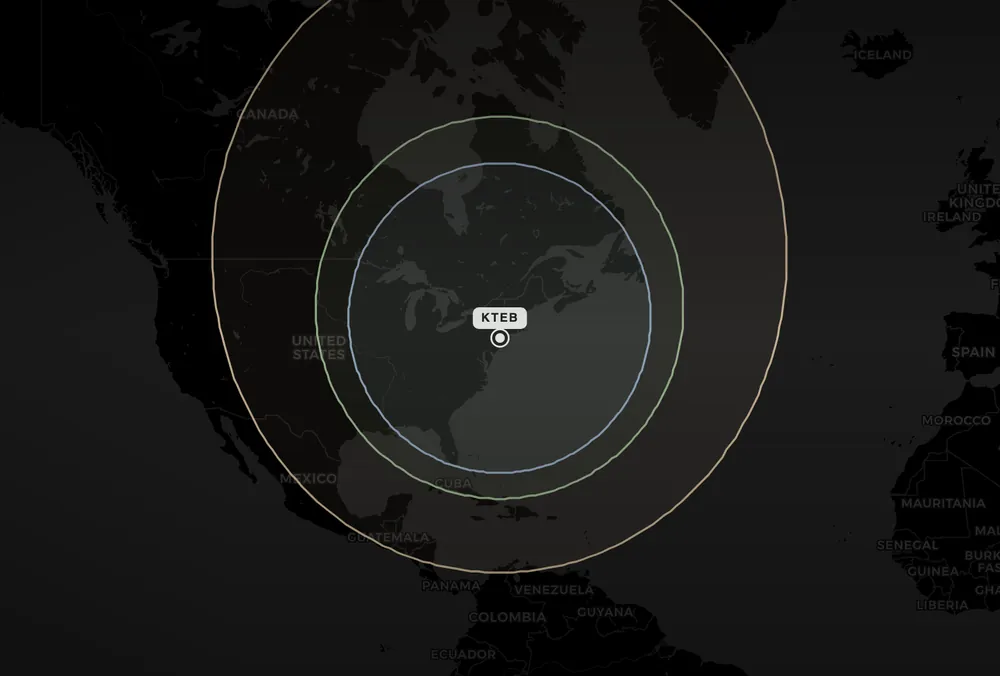
For New York, Teterboro Airport (TEB) can be considered for access to the metropolitan area. Its suitability depends on the flight’s requirements, including aircraft compatibility, applicable restrictions, and any international arrival arrangements that need to be addressed.
Paris calls for a distinction between Paris Charles de Gaulle Airport (CDG) and Paris-Le Bourget Airport. CDG may feature in a wider itinerary or commercial connection, while Le Bourget is a business aviation alternative to assess for a private charter. The familiar airport name should not replace a route-specific evaluation.
Airport selection also needs to work beyond the arrival itself. Ground transportation, travel documents, equipment collection, and accommodation location all influence the door-to-door journey, and tournament traffic makes fixed transfer-time promises inappropriate.
Dubai DXB and Miami OPF for Training and Tournament Travel
Dubai and Miami may belong in a tennis itinerary for training, competition, personal commitments, or onward travel. They should be included because they serve your actual schedule, not because every Grand Slam plan requires them.
Dubai International Airport (DXB) may appear in your proposed routing, but the appropriate arrival airport and handling arrangements require assessment for the specific flight. International entry requirements, aircraft considerations, and onward transportation should be addressed before the itinerary is finalized.
Miami-Opa-locka Executive Airport (OPF) is another facility to evaluate when planning travel to the Miami area. Passenger needs, aircraft requirements, and the location of the next commitment should guide that choice rather than an assumed ground-transfer time.
For both cities, it helps to establish whether your entire party is traveling together. A coach arriving separately or family members joining later can change the aircraft requirement and the coordination needed between sectors.
Matching the Aircraft to the Team
Aircraft selection starts with people and baggage, not the name of a famous passenger. A player traveling with one coach has different requirements from a group that includes family, a physiotherapist, and additional support staff, especially when racquet bags and other equipment are added.
The Amalfi Jets aircraft categories guide provides a starting point for comparing cabin options. A light or midsize aircraft may be considered for some regional journeys, while longer routes may require evaluating larger aircraft categories. The appropriate choice remains dependent on the specific aircraft, route, payload, and operating conditions.
Category labels alone do not establish nonstop capability or usable baggage capacity for a particular group. Those details must be assessed for your proposed aircraft rather than inferred from a general description.
Cabin preferences should follow the purpose of your journey. Room to rest, seating arrangements, privacy, and space to work may carry different weight on a brief transfer than on an intercontinental flight, and these priorities help narrow the options before an operator assesses operational suitability.
What Does a Full Grand Slam Charter Season Cost?
There is no single total for a full Grand Slam charter season without a defined itinerary and aircraft-specific quotes. Four tournament appearances might involve separate return journeys, a continuous international trip, or a combination of charter and commercial flights, each producing a different scope of service.
The Amalfi Jets private jet charter cost guide for 2026 is a useful companion to this planning discussion. A season comparison should distinguish passenger flying from aircraft positioning and identify how taxes, airport charges, handling, crew logistics, and potential schedule changes are treated.
The total also depends on your decisions made between tournaments. Retaining an aircraft and crew, arranging a separate aircraft for a later departure, or changing the size of the traveling party can produce materially different proposals, subject to availability and the terms offered.
For that reason, a proposed season budget should never be presented as Federer’s or Nadal’s actual spending. It is a planning estimate for a defined passenger group and itinerary, not a celebrity expense report.
Two Ways to Compare a Season Plan
One approach is to match the aircraft separately to each journey. A compact traveling party could evaluate suitable regional options for shorter sectors and assess intercontinental flights independently, rather than assuming the same cabin is needed throughout the season.
For a meaningful comparison, this scenario still needs every passenger leg identified. Returns home, separate team movements, baggage requirements, and aircraft positioning cannot be left out simply because they sit between the headline tournament destinations.
A second approach prioritizes keeping a larger team or family together, with additional cabin space where required. Larger aircraft options can then be evaluated against the same itinerary, while regional flights are assessed for the same passenger and equipment needs.
Neither approach guarantees nonstop service on every route or eliminates additional charges. The useful comparison is an itemized proposal with consistent assumptions, clear inclusions, and an explanation of what could change if the tournament schedule shifts.
Planning for Changes Before They Happen
A strong travel brief includes more than a preferred departure date. Earliest acceptable arrival, latest acceptable arrival, and the likely departure window help separate essential requirements from preferences that can accommodate alternatives.
Team movements deserve the same attention throughout your planning. If passengers join for only part of the trip, the aircraft requirement may change between sectors, while travel documents and entry requirements must be considered for each individual journey.
Change and cancellation terms should be reviewed before confirming the charter. A match result can alter the desired departure, but it does not automatically change an operator’s commitments or remove the costs associated with repositioning and crew arrangements.
Early discussion can provide more opportunity to compare suitable options during busy tournament periods. The appropriate booking lead time still depends on the route, aircraft requirements, availability, and how much uncertainty remains in your schedule.
A Charter Plan Built Around Your Schedule
The most useful answer to a Roger Federer private jet search is not an assumed aircraft registration or an invented season bill. It is a clearer understanding of how private aviation can fit the demands of tennis, with the itinerary, traveling party, and contract considered together.
Amalfi Jets is a charter broker, not an aircraft operator. We source and coordinate aircraft options through third-party operators, while those carriers operate the flights and assess their operational suitability.
Whether you are traveling with a competitive team, following the Grand Slams, or combining tennis with personal commitments, begin with the journey you need to make. Share your destinations, passenger count, equipment requirements, and preferred travel windows so the available options can be evaluated against a clear brief.
Contact Amalfi Jets to discuss an itinerary shaped around your schedule. Our team can help you compare suitable aircraft options and understand the proposed arrangements, including what is included and what may change.