



The Gulfstream G650 has become a defining aircraft for private travelers who need to cross continents while preserving schedule control, discretion, and a productive cabin environment. Alongside the Gulfstream G650ER, it supports demanding international itineraries linking New York, Los Angeles, London, Dubai, Singapore, and other important global destinations. Choosing between the two models involves more than selecting the aircraft with the greater published range. As a charter broker, we bring those variables together and source aircraft options aligned with your complete itinerary.
Gulfstream G650 performance and published range
The G650 family was designed for intercontinental travel, combining a stand-up cabin, flat floor, high-speed capability, and the reach required for many nonstop international sectors. These qualities place the aircraft within the ultra long haul jet category, where capability is measured not only by distance but also by how effectively the cabin supports work, dining, rest, and private time during an extended journey.
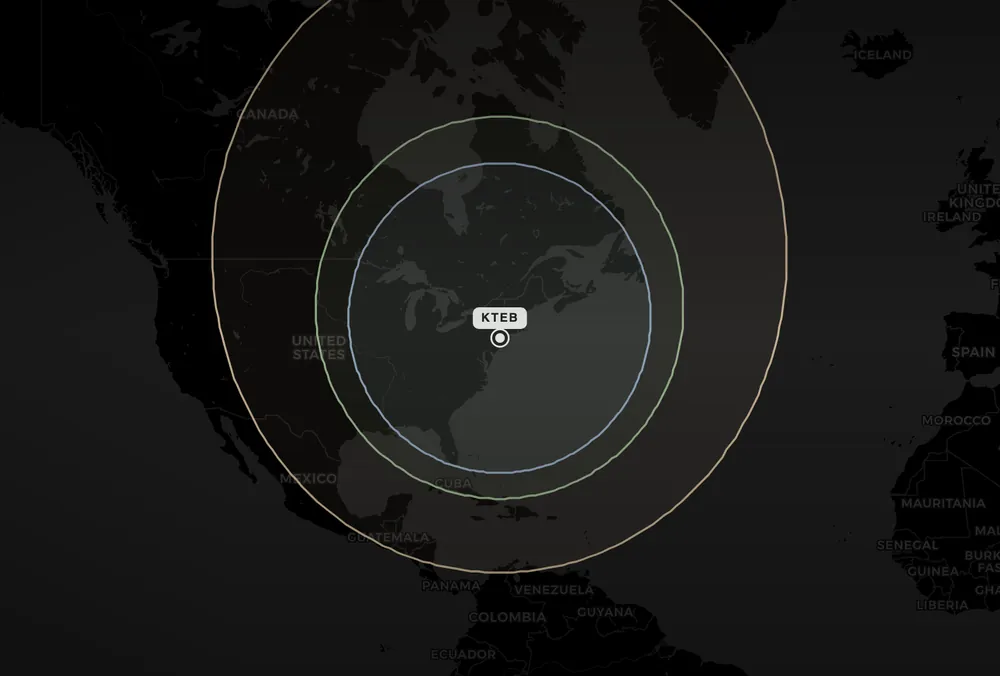
Published figures provide a useful starting point for planning your trip. The Gulfstream G650 features a maximum published range of 7,000 nautical miles, while the Gulfstream G650ER extends that figure to 7,500 nautical miles under defined conditions. The family also boasts a published maximum operating speed of Mach 0.925 and can be configured for up to 19 passengers, although the seating and cabin arrangement of an individual charter aircraft may differ.
Those numbers help establish the intended role of the aircraft, but they do not guarantee the outcome of a specific trip. Passenger and baggage loads, winds, weather, routing, fuel reserves, airport conditions, and the configuration of your selected aircraft can all affect practical mission capability. Speed matters because it can reduce time in transit on longer journeys, while cabin design influences how you experience those hours.
The appeal of the Gulfstream G650 is its ability to bring reach, pace, and cabin utility into one platform. Rather than treating maximum distance as the only measure of suitability, we evaluate how well the aircraft serves your entire travel profile.
Gulfstream G650 versus Gulfstream G650ER
The central distinction between these aircraft is straightforward. The Gulfstream G650ER offers additional published range compared with the original G650. That capability becomes meaningful on more demanding routes, particularly when your objective is to preserve a nonstop itinerary or introduce an additional planning margin.
For many intercontinental missions, the standard G650 already offers the appropriate capability. The G650ER becomes more relevant when a route approaches the practical limits of the base model, when seasonal winds create additional demands, or when your planned payload and routing call for greater flexibility.
The longer published range does not make the G650ER universally preferable. Selecting it without considering your complete mission may narrow availability without producing a meaningful improvement in the passenger experience. A well-matched G650 with the preferred cabin and schedule can be the stronger charter option when its practical performance suits the route.
Both models share the qualities that define the family, including a cabin intended to support extended periods aboard. The better question is therefore not which aircraft is superior in isolation, but which individual aircraft is best aligned with your travelers, itinerary, schedule, baggage, and airport plan.
G650 cabin planning for work, rest, and privacy
A long-range cabin should be evaluated as a living and working environment rather than simply as a seating chart. On an overnight journey, sleeping arrangements and quiet spaces may take priority. Conversely, a daytime business itinerary may call for distinct areas for meetings, dining, and focused work.
Families and larger parties often place greater emphasis on separation between social and rest areas. A group traveling together must also consider how the cabin will function at different stages of the flight, particularly when passengers have different plans for dining, conversation, work, and sleep.
Layouts vary among individual aircraft, even when they carry the same model designation. The number of approved passenger seats does not, by itself, reveal how comfortably the cabin will support sleeping, dining, or separation for your specific group. Reviewing the proposed configuration with our team is therefore an essential part of selecting a G650 charter.
Baggage deserves the same early attention during your planning process. An extended international journey may involve larger personal cases, business materials, or other items that need to be discussed while aircraft options are being assessed. Addressing those requirements before confirmation helps ensure that your selected aircraft fits the whole itinerary rather than merely the distance between airports.
You can review the Gulfstream G650 charter profile for a broader introduction to the role this model plays in long-distance private aviation. Final suitability should still be established against your requested route, passenger requirements, and the details of the individual aircraft offered.
Gulfstream G650 charter planning from New York (TEB) and Los Angeles (VNY)
Teterboro (TEB) is frequently considered by private travelers departing from the New York area. Whether this airport is the appropriate departure point for a particular Gulfstream G650 itinerary depends on current airport access, aircraft positioning, your ground plans, schedule requirements, and operating conditions.
A New York journey to London or Dubai illustrates why the airport plan matters alongside published aircraft range. Routing, winds, weather, passenger and baggage loads, and the selected arrival airport can all influence the final flight plan. Rather than assuming that every proposed city pairing can operate nonstop under all conditions, we evaluate the specific aircraft and itinerary before presenting your options.
Van Nuys (VNY) is often considered for private departures serving the Los Angeles area. Current international departure requirements and aircraft arrangements must be confirmed for each trip. This is especially true when your schedule is time-sensitive or the aircraft must position into Southern California.
Los Angeles routes toward Asia make the distinction between the G650 and G650ER particularly relevant. Distance is only one component of that assessment, since winds, payload, routing, and destination requirements dictate whether the base model or extended-range version is better suited to your journey.
G650ER arrivals in London (LHR), Dubai (DXB), and Singapore (SIN)
London Heathrow (LHR) may be requested by travelers whose ground plans center on London. Access, permissions, airport availability, and current arrangements should be reviewed before your itinerary is confirmed. Another London-area airport may prove more appropriate depending on your specific plans and the prevailing operating conditions.
The same mission-focused analysis applies to Dubai International (DXB). Your preferred arrival airport should be considered together with operating requirements, aircraft availability, onward transportation, and the wider schedule. An airport should never be selected solely because it represents the most familiar code.
For Singapore, travelers frequently request Singapore Changi (SIN) as their arrival point. The final airport strategy must be verified for your specific journey, since current access, aircraft requirements, ground plans, and scheduling considerations shape which option best serves the itinerary.
These destinations demonstrate why route planning should begin with your complete air and ground schedule. The most familiar airport is not automatically the best choice. Similarly, the aircraft with the longest published range is not automatically the strongest fit for your trip.
What Gulfstream G650 charter buyers should compare
A thoughtful G650 comparison begins with your exact origin, destination, desired departure time, passenger count, baggage profile, and any flexibility around airports. The proposed aircraft can then be assessed for cabin arrangement, practical mission capability, positioning, and compatibility with your planned schedule.
It is important to distinguish the aircraft model from the individual aircraft being offered. A model name establishes a broad category of performance and cabin experience, but it does not describe every feature of a specific charter option. Interior layout, sleeping arrangements, refurbishment history, baggage needs, and mission fit remain central to your final decision.
Availability can also shape which option offers the strongest overall value for your journey. Early planning provides more time to compare individual aircraft and airport strategies. This is particularly crucial when the Gulfstream G650ER is being considered for an itinerary where its additional reach is required.
As a charter broker, we curate charter options according to your requested journey. Our team considers the appropriate model, individual cabin, departure airport, arrival strategy, and schedule instead of directing every traveler toward a single aircraft. We do not operate aircraft or provide fractional ownership, allowing our search to remain focused entirely on your itinerary.
How payload and routing shape a G650 mission
Maximum range figures are calculated under defined assumptions that rarely mirror real-world flying. A live charter mission introduces variables that may differ from those conditions, including the number of travelers, baggage, wind, weather, routing, reserves, and airport considerations.
A route that appears to fall within a published maximum may require a different aircraft selection or a technical stop. Conversely, a well-matched G650 may complete a proposed mission without requiring the extended-range version. The sound approach is to evaluate the individual aircraft and the expected operating conditions together.
Routing can also be shaped by factors beyond the direct distance between two cities. Airspace, weather, airport access, and operational requirements may alter your practical route and schedule. For complex journeys involving New York, Los Angeles, London, Dubai, or Singapore, we review all of those details before your itinerary is finalized.
Understanding Gulfstream G650 charter cost
Gulfstream G650 and G650ER charter costs vary according to the individual aircraft, positioning, route, schedule, airport requirements, and wider market conditions. A generic hourly estimate cannot capture the complete cost of an international itinerary. Furthermore, no single figure applies to every journey.
Positioning can be significant because the aircraft may need to travel to the departure airport before passengers board. Multi-city schedules, airport access, date flexibility, and timing also influence your final proposal. Our private jet charter cost guide explains the broader considerations that shape pricing without reducing a tailored itinerary to a single headline rate.
The most useful comparison considers price and mission suitability together. An option that initially appears attractive may not represent the right value if its cabin, practical range, positioning plan, airport access, or schedule falls short of your requirements.
Is the G650 suitable for nonstop intercontinental travel?
Yes, the Gulfstream G650 was designed for long-distance international missions and can support many nonstop intercontinental routes. Whether a particular journey can operate nonstop depends on the selected aircraft, passenger and baggage load, winds, weather, routing, reserves, and airport conditions.
The same principle applies to the G650ER, despite its additional published range. We assess the proposed aircraft against your actual itinerary rather than promising nonstop performance solely based on manufacturer specifications.
Is the G650ER always the better charter choice?
No, greater range does not automatically make the Gulfstream G650ER the better choice. If the standard G650 can complete the planned journey while providing the preferred cabin, airport plan, availability, and schedule, it may be the more appropriate option.
The G650ER is especially compelling when additional reach or planning margin is central to your itinerary. The final decision should remain grounded in your route and passenger requirements rather than the perceived hierarchy of the two models.
How early should you request a Gulfstream G650 charter?
Early planning is valuable for specialized international missions because it allows more time to consider aircraft availability, cabin layouts, airport arrangements, positioning, and routing. This foresight is particularly relevant when your schedule is fixed or the journey requires the specific capabilities of a Gulfstream G650ER.
A later request may still be possible, but the available aircraft and airport options could be narrower. Sharing your complete itinerary from the outset gives our team a clearer basis for sourcing an aircraft perfectly aligned with your mission.
Plan your Gulfstream G650 charter with Amalfi Jets
The Gulfstream G650 family offers a compelling combination of reach, speed, privacy, and cabin utility for global travel. Choosing well requires more than simply identifying a model. This is why we approach every request through the details of the passenger experience and your complete mission.
Share where you need to travel, who will be aboard, your preferred schedule, and how you want the cabin to function during the journey. Request a tailored Gulfstream G650 charter, and our team will curate G650 or G650ER options perfectly aligned with your itinerary.