



Navigating Authorized Travel and Aviation Requirements
Travelers frequently ask if you can fly to Cuba on a private jet. Under current guidelines, the journey is completely possible, provided travelers subject to U.S. jurisdiction have an authorized travel purpose. Furthermore, the aircraft must satisfy all applicable U.S. and Cuban regulatory requirements. A private charter does not make tourism permissible or remove the need for permits, passenger documentation, and thorough border procedures.
For an eligible trip, private aviation offers schedule control, privacy, and a highly coordinated itinerary. Cuba requires particular care because passenger authorization, aircraft authorization, landing permission, and the return to the United States are separate considerations. At Amalfi Jets, we work strictly as a charter broker, sourcing a suitable operating partner and coordinating the itinerary without replacing the legal responsibilities of travelers, operators, or government authorities.
What makes a private flight to Cuba legally permissible?
For persons subject to U.S. jurisdiction, Cuba travel authorization is based entirely on the purpose of the trip. The U.S. Department of the Treasury’s Office of Foreign Assets Control, known as OFAC, permits certain travel-related transactions under general or specific licenses within the Cuban Assets Control Regulations. Tourist travel remains strictly prohibited for these travelers, regardless of whether they fly commercially or privately.
A general license covers activity that meets its applicable regulatory conditions, while a specific license provides individual authorization from OFAC. The distinction matters deeply because identifying a category is only the beginning of the assessment. Your actual activities, arrangements, and financial transactions must satisfy the precise authorization on which you rely.
It helps to separate four distinct questions before discussing an aircraft: whether your travel purpose is authorized, whether the aircraft mission is permitted, whether Cuba has approved the proposed operation, and whether your U.S. return arrangements are acceptable. A favorable answer to one does not resolve the others. We approach these as connected planning requirements rather than assuming that a confirmed aircraft automatically means a confirmed trip.
Understanding the OFAC Cuba travel categories
OFAC identifies twelve categories of authorized travel-related transactions for those under U.S. jurisdiction. These include family visits, official government or certain intergovernmental business, journalistic activity, professional research, educational activities, and religious activities. Each category features its own strict conditions, so a broad or vague description of your trip is never enough to establish eligibility.
The remaining categories include qualifying amateur or semi-professional athletic competitions, support for the Cuban people, humanitarian projects, activities of certain private foundations or research or educational institutes, exportation or importation of informational materials, and certain authorized export transactions. These categories describe qualifying purposes, not interchangeable labels for an otherwise recreational itinerary. Your planned activities on the ground need to comprehensively support the category you identify.
Every passenger on the manifest should be prepared to explain the basis for their authorized travel and provide the required certification. A shared aircraft reservation does not remove individual documentation obligations for any traveler. If your purpose does not clearly fit an applicable authorization, it is vital to seek appropriate guidance before committing to the itinerary.
What to watch in the 2026 Cuba regulations
For 2026 travel planning, particular attention belongs on the nuances between professional research versus attendance at meetings or conferences, educational activities, and people-to-people arrangements. Do not assume that an itinerary permitted under earlier guidance remains authorized today, or that professional research automatically includes any general business gathering. The current regulatory conditions must be assessed against what you actually intend to do upon arrival.
Financial transactions deserve the exact same attention as the travel category itself. Restrictions involving entities on the State Department’s Cuba Restricted List may affect proposed arrangements, including transactions made indirectly through third parties. Your authorization to travel should not be treated as blanket permission for every payment or vendor associated with the trip.
Before requesting a booking, consult current OFAC guidance and the operative regulations, along with relevant State Department advisories. Educational programs and professional itineraries warrant careful legal review rather than reliance on an earlier trip’s paperwork. We strongly recommend revisiting the requirements before departure as well, because regulations and restricted lists can change after initial planning.
Can a private charter carry authorized travelers?
OFAC’s carrier-service framework allows qualifying transportation connected with authorized travel between the United States and Cuba. That specific authorization is distinct from the passenger’s lawful purpose and from the aircraft’s eligibility to make the journey. All of these operational elements need to align perfectly for the proposed charter to proceed.
Providers of carrier or travel services must retain a certification from each customer identifying the regulatory provision authorizing travel, or a copy of the specific license or its number, for at least five years. You should be prepared to supply that information and maintain supporting records for your activities. Treat this documentation as a prerequisite part of the booking process, not something to resolve upon arrival at the departure lounge.
Amalfi Jets does not own or operate aircraft, and we do not issue OFAC approvals. We source flights through qualified operators, including registered Part 135 operators or their foreign equivalents, and coordinate the proposed mission with the operating carrier. The operator’s authorization and administrative ability to perform the particular Cuba itinerary remain essential to the trip's success.
Aircraft authorization, Cuban permits, and airspace planning
Passenger eligibility does not settle whether a particular aircraft can legally travel to Cuba. The Bureau of Industry and Security, or BIS, regulates aircraft temporary sojourns, and separate authorization may be required for the tail number. The applicable treatment must be determined for the selected aircraft, operator, and mission rather than assumed from a previous international flight to a different region.
A Cuba landing permit and a Cuba overflight permit address entirely different aspects of the aviation operation. The operating team must establish the current approval process, required paperwork, flight-plan procedures, and permitted routing for the proposed journey. Historical processing timelines should never be treated as a reliable booking deadline, as processing speeds vary significantly.
Aircraft suitability also requires far more than a simple range comparison. The operator must closely evaluate payload, fuel planning, winds, routing, and any technical or operational requirements, including whether extended-operations considerations such as ETOPS are relevant to the overwater mission. There is no universal answer based solely on the departure city or the general category of the aircraft.
Our role as your broker is to coordinate those detailed questions with the operating partner so that the itinerary reflects actual permissions and operating conditions. Permit timing, handling availability, and aircraft authorization can all heavily affect whether the proposed schedule is feasible. An aircraft should not be presented as suitable for the trip until those critical dependencies have been addressed.
Flying to Havana: José Martí International Airport
José Martí International Airport (HAV), which operates under the ICAO code MUHA, serves as Havana’s primary international gateway and is listed as a designated airport of entry. It has successfully handled private charter activity in the past, but that history does not guarantee availability for a particular aircraft or date. A private charter to Havana still requires mission-specific approval and extensive advance coordination.
For planning purposes, the appropriate expectation is that airport handling and private-aviation support must be arranged well in advance. Do not assume a conventional U.S.-style FBO, a particular private terminal, or a rapid passenger-processing experience. The appointed operating team must thoroughly confirm the handler, arrival procedures, ramp arrangements, and customs workflow for your specific flight.
Fuel availability, airport operating conditions, and local ground permissions also need confirmation extremely close to departure. We coordinate these essential details through the operator and relevant handling contacts rather than promising an arrival experience before the arrangements are definitively established. The objective is a workable aircraft-and-ground plan, not simply an airport reservation.
Departure planning from Miami, New York, Los Angeles, and Dallas
Miami-Opa Locka Executive Airport (OPF) is a highly requested planning point for travelers originating in Miami and South Florida. Its geographic proximity to Cuba makes it a logical airport to evaluate, but the operator must still confirm routing, airport suitability, permissions, and border arrangements. Your return airport may also differ from your outbound departure airport based on customs availability and operational hours.
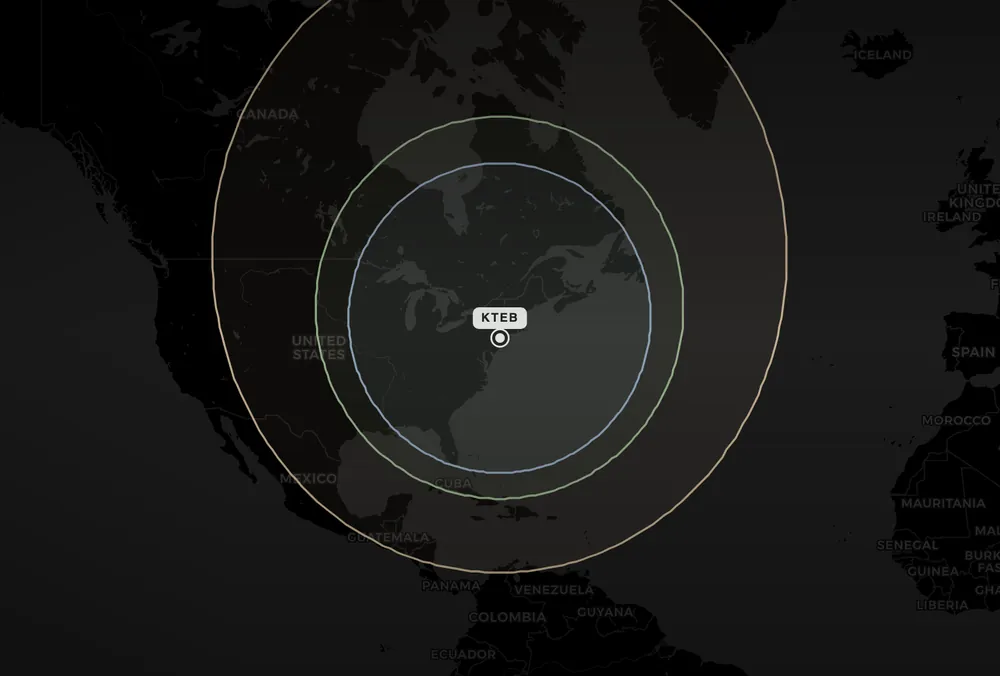
For New York-area travelers, Teterboro Airport (TEB) can be considered as the requested departure point. Aircraft capability, airport operating hours, international procedures, and customs planning all need rigorous review. A proposed Teterboro departure should not be interpreted as confirmation that the exact same airport can receive the return flight from Cuba, as entry requirements dictate inbound routing.
A Los Angeles itinerary beginning at Van Nuys Airport (VNY) requires a significantly more demanding aircraft assessment than a South Florida departure. Range, payload, winds, routing, fuel planning, and possible technical requirements must be considered together for a transcontinental and international mission. We would not promise nonstop service without an aircraft-specific feasibility review conducted by the operating carrier.
Dallas Love Field (DAL) can serve as a requested departure point for a Texas-origin itinerary, subject to strict operational confirmation. International handling, airport permissions, aircraft performance, customs arrangements, and the operator’s ability to legally serve Cuba must all be assessed prior to scheduling. For every departure city, flight timing should strictly follow the selected aircraft and approved routing rather than a generic flight time estimate.
Planning the return to the United States
The return flight deserves thorough attention before you ever leave for Cuba. Your operating team must confirm current U.S. Customs and Border Protection requirements, including applicable electronic manifest submissions, advance arrival notice, and clearance procedures. The eAPIS process and the proposed U.S. arrival airport should be addressed as a foundational part of the initial mission plan.
Do not assume that an airport suitable for your outbound flight is automatically suitable for the inbound return. Current Cuba-related arrival requirements and customs availability must be checked for the proposed operation. Resolving the return plan early helps prevent an otherwise workable outbound itinerary from depending on an unconfirmed or restricted arrival arrangement.
Documents to prepare before requesting a charter
Start your preparation with your passenger information, precise passport details, and any required visa or entry documentation. You should also be completely ready to describe the authorized purpose of your trip, provide the relevant OFAC certification or specific-license information, and explain the activities supporting that purpose. Clear, upfront documentation allows eligibility questions to be addressed before aircraft arrangements progress further.
The operator and handling team will subsequently need to address aircraft registration, airworthiness, insurance, operating documents, permits, passenger manifests, and the ground handling plan. These are not all documents that you personally must obtain, but they are an integral part of the mission’s preparation. We help coordinate these multifaceted requirements while keeping each party’s responsibilities clear.
When requesting a quote, provide your preferred departure airport, exact travel dates, passenger count, and any flexibility in the schedule. Include your proposed activities in Cuba and your preferred U.S. return point. That detailed context gives our coordination team a significantly more useful starting point than a basic airport pair alone.
How Amalfi Jets coordinates a Cuba charter
Our detailed work begins with understanding your complete itinerary and the authorization questions that require resolution. As a dedicated charter broker, we then source a suitable aircraft through a qualified operating partner and coordinate aircraft selection, permits, handling, and scheduling through the appropriate parties. We never substitute a charter confirmation for official government permission.
A Cuba quote should deeply reflect the actual mission parameters rather than an assumed hourly rate. Aircraft time, repositioning, crew logistics, handling, airport charges, fuel adjustments, applicable taxes, and regulatory contingencies can all shape the proposal. Our Private Jet Charter Cost 2026 guide explains the broader components of charter pricing, but Cuba inherently requires an itinerary-specific quote and tax review.
We keep the critical distinction between a proposed itinerary and a confirmed operation clear throughout the planning stages. Your travel eligibility, the operator’s authorization, Cuban permissions, and U.S. return procedures all remain highly relevant until the moment of departure. That thorough coordination is exactly where a broker can provide practical value on a documentation-heavy journey.
Cuba private charter FAQ
Can I charter a private jet to Cuba for tourism?
You cannot do so if you are subject to U.S. jurisdiction and the primary purpose of the trip is tourism. Private aviation does not create any exception to the strict prohibition on tourist travel-related transactions. An applicable, legally authorized purpose is an absolute requirement.
Do I need a specific OFAC license?
That depends entirely on whether your planned activities perfectly meet the conditions of an applicable general license or legally require specific authorization. Do not assume that simply selecting a category establishes your eligibility. Review the current requirements against your actual ground itinerary before booking your flight.
Can I fly privately from Miami to Havana?
A Miami-origin private charter can be considered when the passengers’ travel is authorized and the aircraft mission meets all applicable legal requirements. The Miami-Opa Locka Executive Airport (OPF) is an excellent planning option, but never a guarantee of approval or availability. The operator must confirm the departure arrangements, Cuban permissions, and the U.S. return plan.
How far in advance should I plan?
Begin your planning well before committing to fixed activities or nonrefundable ground arrangements. There is no reliable universal lead time for every Cuba charter because documentation, aircraft authorization, permits, and handling requirements depend on the unique mission. Our team can discuss the proposed schedule with the operator and quickly identify unresolved dependencies.
Can the requirements change after booking?
Yes, regulations, restricted lists, airport procedures, and operating permissions can constantly change. Reconfirm the applicable guidance and operational arrangements before your departure, even when the initial planning has been completed successfully. A previous approval or successful trip should never be treated as a standing authorization.
Plan your Cuba itinerary with total clarity
A private flight to Cuba is entirely possible in authorized circumstances, but the right sequence of preparation matters. Establish your travel purpose, assess the aircraft mission, secure the required permissions, and firmly confirm the return procedures. Consult current OFAC, State Department, BIS, FAA, CBP, and Cuban aviation guidance as applicable, with your operating team addressing the mission-specific requirements.
If you are actively considering an authorized Cuba itinerary, contact our team through the Amalfi Jets website to request a tailored charter proposal. Share your departure city, preferred dates, passenger details, and precise travel purpose so we can coordinate an accurate proposal with a highly qualified operating partner. You can learn more about our rigorous broker standards by visiting our Why Amalfi page, and we will help you move forward with a clear understanding of what can be arranged.