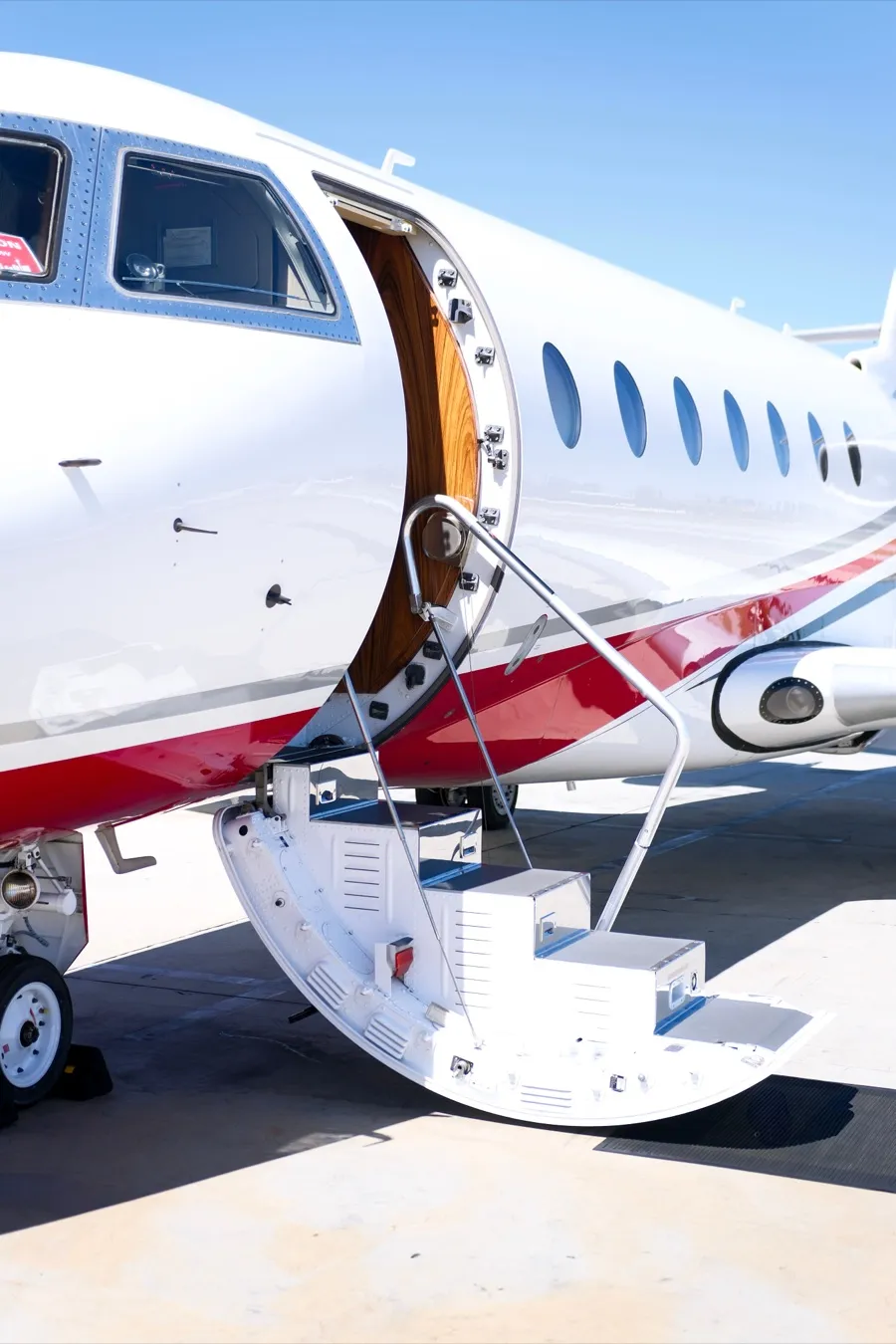




A few characters painted on an aircraft can become almost as recognizable as the person publicly associated with it. Famous private jet tail numbers attract attention through memorable initials, distinctive combinations, and the stories attached to particular aircraft.
Yet a registration is an aircraft identifier, not a passenger manifest. Before connecting an aircraft to a celebrity, an ownership story, or a particular journey, it helps to understand what a public record establishes and where its limits begin.
At Amalfi Jets, aircraft identity is a practical part of arranging a charter. The distinctions that make aviation research more accurate also help travelers ask informed questions about the aircraft proposed for their trip.
What a Private Jet Tail Number Actually Means
A tail number is an aircraft's registration identifier. For an aircraft registered in the United States, it begins with N, the country's nationality designator.
An American registration can contain up to five characters after that prefix, subject to FAA formatting restrictions. Those rules explain why some combinations are possible while others are not, even when a particular set of initials would seem an obvious choice.
A memorable registration may suggest a name, a significant number, or a personal reference. That interpretation is separate from establishing who legally owns the aircraft or who uses it.
A registration is also not an unchanging identity throughout an aircraft's life. Registrations can change, so the manufacturer's serial number is an important point of comparison when following an aircraft through historical records.
Famous Private Jet Tail Numbers: Two Public Associations
A useful private jet tail number list needs context more than length. The examples below illustrate recognizable public associations, not a live directory of aircraft ownership or personal travel.
When researching celebrity private jet tail numbers, distinguish a historical connection from a current registry entry. Neither establishes who was aboard a particular flight, and an old photograph should not be treated as confirmation of a present ownership arrangement.
N236MJ and Its Michael Jordan Association
N236MJ has been publicly associated with Michael Jordan. The combination is memorable because "23" and "MJ" are widely interpreted as personal references, giving aviation enthusiasts an identifier that is easy to recognize.
That association does not, by itself, establish the aircraft's current registered owner or operating arrangements. A current ownership question requires a current registry inquiry, with attention to the aircraft description and serial number rather than the familiar characters alone.
An aircraft registered to a company also presents a different factual claim from an aircraft registered directly to an individual. Keeping that distinction explicit makes the explanation more precise without diminishing the appeal of the registration's story.
N898TS and a Historical Taylor Swift Association
N898TS was historically associated in public reporting with Taylor Swift's Falcon 900. It belongs in a discussion of recognizable registrations as a historical example, not as an unqualified statement about her current aircraft.
A reader encountering an older photograph or article should preserve that time context. The registration's association at the time of publication does not establish the same relationship today.
This is the central weakness of many celebrity aircraft lists, because memorable associations can remain in circulation after circumstances change. A shorter guide that separates past and present is more useful than a longer directory that treats every connection as permanent.
How to Look Up Private Jet N-Numbers
The FAA Aircraft Inquiry system is the starting point for researching private jet N-numbers in the United States. A registration inquiry can provide aircraft details, a serial number, registration status, and registered-owner information, depending on the record available.
Begin with the complete registration rather than a person's name. Compare the aircraft description and serial number with the photograph, article, or historical document that prompted your search.
Next, read the registration status and owner fields carefully. A familiar identifier is not enough to establish that the aircraft remains connected to the person or company mentioned in an older account.
For historical questions, additional aircraft records may be necessary. A current registry result is a snapshot, not a complete explanation of every previous ownership arrangement or registration change.
When keeping research notes, record the date of the inquiry and separate registry information from public associations. This simple distinction makes famous private jet tail numbers easier to discuss accurately as aircraft and ownership arrangements change.
What Famous Aircraft Registrations Reveal About Ownership
Famous aircraft registrations can lead to useful records about aircraft identity and registered ownership. Their value lies in connecting the identifier to the correct aircraft, not in turning a recognizable combination into a definitive account of an individual's affairs.
The registered owner may be an LLC, a trust, or another legal entity. That entry identifies what the record says, but it does not necessarily disclose the individual who ultimately benefits from or controls the entity.
Historical research also requires attention to the registration itself. A number may be reserved, reassigned, or changed, so the same characters do not always indicate the same aircraft across different years.
Comparing serial numbers helps distinguish an aircraft's history from a registration's history. Without that comparison, continuity in the identifier can be mistaken for continuity in the aircraft carrying it.
A reserved registration creates another potential misunderstanding. Its reserved status is not proof that it currently identifies an aircraft shown in a photograph or described in an article.
What a Tail Number Cannot Tell You
An aircraft registration does not identify the passengers on a particular flight. Even a well-established public association is not evidence that a specific person traveled aboard every movement of that aircraft.
The identifier also does not explain a journey's purpose. A route or airport appearance alone cannot establish whether a flight involved a meeting, a personal visit, repositioning, or another activity.
Photographs have similar limits. An image may document an aircraft's presence at a location, but it cannot independently resolve questions about beneficial ownership or who used the aircraft on another date.
The essential distinction is between aircraft identity and personal identity. Maintaining that separation keeps registration research informative without presenting assumptions as facts.
Does LADD Hide an Aircraft Registration?
The FAA's Limiting Aircraft Data Displayed program, known as LADD, concerns the distribution and public display of aircraft flight data. It does not erase a registration from an aircraft or make every source of aircraft information disappear.
Eligible owners or authorized representatives can request restrictions affecting FAA-distributed tracking data. The available approaches include blocking at the FAA source or filtering public display by participating subscribers.
These restrictions concern a particular data-distribution framework, not every possible observation of an aircraft. Independently received ADS-B signals and other observations mean that LADD should not be described as a universal invisibility setting.
LADD participation also should not be confused with proving or concealing passenger identity. Registry information, tracking visibility, and the identities of people aboard are separate questions, each with different limitations.
Our guide to private jet tracking explores the related distinction between observing an aircraft's movement and understanding a person's travel. For readers researching registrations, the important point is that reduced tracking visibility does not change what a tail number means.
Aircraft Sightings in Los Angeles, New York, and Miami: VNY, TEB, and OPF
An aircraft sighting often begins at an airport rather than in a registry. At Van Nuys Airport (VNY), serving Los Angeles, a visible registration can provide a starting point for learning about an aircraft's identity.
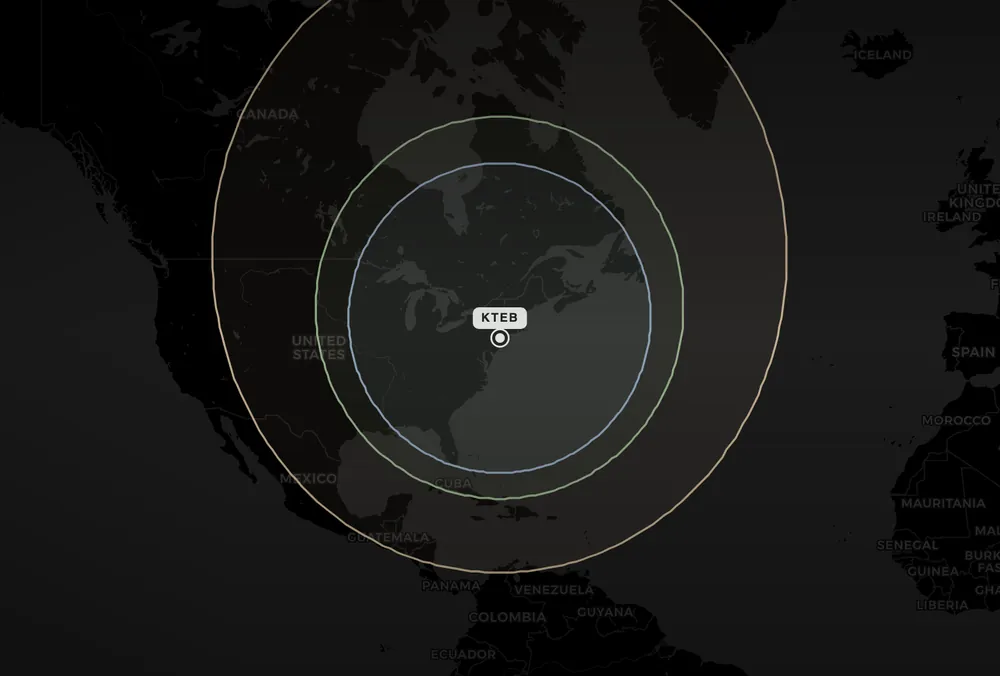
The same principle applies at Teterboro Airport (TEB), located in New Jersey and serving the New York metropolitan area. An aircraft's presence there establishes a location at a particular moment, not the identities of its passengers or their plans beyond the airport.
At Miami-Opa Locka Executive Airport (OPF), serving Miami, an interesting registration may prompt the same curiosity. The useful next step is to examine the aircraft record, not infer a private schedule from a familiar association.
Keep the observation separate from the interpretation. A registration, location, and date describe what was observed, and an assertion about someone's whereabouts requires evidence beyond the aircraft's presence.
Why Aircraft Identity Matters When You Charter
For a charter traveler, a tail number has practical value beyond recognition. It helps connect the proposed aircraft with the records and trip documentation relevant to the journey.
A registration is one input when confirming aircraft identity and reviewing the operating provider. It does not replace operator diligence, and a registry entry alone is not a complete assessment of a charter proposal.
Amalfi Jets is a charter broker, not an aircraft operator. We arrange charter flights through third-party operators and help coordinate aircraft selection, operating arrangements, and itinerary requirements.
That distinction keeps the conversation focused on suitability rather than a recognizable registration. The right aircraft is the one that fits the trip, with its identity and operating arrangements clearly understood.
Aircraft selection also influences the structure of a charter quote. Our Private Jet Charter Cost 2026 guide explains how aircraft choice, billable time, positioning, airport handling, taxes, and crew logistics can contribute to the overall arrangement.
Privacy belongs in that planning conversation as well. Discuss your expectations with our team rather than assuming that an aircraft's absence from one tracking service means no information about its movements can appear elsewhere.
A More Useful Way to Read a Famous Tail Number
Famous private jet tail numbers are most informative when treated as starting points for research rather than shortcuts to conclusions. Read the identifier, compare aircraft details, distinguish the registered entity from the person publicly associated with it, and preserve the dates attached to historical references.
That approach retains the interest of aviation research while respecting what the information can actually establish. A recognizable registration can tell an intriguing story without becoming a claim about someone's current movements.
Request a charter with Amalfi Jets when you are ready to plan your own journey. Our team can help you explore appropriate aircraft options, clarify operating arrangements, and coordinate an itinerary around your priorities.