



Dassault Falcon 900LX: Intercontinental Reach
The Dassault Falcon 900LX combines a distinctive three-engine configuration with a spacious cabin and a published range of 4,750 nautical miles. For travelers considering an intercontinental charter, its appeal lies in how those capabilities fit the journey, from passenger comfort to preferred departure and arrival airports.
The aircraft builds on the Falcon 900EX with aerodynamic refinements, most visibly its winglets. That evolution adds reach to an established platform, but selecting the right charter aircraft still requires a closer look at passenger load, baggage, operating conditions, and the individual cabin offered.
Amalfi Jets is a charter broker, not an aircraft operator. We arrange flights through qualified third-party operators and compare available aircraft against your itinerary, rather than assuming that one model is the right choice for every trip.
Falcon 900LX vs. Falcon 900EX: What Changed?
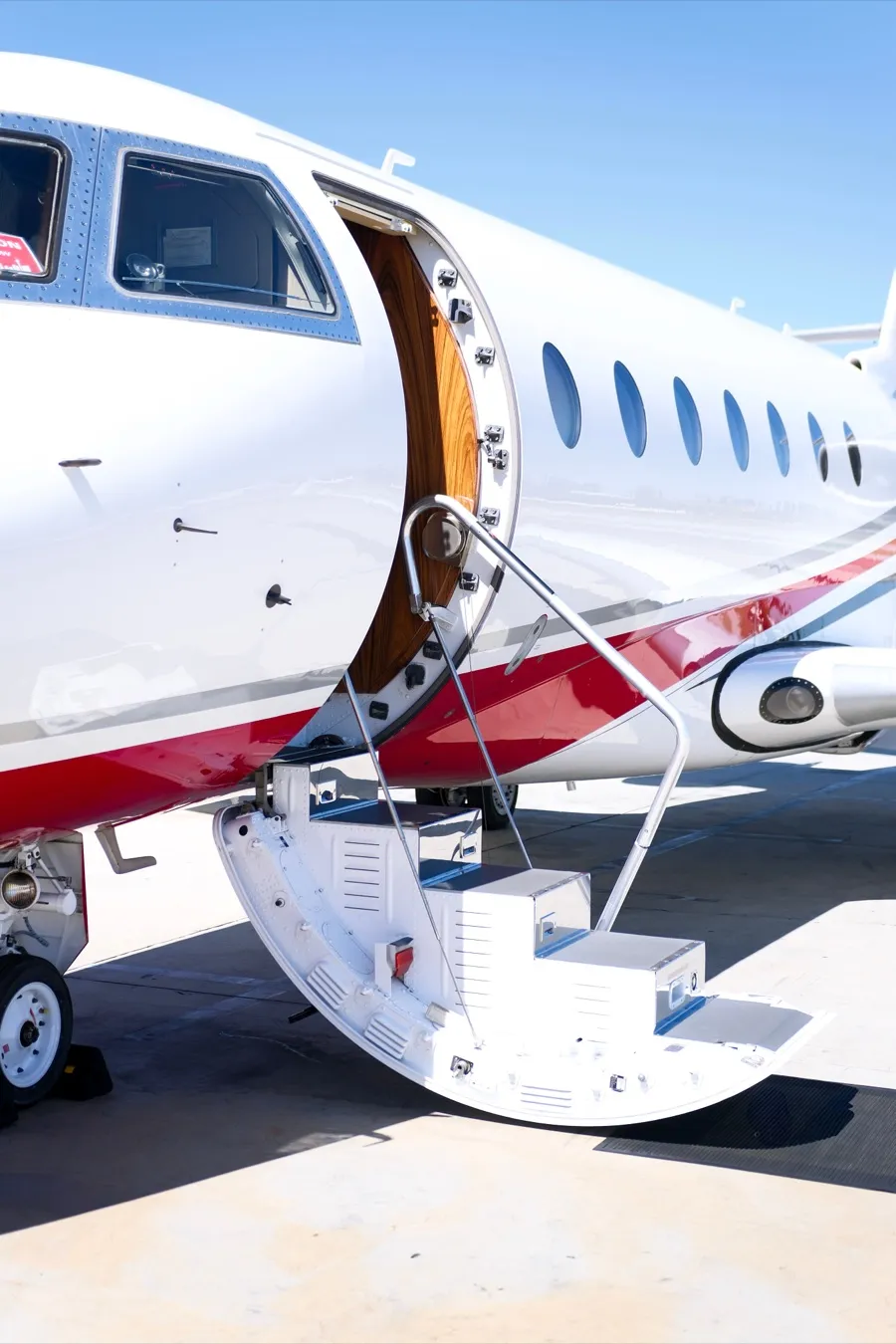
The most recognizable distinction between the LX and the 900EX is the addition of winglets. These aerodynamic surfaces help reduce drag and improve efficiency, contributing to the later model’s extended published range.
For travelers comparing the Dassault 900LX with the 900EX, the useful question is whether that additional capability changes the proposed mission. It may make the LX a stronger candidate for a particular itinerary, but it does not automatically make an available 900EX unsuitable.
Aircraft condition, cabin configuration, positioning, and operator availability can be just as consequential as the model designation. A well-matched aircraft is one that meets your requirements as a whole, not simply the one with the more favorable headline range.
The comparison also deserves a clear distinction between aircraft design and individual charter availability. Interiors and amenities can differ between aircraft of the same model, so the proposed cabin should be assessed alongside the aircraft’s mission suitability.
Falcon 900LX Range: What 4,750 Nautical Miles Means
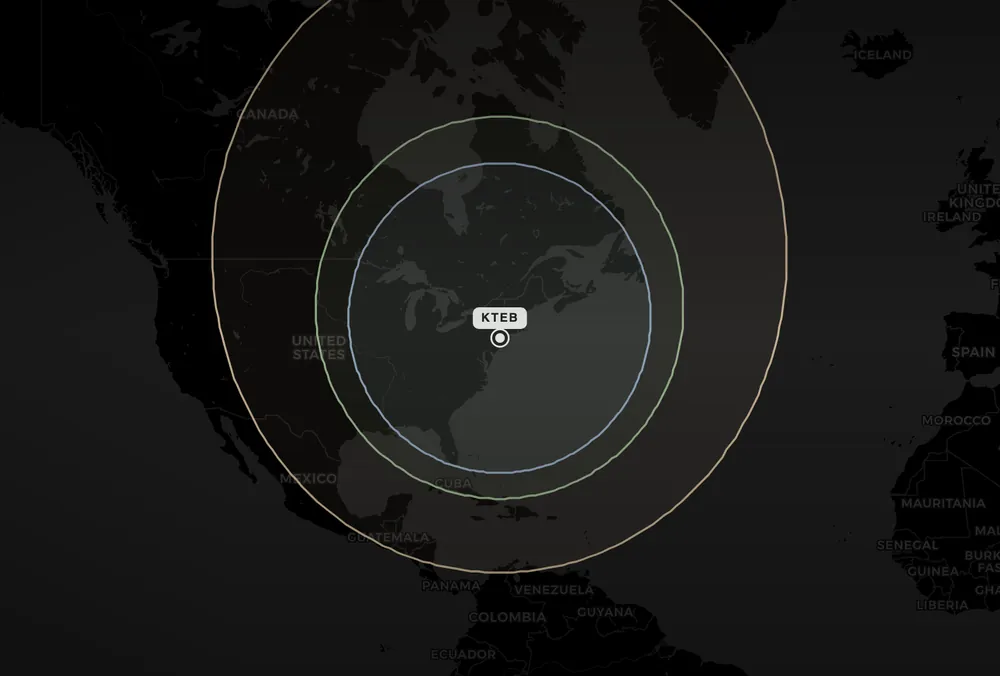
The published Falcon 900LX range is 4,750 nautical miles under stated operating assumptions. That figure provides a useful starting point for aircraft comparison, not a guarantee that every route within that distance can be completed nonstop.
Passenger load, baggage, winds, routing, and fuel reserves affect practical reach. Airport conditions and the flight profile selected by the operator also influence the assessment, which is why an aircraft recommendation should be tied to a specific itinerary.
For a New York departure to London or Paris, the aircraft may warrant consideration as part of an intercontinental charter search. A Los Angeles departure or a Dubai destination introduces a different mission profile, and the operator must assess whether the proposed journey supports a nonstop flight or requires a fuel stop.
The return sector deserves its own evaluation. Winds, departure conditions, and passenger requirements may differ, so suitability in one direction should not be treated as confirmation for the entire trip.
If nonstop travel is your priority, share that requirement at the beginning of the inquiry. Amalfi Jets can then compare available aircraft with that objective in mind and explain where an alternative may provide a better fit.
Why Three Engines Matter for Oceanic Planning
The aircraft’s three-engine configuration provides an additional propulsion source, making it a distinctive option for intercontinental travel. That redundancy is relevant to oceanic mission planning, where routing and diversion considerations deserve particular attention.
It should not be interpreted as proof that a trijet is categorically safer than a twin-engine aircraft. Safety and operational suitability depend on the aircraft, maintenance, crew, operator approvals, procedures, and the conditions affecting the flight.
Three engines also do not create unrestricted access to any overwater route. The selected operator must determine the appropriate routing, suitable diversion options, fuel requirements, and applicable operating permissions for the journey.
For a charter client, the practical benefit is having another aircraft configuration to consider against the mission. Amalfi Jets keeps the discussion focused on your actual route and the operator’s assessment, rather than treating engine count as a complete answer to an operational question.
Cabin Comfort for Longer Journeys
The three-zone cabin provides a useful framework for working, dining, and resting during a longer flight. Depending on the individual layout, passengers may be able to use different areas for conversation and quieter activities.
A maximum seating capacity is not the same as the ideal passenger count for an intercontinental itinerary. The arrangement offered for your charter matters, particularly when several travelers want to rest or when baggage requirements are substantial.
Connectivity, seating, interior condition, and onboard amenities should be confirmed for the specific aircraft. If you intend to work throughout the flight, the details of the available connectivity belong in the initial conversation rather than being assumed from the model name.
Resting arrangements deserve the same attention. Sharing how you plan to spend the flight allows the cabin search to reflect your priorities, whether those involve a business discussion, a family journey, or an overnight itinerary.
Airport Flexibility Requires an Individual Assessment
Range is only one part of the aircraft selection process. Runway performance and airport suitability can influence whether the proposed aircraft can serve your preferred departure and arrival points under the expected conditions.
Runway length alone does not establish suitability. Temperature, elevation, aircraft weight, runway condition, and local operating restrictions all belong in the selected operator’s performance review.
For travelers, airport flexibility is most useful when it supports the complete itinerary. The preferred airport should work with your schedule, aircraft availability, and onward arrangements rather than being selected solely for its proximity on a map.
Amalfi Jets incorporates those preferences into the charter search while leaving operational decisions to the selected operator. If an airport or schedule introduces a constraint, we can discuss suitable alternatives before the arrangements are finalized.
New York and Los Angeles Charter: TEB and VNY
For New York travel, Teterboro (TEB) is an airport option to discuss when planning a private charter. Your preferred departure time, the aircraft’s position, and the operator’s assessment all help determine whether it suits the proposed flight.
The airport decision should also reflect where you need to be before departure or after arrival. Ground transportation can be planned around that destination without assuming a fixed transfer time through the metropolitan area.
In Los Angeles, Van Nuys (VNY) provides another airport option for a charter inquiry. Its suitability should be considered alongside the available aircraft, your schedule, and the relevant airport requirements for the trip.
A West Coast departure can create a different range assessment from a New York departure, even when the destination is identical. Comparing the actual sectors keeps the aircraft recommendation grounded in the journey rather than a broad city-to-city assumption.
London, Paris, and Dubai Charter: BQH, LBG, and DXB
For London, London Biggin Hill (BQH) is an airport option to evaluate against your final destination and schedule. Operating requirements and the arrangements available for the proposed visit should be considered before making it the confirmed arrival point.
Paris-Le Bourget (LBG) is a relevant option for a Paris private charter itinerary. Airport access, parking, and handling arrangements need confirmation for the planned dates, especially when the aircraft will remain for a return flight.
Dubai International (DXB) requires its own itinerary-specific coordination. The selected operator must confirm applicable airport access, permissions, and handling arrangements rather than treating the airport choice as automatic.
Across London, Paris, and Dubai, the airport plan should be developed alongside the aircraft assessment. A preferred arrival point is only useful when the route, operating requirements, and schedule work together.
For a journey involving more than one of these cities, share the complete sequence of stops at the outset. A broader view helps identify positioning needs and assess each sector without assuming that one flight’s feasibility settles the rest of the itinerary.
Where the Aircraft Fits in the Charter Market
The 900LX is worth considering when a traveler needs intercontinental capability and a substantial cabin without automatically selecting a larger long-range aircraft. Its value depends on the mission fitting its practical operating envelope and the available cabin meeting the passengers’ needs.
A larger aircraft may be more appropriate when nonstop objectives, passenger numbers, baggage, or resting requirements demand additional capability. Conversely, choosing a larger model is not inherently a better decision if it adds capacity that the itinerary does not require.
The Amalfi Jets page on ultra-long-haul private jets offers a broader introduction to aircraft considered for longer missions. It complements this model-specific discussion without implying that every aircraft in the comparison serves the same routes or cabin requirements.
Availability remains an essential part of the decision. Amalfi Jets does not own or operate the aircraft, and access to a particular model depends on suitable options available through third-party operators for your dates and itinerary.
What Shapes a Charter Quote?
A meaningful charter quote begins with the complete itinerary, not a generalized model price. Aircraft positioning, crew logistics, airport charges, taxes, international arrangements, and other applicable costs can affect the total.
The Amalfi Jets private jet charter cost guide for 2026 provides context for understanding why a charter involves more than an hourly aircraft figure. For your proposed journey, the relevant comparison is the quoted scope of service and the arrangements included.
Dates, departure windows, passenger count, baggage, and cabin priorities help define the search. Sharing those details early allows the aircraft options to be compared against the same requirements rather than against incomplete assumptions.
If your timing or airport choice is flexible, mention that as well. Flexibility may broaden the available options, although it does not guarantee availability or a particular outcome.
Falcon 900LX Charter Questions
Travelers sometimes ask whether the name Falcon 900 LX identifies a different aircraft. In this context, the spaced name refers to the same model, and the more important distinction is the individual aircraft offered and its confirmed configuration.
Another common question is whether the aircraft can fly a proposed route nonstop. The published range helps frame that conversation, but only an itinerary-specific operator assessment can establish whether the intended flight is feasible under the expected conditions.
For travelers comparing the LX with the 900EX, the winglets and improved published reach are the central design distinction. Cabin suitability and availability still need to be evaluated separately rather than inferred from the model name.
The three-engine configuration also prompts questions about oceanic travel. It provides propulsion redundancy, but appropriate routing, diversion planning, and operating procedures remain necessary for the actual mission.
Plan Your Charter with Amalfi Jets
The Falcon 900LX brings together intercontinental reach, a distinctive trijet design, and a cabin suited to discussing a wide range of longer journeys. The right recommendation depends on how those qualities align with your route, passengers, schedule, and onboard priorities.
Request a charter with Amalfi Jets and share your preferred airports, dates, passenger count, and plans for the flight. Our team will compare available aircraft and explain the proposed arrangements, with the flight performed by the selected qualified third-party operator.