



The Dassault Falcon 8X combines a published range of 6,450 nautical miles with a three-engine design and a cabin that can accommodate different priorities for work, conversation, and rest. For travelers considering intercontinental charter between New York, Los Angeles, London, Dubai, Singapore, and Paris, its appeal lies in how those capabilities fit the journey rather than in the specifications alone.
Amalfi Jets approaches aircraft selection through your itinerary, passenger requirements, and preferences on board. As a charter broker, we source aircraft through qualified operators rather than owning or operating the aircraft ourselves, while the selected carrier remains responsible for the flight's operational assessment.
Falcon 8X Range: Understanding the Published Figure
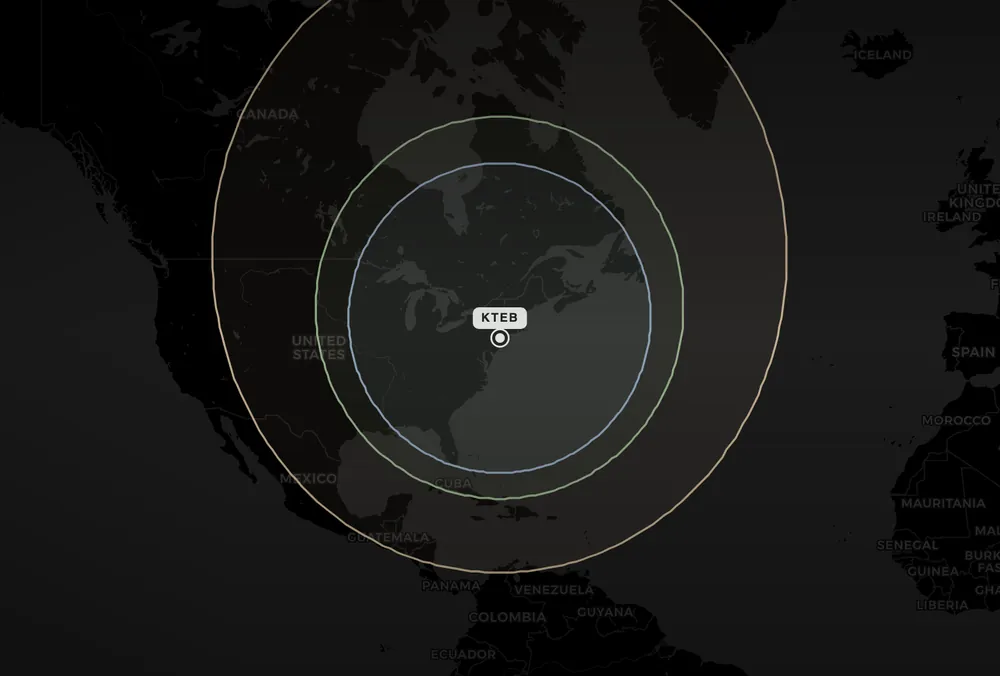
The published Falcon 8X range is 6,450 nautical miles. That figure provides a useful starting point for comparing aircraft, but it does not establish the distance every charter flight can travel nonstop.
Passenger count, baggage, winds, fuel reserves, airport conditions, and the proposed routing all affect the mission. An aircraft carrying a larger group may face different planning considerations than one carrying fewer passengers, even when both journeys connect the same cities.
For the traveler, the important question is whether the proposed aircraft can meet the specific itinerary on the requested date. A London to Singapore request, for example, requires an operator's assessment of the actual airports, payload, conditions, and routing before anyone can confirm a nonstop plan.
We treat nonstop travel as a preference to evaluate rather than a promise attached to an aircraft name. If a technical stop is appropriate, its implications for the itinerary should be clear before you commit.
Dassault 8X vs. Falcon 7X: What Changes for Travelers?
The Dassault 8X develops the Falcon 7X concept with a longer cabin and greater published range. Those differences can matter when a trip calls for more space on board or when additional reach improves the proposed itinerary.
A longer cabin creates more opportunity to separate activities, although the benefit depends on the installed layout. A group hoping to hold a meeting while other passengers rest should review the actual arrangement rather than assume that every aircraft provides the same degree of separation.
The comparison also needs to account for availability and the complete journey. A well-matched 7X proposal may be more appropriate for one itinerary, while the 8X's additional reach or cabin arrangement may make it the stronger candidate for another.
Our recommendation considers the aircraft offered, not simply the model designation. Seating, requested amenities, baggage, airport access, and the operator's mission assessment belong in the same discussion.
Three Engines, ETOPS, and Remote Routing
The aircraft's three-engine configuration is one of its most distinctive features. For journeys over water or remote regions, it also raises a common question about ETOPS and the flexibility of the proposed route.
ETOPS is often associated with the diversion planning requirements that shape certain twin-engine operations. A trijet can present a different regulatory planning picture, which may be relevant when comparing remote routings, but three engines do not create unrestricted access or remove the need for suitable diversion planning.
Applicable requirements depend on the operating authority, the carrier's approvals, the aircraft, and the route. It would therefore be misleading to describe the configuration as a blanket exemption from every extended operations requirement.
The practical question is whether the selected operator can support the requested routing under the applicable rules. Amalfi Jets coordinates those itinerary questions with the operator so that any routing benefit is reflected in a supportable proposal rather than a broad claim.
Falcon 8X Interior: Seating, Privacy, and Rest
The Falcon 8X interior is best understood through the configuration of the aircraft being offered. Layouts accommodating 14 to 16 passengers may be considered, but the approved seating capacity and available arrangement must be confirmed for the specific aircraft.
Seating capacity is not the same as sleeping capacity. If your party intends to rest during an overnight sector, the number and arrangement of suitable sleeping positions deserve as much attention as the total number of seats.
For business travel, separate areas for discussion and quiet work may be a priority. For families, the more useful distinction may be between a shared seating area and a quieter space where passengers can settle in without interrupting one another.
Cabin photographs and a layout plan help make those choices tangible. We review the proposed arrangement with your group size and intended use in mind, rather than treating one interior as representative of every aircraft of the same type.
Cabin Amenities Worth Confirming Before Booking
An extended flight makes small cabin details more consequential. Connectivity, dining arrangements, privacy, entertainment, and the way seating converts for rest can all influence whether an aircraft feels well suited to your journey.
Features such as a shower, a privacy suite, or dedicated crew rest space should never be assumed from the model name. Their availability depends on the individual aircraft, and any feature essential to your trip should be addressed in the proposal.
Connectivity also deserves a specific conversation if you expect to work in flight. Ask about the service available on the selected aircraft and any relevant limitations rather than treating onboard internet as uniform across all charter options.
Baggage planning belongs in this discussion as well. Sharing luggage requirements early, including any unusually sized items, allows the operator to assess the complete load alongside passengers, fuel, and the route.
FalconEye and the Limits of Any Technology Promise
FalconEye is Dassault's Combined Vision System, designed to support flight crew situational awareness through enhanced and synthetic visual information. It is relevant to a discussion of the aircraft's available technology, particularly when considering operations in reduced visibility.
Availability for an aircraft model does not mean that every charter example has the same equipment installed. If FalconEye matters to your selection, the equipment on the proposed aircraft should be confirmed as part of the aircraft review.
No vision system guarantees an arrival in adverse weather. Airport conditions, aircraft equipment, crew qualifications, and the operator's approvals remain part of the decision, and those considerations cannot be replaced by an avionics feature.
New York TEB, Los Angeles VNY, and London LHR
For New York travel, Teterboro Airport (TEB) is a relevant airport to discuss when planning a private charter. For Los Angeles, Van Nuys Airport (VNY) is another established option, with suitability for the specific flight dependent on the operator's assessment.
London Heathrow Airport (LHR) may be your requested arrival point, but it should be considered alongside other suitable airport options. Your final destination, airport permissions, operating requirements, and the onward ground journey all influence the recommendation.
A TEB to LHR or VNY to LHR request therefore begins with your preferred schedule and the details of your party. The operator must assess the airport pairing, passenger and baggage load, forecast conditions, and reserves before confirming the flight plan.
The aim is not simply to select the most familiar airport name. It is to build an itinerary in which the aircraft, airport arrangements, and final transfer work together comfortably and efficiently.
Dubai DXB, Singapore SIN, and Paris LBG
Dubai International Airport (DXB), Singapore Changi Airport (SIN), and Paris Le Bourget Airport (LBG) extend the airport discussion across three important intercontinental destinations. Each request requires its own review of permissions, handling arrangements, operating conditions, and the onward journey.
For a New York to Dubai itinerary or a Paris to Singapore journey, the aircraft's published range is only one part of the assessment. Your preferred departure time, passenger count, baggage, and flexibility about a technical stop help establish what the operator needs to evaluate.
Arrival arrangements should be addressed with the same care as the flight itself. The selected handling arrangements, any applicable arrival formalities, and ground transportation need to be established for the specific airport rather than assumed.
Airport flexibility can also be useful when timing or access becomes a constraint. Where appropriate, we can discuss alternatives with you and the operator while keeping your final destination and preferences central to the proposal.
Choosing a Falcon 8X Charter With Amalfi Jets
A considered charter proposal should describe the actual aircraft and configuration available for your trip. The model name is a starting point, not a substitute for reviewing seating, amenities, baggage suitability, and the itinerary as a whole.
Amalfi Jets sources options through qualified operators and coordinates the details around your requirements. The operating carrier is responsible for operating the flight and determining whether the aircraft and proposed routing meet applicable requirements.
Our ultra-long-haul private jet options provide a useful framework for comparing alternatives if another aircraft better matches your priorities. The right recommendation may turn on cabin layout, airport suitability, or availability just as much as published range.
This approach keeps the aircraft selection proportionate to the journey. You receive a proposal shaped around what you need to accomplish, rather than a recommendation based solely on an aircraft's reputation.
Understanding the Charter Proposal
A meaningful quote reflects the complete itinerary rather than a general aircraft category. Aircraft positioning, crew arrangements, airport charges, applicable taxes, and trip structure can all influence the proposal.
Our private jet charter cost guide explains the broader factors behind charter pricing. Your individual quote should address the requested journey and make clear which arrangements and services are included.
If you are comparing proposals, review the aircraft configuration and itinerary assumptions alongside the total. Two offers carrying the same aircraft model name may differ in ways that matter to your group, particularly when rest, connectivity, or airport preferences are important.
Plan the Aircraft Around Your Journey
The Dassault Falcon 8X offers a compelling combination of intercontinental reach, a distinctive trijet design, and flexible cabin possibilities. Its value comes into focus when those attributes align with your passenger needs, airport choices, and expectations for time on board.
Share your itinerary, group size, baggage requirements, and cabin preferences with Amalfi Jets. Request a tailored charter proposal, and our team will source suitable options and coordinate the details with the operator around the journey you want to make.