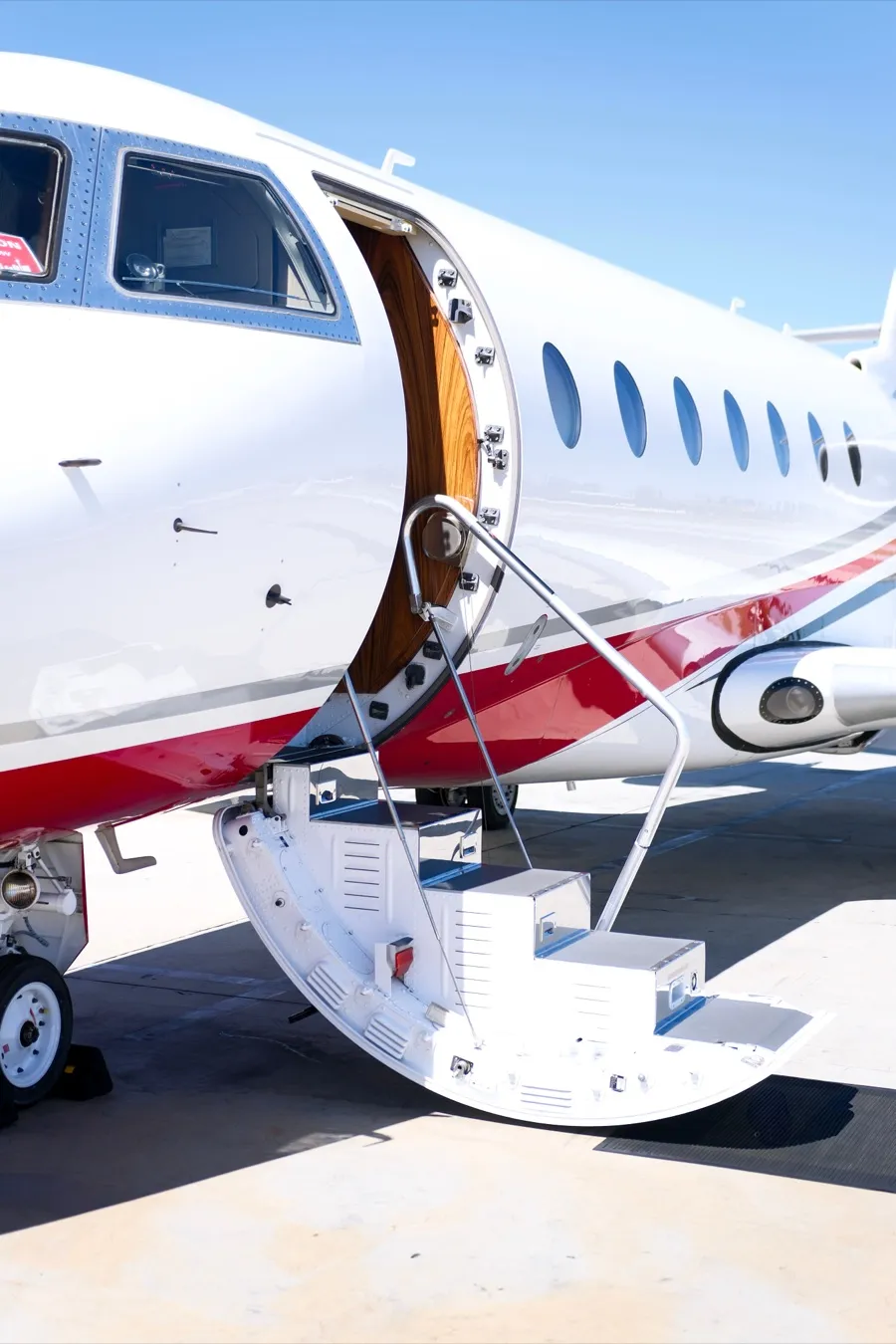





The Falcon 50 jet stands apart through its three-engine profile and enduring appeal as a classic business aircraft. For travelers considering one today, the important question is whether the particular aircraft offered fits the journey, the group, and the experience they expect onboard.
At Amalfi Jets, we approach that decision as a charter broker, sourcing aircraft through third-party operators rather than operating flights ourselves. Whether your plans begin in New York, Los Angeles, Miami, or Houston, our recommendation starts with your itinerary and the details of the available aircraft.
Falcon 50 Jet: What Makes the Three-Engine Classic Distinctive
The Dassault Falcon 50 has a recognizable identity, with a three-engine layout that distinguishes it from many other business aircraft. That design is part of its appeal, but appearance alone does not establish whether it is the right choice for a charter.
For travelers drawn to a classic Falcon, the more useful conversation concerns the aircraft available for their dates. Its variant, interior configuration, equipment, and suitability for the proposed route matter more than a general impression of the model.
An aircraft with a familiar name can still present a very different experience from another example of the same type. We focus on those differences early, so your expectations reflect the proposed aircraft rather than a representative photograph or a broad description.
Falcon 50 Range: What Determines a Nonstop Flight?
Falcon 50 range is not a single promise that applies to every itinerary. Whether a proposed flight can operate nonstop depends on the selected aircraft, passenger and baggage load, weather, routing, fuel reserves, and applicable operational requirements.
The original Falcon 50 and Falcon 50EX also need to be distinguished during the selection process. A performance assumption associated with one variant should not be applied automatically to another, and neither designation replaces a route-specific assessment.
If nonstop travel is essential, make that clear at the beginning of your inquiry. The operating team can then evaluate the proposed flight with that requirement in mind, while we help compare suitable aircraft options.
A map is useful for understanding the journey, but it cannot establish operational feasibility. For longer domestic trips or international travel, a recommendation should follow the operator’s assessment rather than a headline range figure.
Cabin Feel: What to Look for Beyond the Photographs
The appeal of a Falcon 50 cabin depends on how well its arrangement supports your time onboard. Some travelers want a setting for conversation and reading, while others need seating that works for reviewing documents or traveling together as a family.
There is no single interior that represents every aircraft available for charter. Seating layouts, upholstery, lighting, galley equipment, lavatory arrangements, and refurbishment history can differ, so current images and configuration details are more useful than model-level impressions.
Connectivity deserves its own discussion if you expect to work during the flight. The aircraft name does not establish what equipment is installed, what service may be available on your route, or whether it will support your intended use.
Baggage is equally important to the cabin conversation. A group traveling with large suitcases, specialist equipment, or other substantial items may have different requirements from a group with the same passenger count carrying only overnight bags.
Share catering preferences and any specific cabin needs before an aircraft is selected. Those details help shape an informed recommendation instead of becoming last-minute compromises.
Who a Falcon 50 Charter Suits
A Falcon 50 charter can suit travelers who appreciate a classic aircraft and are comfortable choosing on the merits of the individual option presented. The strongest fit is a group whose route, baggage, seating preferences, and onboard expectations align with that aircraft’s capabilities and configuration.
For business travelers, that may mean colleagues who want to travel together between meetings and value a cabin suited to conversation. For personal travel, it may mean a family or private group whose priorities center on a coordinated itinerary and a thoughtfully arranged onboard experience.
It may be less suitable when an available aircraft cannot provide an essential feature, a preferred cabin arrangement, or the required route capability. In those circumstances, attachment to a particular model should not outweigh the needs of the journey.
Our role is to make the trade-offs clear rather than recommend a classic aircraft simply for its character. The right choice is the aircraft that supports your plans with the fewest unnecessary compromises.
New York and Los Angeles: Planning With TEB and VNY
For New York travel, Teterboro (TEB) can be considered as part of the departure or arrival plan. Its suitability for your itinerary should be discussed alongside the destination address, preferred schedule, and arrangements for the selected aircraft.
A proposed New York to Los Angeles flight involving Van Nuys (VNY) brings the nonstop question into focus. Passenger load, baggage, weather, routing, and reserves all require review before the operator can establish whether the specific aircraft can perform the flight as requested.
The return journey deserves its own assessment rather than being treated as an identical flight in reverse. Conditions and operational requirements can differ, and your schedule may introduce different priorities on each leg.
If your plans include meetings on both coasts, share the full itinerary rather than requesting each segment in isolation. That gives us a clearer understanding of where timing matters most and where another aircraft option may better support the trip.
Miami and Houston: Considering OPF and SGR
For Miami itineraries, Miami Opa-locka Executive (OPF) can be included in the airport discussion. A trip between New York and Miami may place particular emphasis on departure preferences, cabin comfort, and onward ground arrangements, but aircraft suitability still requires individual review.
Houston travel can include consideration of Sugar Land Regional (SGR). The choice should reflect where you need to be on the ground, the proposed flight, and the arrangements available for that movement rather than the airport code alone.
A Miami to Houston itinerary may serve a different purpose from a Los Angeles to Houston journey. Sharing the reason for the trip, key appointment times, and any flexibility helps us organize the aircraft search around your actual priorities.
These city pairs are planning examples, not statements of availability or guaranteed performance. Airport suitability, services, and any relevant arrival requirements need to be confirmed for the proposed itinerary.
Falcon 50 Versus Falcon 50EX
The Falcon 50EX should be considered as a distinct variant, not simply another name for the original aircraft. When both are under consideration, the useful comparison concerns what each proposed aircraft can deliver for your route and your group.
The variant alone does not establish the cabin’s condition, the installed connectivity equipment, or the seating arrangement. An aircraft’s current interior and equipment deserve separate attention from its model designation.
Ask which variant is being offered and what that means for your particular flight. We can then discuss the aircraft’s configuration alongside the operator’s route assessment, keeping the comparison grounded in the journey rather than the suffix.
Falcon 50 Versus Falcon 2000 and Newer Falcons
The Dassault Falcon 50 is best compared with newer Falcons through the requirements of the trip. A different model may be worth considering if your priorities include a particular cabin layout, onboard equipment, baggage arrangement, or route capability that the available classic cannot provide.
Our Falcon 2000 charter guide offers a useful next step for travelers exploring another part of the Falcon family. The same selection principle applies, as the exact variant and aircraft configuration matter more than the family name alone.
Rather than assuming that newer is always necessary, begin with what would materially improve your journey. More suitable seating, a required connectivity setup, or a better operational fit can be meaningful reasons to consider another aircraft.
Conversely, there is little value in choosing a model for features your trip does not require. Comparing aircraft available for your dates keeps the discussion focused on practical differences instead of reputation or age.
Selecting a Classic Aircraft With Care
A classic design calls for a clear understanding of the aircraft being presented. Age alone does not describe its current condition, just as a refreshed interior does not answer every question about equipment or operational suitability.
As a charter broker, Amalfi Jets brings together aircraft sourcing, itinerary coordination, and your preferences. Third-party operators conduct the flights and are responsible for the aircraft’s operation and operational decisions.
We seek the aircraft and cabin information relevant to your request and discuss the proposed option with you before you commit. Where a detail remains unresolved, it should remain an open question rather than be treated as an assurance.
That approach is especially valuable when comparing several aircraft with the same model name. A clear account of the actual option is more useful than a broad statement about what every example should offer.
Bringing the Flight and Ground Plan Together
The aircraft is only one part of the itinerary. Your preferred FBO, ground transportation needs, baggage arrangements, and destination schedule also influence how the journey should be organized.
For international travel, customs and handling arrangements need to align with the proposed flight. Operating hours and airport services require confirmation, rather than an assumption that every arrival can be handled in the same way.
Tell us about important appointments and any onward connections at the start of planning. We can then consider the ground plan alongside the aircraft search without promising a fixed transfer time or overlooking the details after arrival.
Planning Your Falcon 50 Trip With Amalfi Jets
To explore whether a Falcon 50 jet belongs in your plans, begin with your dates, departure and arrival preferences, passenger count, and baggage requirements. Let us know whether nonstop travel is essential and which onboard features are nonnegotiable.
Connectivity, catering, pets, ground transportation, and schedule flexibility are also useful parts of the initial conversation. With those priorities in view, we can compare available Falcon 50 and Falcon 50EX options with other suitable aircraft and explain the differences that matter to your trip.
The strongest case for this three-engine classic is always a specific itinerary. Request a charter with Amalfi Jets, and let our team help you consider the right aircraft for your next journey.