



Falcon 2000LXS Range and Charter Suitability
The Dassault Falcon 2000LXS brings together a stand-up cabin, a published range of 4,000 nautical miles, and airport flexibility that deserves a closer look. For travelers considering domestic or transatlantic charter, its appeal lies in how those qualities work together. The most useful question is not simply how far it can fly, but how well a particular aircraft fits your passengers, baggage, airports, and schedule.
Amalfi Jets approaches aircraft selection around your itinerary rather than a model name alone. As a charter broker, we source aircraft through appropriately certified operators and coordinate the details surrounding your trip. The operating carrier assesses flight feasibility, including whether the proposed route can be flown nonstop under the expected conditions.
What Sets the Dassault Falcon 2000LXS Apart
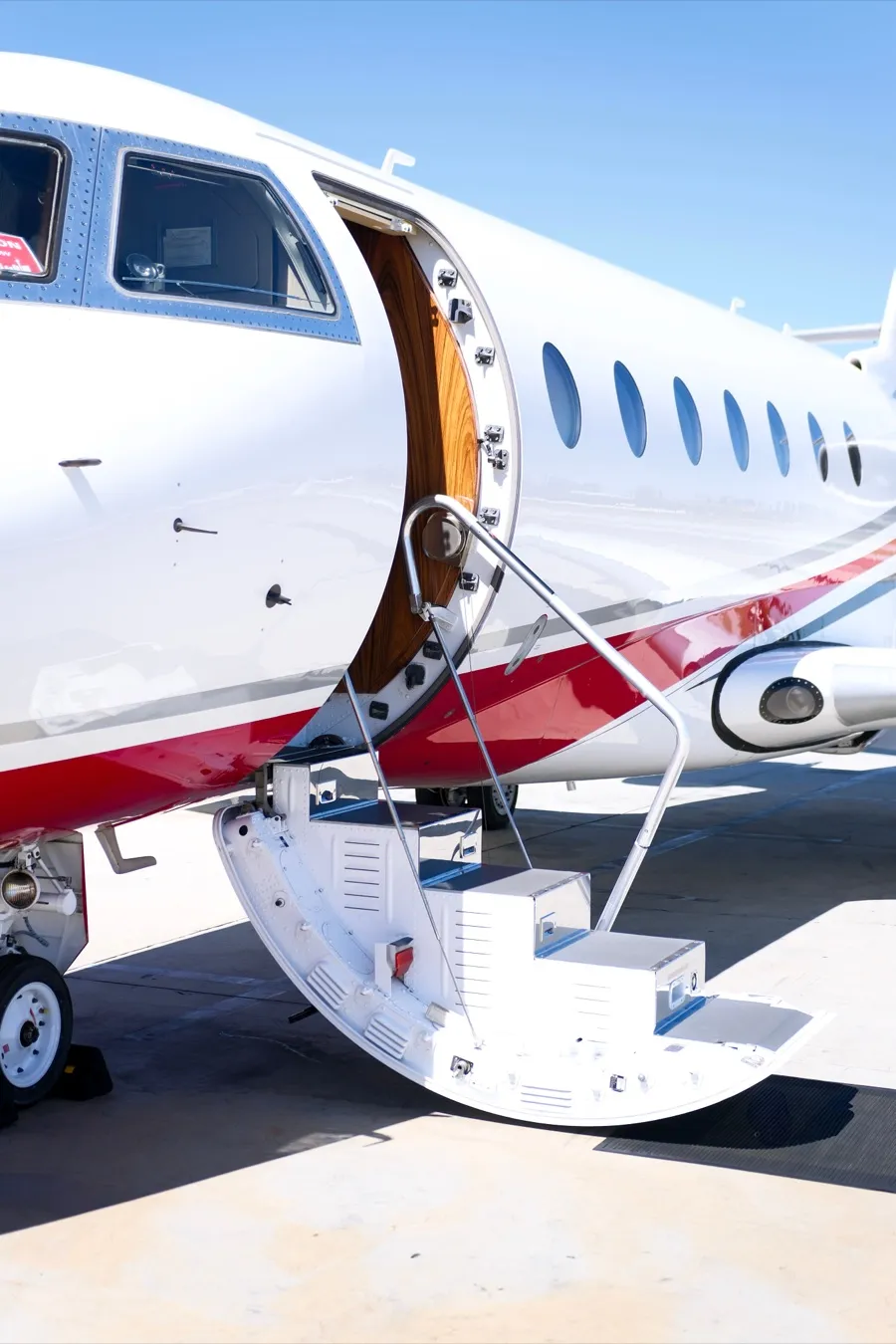
The LXS is a distinct variant within the Falcon 2000 family, not an interchangeable label for every aircraft bearing the Falcon 2000 name. Its winglets are part of an aerodynamic design associated with its range and performance capabilities. When comparing charter proposals, the exact variant matters as much as the broader aircraft family.
You may see this model written as Falcon 2000 LXS or shortened to Dassault 2000LXS. These are alternative ways of referring to the model, not separate aircraft variants. A proposal should identify the aircraft clearly enough to distinguish it from other Falcon 2000 versions.
Travelers comparing super-midsize private jet options may also consider this aircraft when cabin space and longer-range capability are priorities. That comparison should extend beyond a category label to the actual interior, baggage requirements, and proposed route. The strongest recommendation is the aircraft that fits the mission, not simply the one with the most appealing headline specification.
Understanding the Published Range
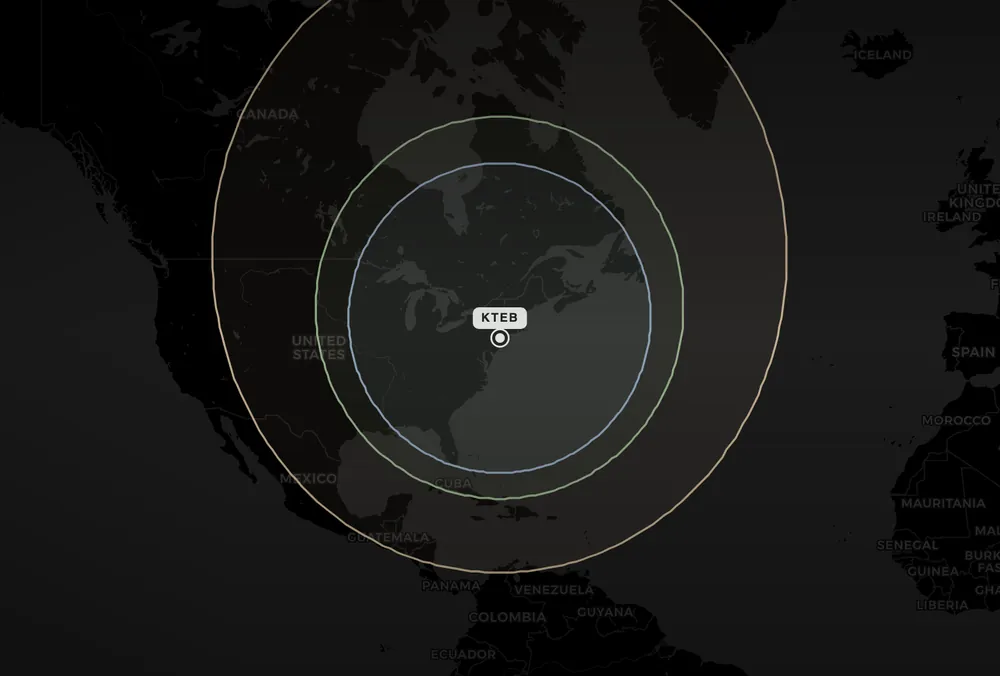
The published range of 4,000 nautical miles is a planning benchmark, not a promise that every route within that distance can be flown nonstop. Range figures depend on defined operating assumptions, including passenger load and fuel reserves. Your itinerary introduces conditions that may differ from those assumptions.
Passenger count, baggage, winds, routing, airport conditions, and required reserves all influence the operating plan. A route that looks straightforward on a map may require a fuel stop or a different aircraft once those factors are considered. This is especially important when an itinerary approaches the aircraft's published range.
Arrival planning requires the same care. Cruise performance alone does not establish a reliable schedule because winds, air traffic routing, and airport procedures affect the journey. Amalfi Jets coordinates with the carrier to develop a practical itinerary rather than turning an aircraft specification into an arrival guarantee.
Cabin Comfort Begins With the Actual Aircraft
A stand-up cabin is an important part of this model's appeal, particularly when the trip calls for time to work, dine, or relax. The experience still depends on the aircraft's seating arrangement and interior. Two aircraft of the same model may serve different passenger priorities because their cabins are configured differently.
An executive group may prefer seating that supports conversation and individual work. A family may place greater value on how passengers can settle in, where personal items can be stored, and whether the layout suits the journey. Reviewing the proposed interior before confirmation makes those preferences part of the selection process.
Baggage deserves equal attention, especially on longer flights where payload and fuel requirements interact. Share the number and type of bags early, including oversized or unusually shaped items. Available storage volume alone does not establish that every item will fit or that the proposed load suits the route.
Connectivity and onboard amenities also require aircraft-specific confirmation. If you need to work during the flight, describe what that involves before choosing an aircraft. Equipment availability and service capabilities should be discussed for the actual charter rather than assumed from the model name.
New York Charter Planning Through TEB
For New York travel, Teterboro Airport (TEB) is a relevant starting point for the airport discussion. Its suitability for a particular departure or arrival depends on the aircraft, operating conditions, applicable restrictions, and the carrier's assessment. Airport preference should therefore be considered alongside the complete itinerary.
A New York to London request is a useful example of why this aircraft attracts transatlantic interest. A TEB to London Biggin Hill Airport (BQH) itinerary requires evaluation of the actual payload, winds, routing, and reserves before nonstop feasibility can be confirmed. The return journey needs its own assessment because conditions may differ by direction and travel date.
Miami Charter Planning Through OPF
For Miami, Miami-Opa-locka Executive Airport (OPF) can be considered against your preferred schedule and aircraft requirements. Handling arrangements and passenger needs should be coordinated for the specific flight. Neither airport selection nor aircraft availability should be treated as automatic.
Miami to Paris also illustrates the limits of relying on published range alone. An OPF to Paris Le Bourget Airport (LBG) request deserves careful review rather than a blanket nonstop recommendation. If the carrier identifies a constraint, Amalfi Jets can compare a planned fuel stop with another aircraft option that better supports the journey.
London Charter Planning Through BQH
London Biggin Hill Airport (BQH) is a business aviation option to evaluate for a London itinerary. Operating hours, applicable restrictions, border arrangements, and handling requirements must align with the requested journey. Ground transportation should be coordinated around the confirmed airport plan rather than a fixed transfer assumption.
For travelers arriving from New York, the airport pair is only one part of the decision. Passenger requirements and the operator's performance assessment remain central to the recommendation. A preferred London airport is most useful when it supports the flight as a whole.
Paris Charter Planning Through LBG
Paris Le Bourget Airport (LBG) is the Paris airport considered in this planning framework. Access, passenger handling, and border arrangements need to be confirmed for the proposed flight. Those details should be coordinated alongside the aircraft rather than left until after the itinerary is selected.
A TEB to LBG request should be assessed separately from a New York to London itinerary. Different routing, weather, and airport requirements may affect the operating plan. Similar destinations do not necessarily produce identical aircraft recommendations.
Dallas Charter Planning Through DAL
Dallas Love Field (DAL) provides the Dallas starting point for this airport discussion. Aircraft availability, positioning, the selected handling facility, and route feasibility all influence the proposal. The preferred departure airport should be evaluated together with your schedule and destination.
For Dallas to London, a DAL to BQH request requires particular care before any nonstop commitment. The published range is not sufficient on its own to establish suitability. An itinerary with a fuel stop or a different aircraft may provide a better match for your timing and passenger requirements.
Airport Flexibility Still Requires Flight-Specific Review
Airport access is one reason to consider the LXS, but published performance does not make every airport suitable for every flight. Temperature, elevation, runway condition, obstacles, aircraft weight, and operating requirements can all affect the assessment. The carrier must evaluate the actual departure and arrival conditions.
This review should support a practical choice rather than become an exercise in comparing isolated runway figures. An airport that appears attractive geographically may introduce limitations for the planned mission. Considering airport access, cabin needs, and range together produces a more useful recommendation.
What Shapes a Falcon 2000LXS Charter Quote
A charter proposal reflects more than the time spent flying your requested route. Travel dates, aircraft availability, positioning, airport charges, taxes, crew logistics, and requested services can all affect the total. A proposal built around your itinerary is more informative than an isolated hourly figure.
Positioning is particularly important when comparing available aircraft. An aircraft must reach the right place to perform your trip, and those movements can influence both the quote and the schedule. The most suitable option therefore depends on availability and logistics as well as cabin preference.
Our private jet charter cost guidance for 2026 explains why the complete trip total deserves attention. Apply that same approach when reviewing a proposal for this model. Ask what is included, what assumptions underpin the itinerary, and what conditions could change the arrangements.
How Amalfi Jets Coordinates Your Charter
Amalfi Jets is an air charter broker and does not own or operate the aircraft it arranges. Flights are performed by appropriately certified operating carriers. Our role is to source suitable options, coordinate the arrangements, and help you understand the differences between proposals.
Planning begins with your preferred airports, travel dates, passenger count, and baggage requirements. We then consider available aircraft, cabin configurations, operator qualifications, and positioning needs. Where additional performance review is necessary, the operating carrier assesses the flight before feasibility is confirmed.
Your priorities guide that comparison throughout. You may prefer a particular cabin arrangement, need to preserve an arrival window, or want to compare nonstop travel with an option including a fuel stop. Bringing those preferences into the initial discussion makes the resulting recommendation more useful.
Questions About the Falcon LXS
Can it fly nonstop across the Atlantic? Some transatlantic itineraries may be suitable, but the published range does not guarantee a particular route. The carrier must assess the actual airports, payload, weather, routing, and reserves before confirming the plan.
How many passengers can travel? The appropriate passenger count depends on the seating configuration and the mission. Confirm the proposed aircraft's layout and assess passengers, baggage, and fuel requirements together rather than relying on a maximum seating claim.
Is it different from other Falcon 2000 aircraft? Yes, the LXS is a specific variant within the aircraft family. A charter offered simply as a Falcon 2000 should not be assumed to have the same performance or equipment.
Can the same aircraft serve every airport discussed here? Each airport and itinerary requires its own assessment. Aircraft loading, operating conditions, restrictions, and carrier requirements determine whether a particular flight is suitable.
Plan a Charter Around Your Itinerary
The Falcon 2000LXS merits consideration when cabin space, range, and airport access align with your travel plans. Its strongest fit emerges from a flight-specific comparison, not a specification viewed in isolation. A thoughtful review makes the tradeoffs clear before you commit.
Request a charter with Amalfi Jets and share your preferred airports, dates, passenger count, and baggage needs. Our team will explore suitable aircraft, coordinate with the operating carrier, and present options shaped around your journey.