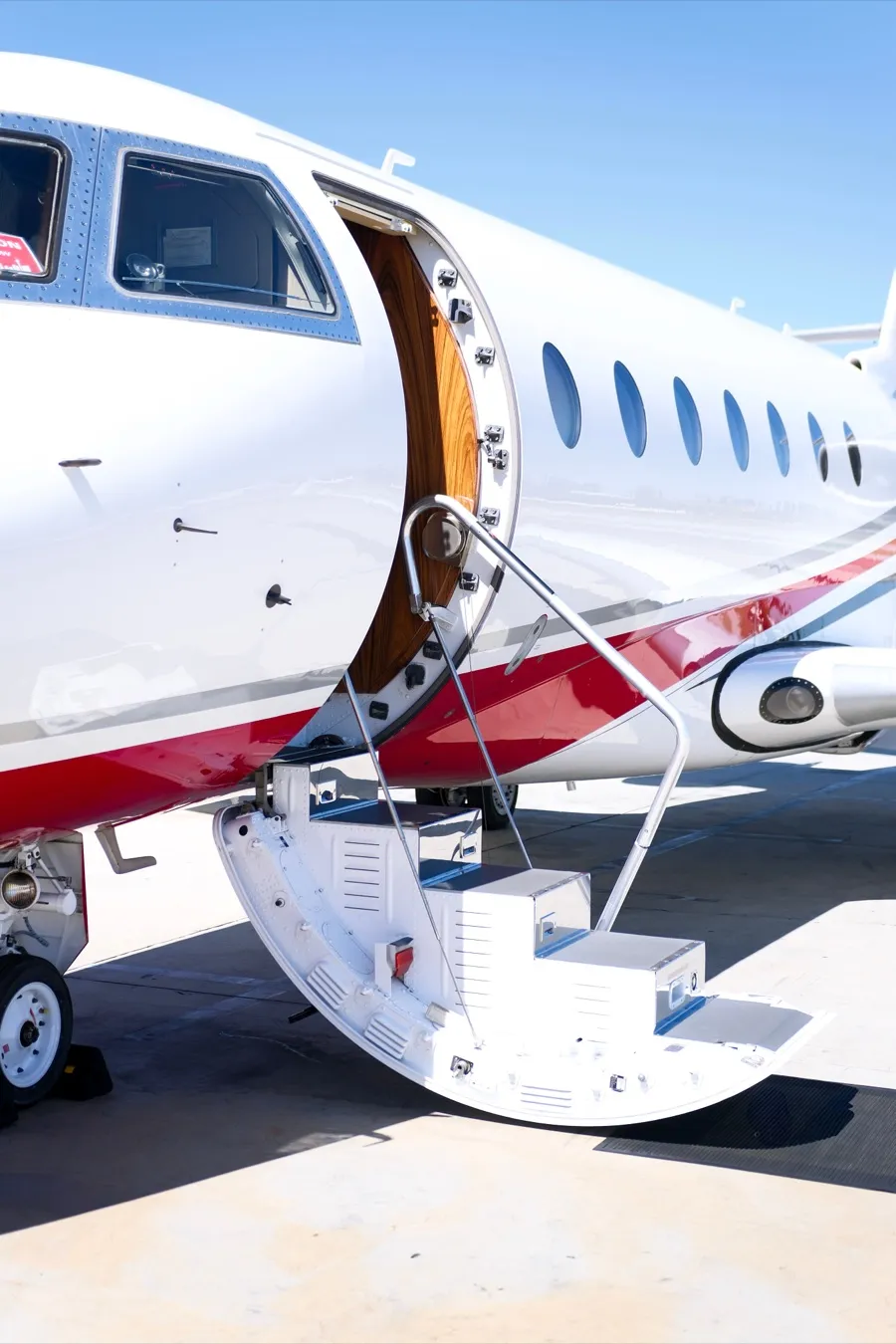




The Falcon 2000EX brings a broad cabin and extended-range capability to long domestic flights and selected transatlantic itineraries. For travelers comparing private charter options, its appeal lies in the balance between passenger space, mission reach, and the requirements of a particular journey.
A departure from New York to London presents a different planning exercise from Miami to Paris or a European itinerary originating in Dallas. The right aircraft depends on more than the destination, as passenger count, baggage, winds, routing, and aircraft availability all influence the decision.
Amalfi Jets acts as your charter broker, sourcing options through third-party operators and comparing them against your itinerary. We evaluate the aircraft being offered rather than treating a model's published range as a promise of nonstop travel.
Dassault Falcon 2000EX: What the EX Designation Means
The Dassault Falcon 2000EX is an extended-range development of the original Falcon 2000, not simply an alternative name for the same aircraft. Its twin-engine design and increased fuel capacity give it a different mission profile while retaining the family's broad-cabin appeal.
For your charter, that distinction creates an opportunity to consider a spacious aircraft for a longer journey without automatically moving to a larger long-haul model. Whether it is the right choice depends on the actual aircraft, its configuration, and the operator's assessment of your proposed flight.
The EX designation should also be distinguished from the Falcon 2000EX EASy and later Falcon 2000 variants. Related names do not make performance assumptions or onboard arrangements interchangeable, so your proposal should identify the specific variant being offered.
Falcon 2000EX Range: Understanding the 4,000-Nautical-Mile Figure
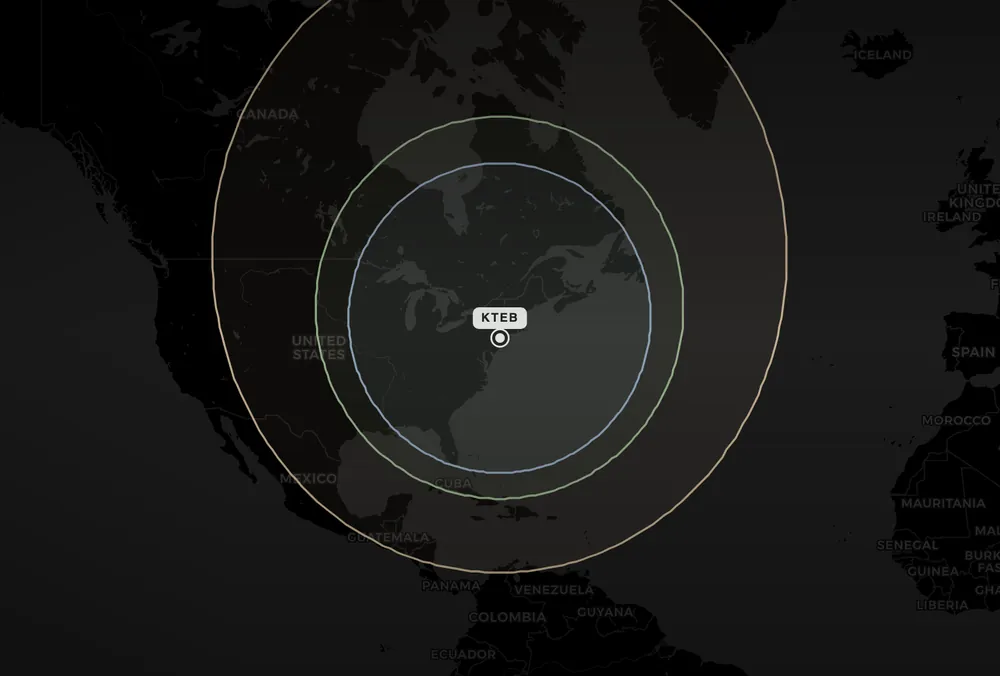
The approximately 4,000-nautical-mile range associated with this aircraft provides useful starting context, not a guarantee for every departure. It should not be interpreted as a promise that an available aircraft can carry a full charter group and its baggage nonstop over that entire distance.
Published range figures depend on planning assumptions, including passenger load and operating conditions. Your itinerary adds its own requirements, from the amount of luggage on board to the fuel reserves needed for the proposed mission.
Winds, temperature, routing, runway performance, and air traffic requirements can change the initial assessment. A journey that appears suitable when measured by distance alone may require a fuel stop or a different aircraft once those factors are considered together.
The direction of a transatlantic flight matters significantly as well. An aircraft that is appropriate for an outbound journey should not automatically be assumed to meet the same nonstop expectations on the return leg, because weather conditions often differ.
The operating carrier evaluates the flight using the exact aircraft and applicable operating requirements. We use that assessment to help you compare realistic options, particularly when nonstop travel is a firm priority rather than a preference.
Cabin Planning for a 10-Passenger Group
A typical executive configuration accommodates approximately 10 passengers, although the available aircraft's layout and approved capacity must be confirmed. That positioning makes the EX worth considering for a group that values cabin space alongside extended-range capability.
Seat count is only the beginning of a useful cabin comparison. The arrangement of the seats matters when some passengers want to work while others prefer to rest or converse, especially during a longer international journey.
We review the actual configuration rather than assuming that every aircraft of the same model offers an identical experience. Sharing your priorities early helps us identify whether the proposed cabin supports the way your group intends to travel.
Baggage deserves the same attention as passenger numbers during the planning phase. A cabin with a seat for everyone does not establish that the aircraft can accommodate all luggage while meeting the performance requirements of the route.
If your party is traveling with larger bags or other bulky items, include those details in the initial inquiry. This information supports both aircraft selection and the operator's payload assessment, reducing the risk of a mismatch later in the planning process.
Twin-Engine Efficiency and Mission Fit
The aircraft's twin-engine configuration is part of its appeal, but it does not establish a universal operating cost or fuel consumption advantage. Efficiency is better considered in relation to the journey you need to complete and the available alternatives.
For a charter itinerary, aircraft positioning can be just as relevant as the model's general performance profile. An otherwise suitable aircraft may be less practical if it must travel a substantial distance to reach your departure airport.
Passenger load, routing, availability, and the possibility of a fuel stop also affect the overall comparison. We consider those factors together rather than selecting an aircraft on the strength of a single specification.
The EX may be an attractive option when you want a broad cabin for a longer mission without assuming that a larger long-haul aircraft is necessary. Another model may be better suited if your group, schedule, or nonstop requirements call for a different balance.
Falcon 2000EX vs. Challenger 300 and Praetor 600
The Challenger 300 and Praetor 600 are useful aircraft to consider alongside the EX because they can serve overlapping travel needs. A meaningful comparison must account for the actual cabin configuration and the conditions attached to each aircraft's performance figures.
Against the Challenger 300, the Falcon's broad cabin and extended-range positioning may be relevant to travelers planning a larger group or a longer sector. That does not make it the automatic choice for a shorter journey where an available Challenger meets the passenger, baggage, and operational requirements.
For such a trip, positioning and availability may influence the decision more than additional published reach. We compare what each aircraft can deliver for your itinerary rather than treating greater range as an advantage you must always purchase.
The Praetor 600 is another worthwhile comparison when extended-range capability is a priority. Its suitability should be evaluated using the same passenger, baggage, routing, and reserve assumptions applied to the Falcon, rather than by comparing headline figures in isolation.
For travelers considering the Dassault Falcon 2000EX alongside either alternative, cabin arrangement and mission feasibility deserve equal attention. An aircraft can be appealing on paper yet less suitable for the particular group, departure airport, or travel date being considered.
Our super-midsize jet charter options provide a starting point for exploring aircraft relevant to long domestic and shorter international journeys. The next step is a comparison of the specific aircraft available, since a category description cannot settle the details of an individual charter.
New York to London: TEB and BQH Planning
New York to London is a city pair for which the EX may merit a mission-specific transatlantic assessment. Nonstop suitability still depends on the selected aircraft, passenger load, baggage, routing, winds, and required reserves.
Teterboro Airport (TEB) is an important facility to consider for a New York departure or arrival. Its suitability for your itinerary should be assessed alongside airport requirements and the ground journey between the runway and your final destination.
For London, Biggin Hill Airport (BQH) is one gateway to evaluate against your plans on the ground. The decision should reflect where you need to be, when you need to arrive, and whether the applicable airport arrangements support your schedule.
We consider the outbound and return flights individually rather than carrying one performance conclusion across both legs. If nonstop travel is essential, that requirement belongs at the start of the aircraft comparison so alternatives can be assessed on the same basis.
Miami to Paris: OPF and LBG Planning
A Miami to Paris itinerary requires its own assessment rather than borrowing assumptions from a New York to London journey. The additional route considerations may change which aircraft are suitable or whether a fuel stop should be included in the proposal.
Miami-Opa Locka Executive Airport (OPF) is a primary facility to consider for travel involving Miami and South Florida. Airport selection should support both the flight plan and your ground itinerary, with applicable international arrangements considered for the proposed schedule.
Paris-Le Bourget Airport (LBG) is a highly relevant gateway for a private charter itinerary to Paris. Airport access, handling arrangements, and any applicable operating requirements should be reviewed for the specific travel dates rather than assumed in advance.
For this city pair, the most useful comparison is between aircraft that can meet your actual priorities. A preference for the EX should remain separate from a firm requirement for nonstop travel until the operating carrier has assessed the mission.
Dallas Departures: DAL and European Connections
Dallas Love Field (DAL) is an airport to consider when your departure or arrival plans center on Dallas. Its relevance to the ground itinerary does not automatically establish that a particular aircraft is appropriate for a proposed European sector.
A journey from Dallas to London or Paris should be evaluated independently, with particular attention to route requirements and your tolerance for a fuel stop. Where the EX does not align with the mission, another aircraft may provide a more suitable proposal.
The same model may also deserve consideration for a longer domestic itinerary involving Dallas, New York, or Miami. Here, cabin preferences, group size, aircraft positioning, and availability often carry more weight than the maximum published reach of the jet.
Questions to Resolve Before Booking
Whether the aircraft can fly nonstop is often the first question, but the answer must relate to your specific departure rather than the model in general. Share the complete itinerary with us, including the return flight, so both directions can be evaluated against your expectations.
Passenger capacity is another metric that requires an aircraft-specific answer. Approximately 10 seats provides useful context, but the proposed configuration and the combined passenger and baggage requirements determine whether an available aircraft actually fits your group.
It is also worth deciding whether you would consider a fuel stop if it broadens the suitable aircraft options. That preference can materially change the comparison and should be discussed before a proposal is narrowed to a particular jet.
Finally, ask what is included in the charter quote and how the proposed aircraft supports the complete journey. The best comparison considers the cabin, routing, airport arrangements, and total itinerary rather than isolating one aircraft rate or range figure.
How Amalfi Jets Builds Your Charter Comparison
Our evaluation begins with your departure and destination, travel dates, passenger count, and baggage details. We also ask about cabin preferences, schedule flexibility, and whether nonstop travel is essential.
We then compare availability, aircraft configuration, positioning, and the operator's mission assessment. Airport requirements and international arrangements are considered alongside the aircraft so that the proposal addresses the journey as a whole.
Amalfi Jets operates strictly as your charter broker, while the selected third-party operator remains responsible for flying the aircraft. That distinction allows us to focus on helping you understand the available choices without presenting a preliminary aircraft comparison as an operational guarantee.
The private jet charter cost guide for 2026 offers additional context for reviewing any proposal. Aircraft type is one consideration alongside positioning, billable time, taxes, airport charges, crew logistics, and international handling, with applicable items depending on the specific trip.
Plan Your Falcon 2000EX Charter With Amalfi Jets
The right charter begins with a clear understanding of what you need from the aircraft and the broader journey. For some itineraries, the Falcon 2000EX provides a compelling option through its combination of cabin space and extended-range capability. For other trips, a different model may ultimately be the better fit.
Tell Amalfi Jets where you want to travel, who is joining you, and which details matter most. Request a tailored charter proposal, and our team will compare the Falcon 2000EX with suitable alternatives around your schedule and priorities.