



This private aviation golf airports guide maps the best private airports for golf travel in the US, pairing iconic courses and resort corridors with the general aviation fields that make the most sense for access, runway performance, aircraft fit, and ground efficiency. For serious players, corporate groups, and multi-stop itineraries, the airport decision is often as important as the tee sheet itself. The right field can shorten transfer times, simplify baggage handling, and make a demanding schedule feel effortless from departure to the first round.
That is especially true when you want to fly private to golf US airports that sit close to the course without sacrificing operational flexibility. A short runway may be perfect for one mission and restrictively short for another. Summer heat, baggage volume, fuel load, and event congestion can all heavily influence your best logistical strategy. If you are comparing aircraft categories and real trip budgets, our 2026 private jet charter cost guide for golf travel serves as an essential companion. Final pricing depends not only on hourly rates but also on airport fees, repositioning, crew logistics, and local operating conditions.
As a charter broker, Amalfi Jets does not operate a fixed fleet. We source premium aircraft through a vetted global network of operators, allowing our team to seamlessly match the precise aircraft to your specific mission. This distinction matters deeply in golf travel, where one itinerary may run beautifully with a light jet, while another requires a super-midsize or heavy aircraft to accommodate runway length, range, passenger count, and multiple heavy club bags. Ultimately, the best private airports golf travel US planners rely on are not simply the closest ones, but the airports that flawlessly support the entire trip.
How to Use This Private Aviation Golf Airports Guide
Each destination in this guide applies the same rigorous planning lens. We begin with proximity to the course or resort, followed rapidly by runway context, which dictates what kind of aircraft can operate comfortably under typical conditions. From there, FBO support and handling quality become critical, especially for groups requiring careful coordination of catering, ground transportation, and a tightly managed schedule. We also highlight the local operational details that separate a smooth arrival from a compromised one, including coastal weather, seasonal demand, and tournament-week congestion.
This means you are not just reading a casual roundup of GA airports near golf courses US travelers frequent. You possess a practical planning resource for successfully executing complex luxury travel. In several destinations, the absolute closest field is also the clear winner, while in others, a secondary airport boasting a longer runway or broader handling capability presents the smarter choice for your specific flight.
Augusta National and Augusta Regional Airport (AGS)
If your trip centers on Augusta National, Augusta Regional Airport (AGS) acts as the optimal primary gateway. It sits roughly eight to 10 miles from the club, placing you within an incredibly short drive of the iconic property. For a globally recognized destination where timing, discretion, and ease of transfer matter enormously, that immense proximity remains unmatched.
AGS is also exceptionally strong from an operational standpoint. Its primary runway stretches to about 8,001 feet, alongside a secondary runway of roughly 6,001 feet, which grants the airport remarkable flexibility across turboprops, light jets, midsize aircraft, and heavy jets. This robust infrastructure explains why Augusta remains one of the best private airports for golf travel in the US year after year. During Masters week, demand rises sharply and every detail becomes highly compressed, but AGS still delivers the vital combination of access and runway capacity that serious golf travelers demand.
For larger groups, premium sponsor movements, and longer-range arrivals, AGS typically outshines smaller regional alternatives because it absorbs a wider array of complicated missions seamlessly. The primary planning consideration is not whether to use AGS, but how early our team should secure your parking, handling, and operating windows during peak tournament dates.
Pinehurst Resort and Moore County Airport (SOP)
Moore County Airport (SOP) acts as the premier aviation gateway for visits to Pinehurst. Located roughly eight miles from the resort area, SOP places your group within a very short drive of Pinehurst No. 2, No. 4, and the wider resort campus. For a golf trip built around repeated rounds rather than urban commercial connectivity, that immediate access defines the luxury experience.
SOP provides a runway of approximately 6,500 feet, which easily accommodates turboprops, light jets, midsize aircraft, and many super-midsize missions under standard conditions. It perfectly illustrates a core truth about the best private airports golf travel US itineraries feature prominently. A less congested, highly tailored airport close to the golf resort consistently creates a better overall experience than navigating a massive commercial hub farther away.
During warmer months, aircraft operators must account for heat-related performance shifts, especially if carrying a full passenger load alongside heavy golf bags and extra fuel. For highly specific long-range or heavier missions, we may sometimes evaluate Fayetteville Regional Airport (FAY) or Raleigh-Durham International Airport (RDU). However, using those larger alternatives forces you to sacrifice the serene convenience that makes SOP so compelling.
Pebble Beach and Monterey Regional Airport (MRY)
For trips focused on Pebble Beach, Spyglass Hill, and Spanish Bay, Monterey Regional Airport (MRY) serves as the undeniable choice. MRY sits about 10 miles from the premier resort corridor, offering a profoundly efficient drive to one of the most stunning coastlines in the country. If you are planning a comprehensive California golf weekend, it perfectly balances direct access with broad aircraft capability.
The main runway at MRY offers a comfortable 7,175 feet, complemented by a shorter secondary runway of roughly 3,500 feet. That generous configuration allows a massive range of business aircraft to operate reliably, including large-cabin jets on the primary strip. Multiple exceptional FBO options add another layer of sophisticated practicality, effortlessly providing fuel availability, hangar space, and polished passenger handling.
The primary operational variable at Monterey involves shifting coastal weather rather than standard runway length. Overcast marine layer conditions can briefly influence morning arrivals along the coastline. Well-equipped aircraft and highly experienced crews manage these conditions effortlessly, ensuring Pebble Beach rewards travelers who view flight logistics and weather patterns with equal seriousness.
Bandon Dunes and Southwest Oregon Regional Airport (OTH)
Bandon Dunes stands as one of the great destination golf trips in America, and its rugged remoteness serves as central to its appeal. That exact same remoteness makes your airport choice highly consequential. Southwest Oregon Regional Airport (OTH) in North Bend functions as the premier solution, serving as the best available general aviation gateway for direct resort access.
OTH is roughly 25 to 30 miles from Bandon Dunes, generally translating to a scenic drive of roughly 40 to 50 minutes. The airport offers the distinct business aviation support necessary in a coastal destination, including vital instrument access, consistent Jet A availability, and dedicated on-field handling. For turboprop missions, light jets, midsize aircraft, and many super-midsize groups, it delivers the most efficient path to the property.
Bandon is not a destination where you expect to land directly beside the clubhouse. Instead, it serves as a study in securing the field that best guarantees year-round access to an isolated resort. For comprehensive West Coast itineraries seamlessly blending Monterey and Bandon, securing clearance into OTH remains an indispensable step.
Hilton Head Golf Travel: Hilton Head Island Airport (HHH) or Savannah/Hilton Head International (SAV)
Hilton Head perfectly demonstrates how varying aircraft types profoundly alter the ideal airport selection. Hilton Head Island Airport (HHH) offers staggering geographic convenience, while Savannah/Hilton Head International Airport (SAV) often becomes the superior option for larger or longer-range aircraft. The absolute closest airport and the unequivocally best airport are not always the exact same facility.
HHH sits cleanly on the island itself and is roughly five miles from Harbour Town Golf Links, making it incredibly attractive for players focused entirely on nearby local courses. Its runway stretches to around 5,000 feet, which typically favors turboprops, very light jets, and light jets depending on precise temperatures and loads. If your desired mission fits those parameters safely, HHH eliminates meaningful transfer times and makes your trip feel entirely local the moment wheels touch down.
SAV, by contrast, happily trades a portion of that proximity for substantial flexibility. Its primary runway spans an immense 9,300 feet, effortlessly welcoming super-midsize, heavy, and ultra-long-range missions with superior safety margins. For warm afternoons, larger passenger counts, or nonstop sectors from the West Coast, SAV remains the intelligent choice even factoring in a slightly longer coastal drive.
Scottsdale and Scottsdale Airport (SCF)
Scottsdale Airport (SCF) ranks highly as one of the premier luxury golf corridors in the country. For direct access to TPC Scottsdale and the broader local market, SCF boasts the refined private aviation infrastructure that makes high-demand travel feel thoroughly routine. It rests about nine miles from TPC Scottsdale and usually requires a brief ground transfer of just 15 to 25 minutes.
Its exceptional runway stretches to roughly 8,249 feet, efficiently supporting virtually all business jet categories, including demanding long-range aircraft. The airport also benefits from multiple premium full-service FBOs, formidable event-handling protocols, and a deeply established luxury aviation ecosystem. These operational strengths firmly cement its status in any premier private jet golf airports 2026 breakdown.
The defining operational factor in the Scottsdale area remains extreme summer heat. High density altitude distinctly influences payload capacities and departure windows, particularly for fully loaded luxury aircraft on extensive cross-country flights. Even with these temperature variables, SCF commands loyalty as one of the best private airports for golf travel in the US precisely because it merges generous runway capacity with unrivaled location.
Palm Beach Golf: Boca Raton Airport (BCT) with Palm Beach International (PBI) as Secondary
For discerning Palm Beach County golf access, Boca Raton Airport (BCT) often acts as the most practical general aviation choice, particularly when the itinerary focuses on Seminole or neighboring coastal clubs. BCT is approximately 15 miles from Seminole Golf Club and routinely provides a far better balance of efficiency and exclusive access than the massive fields nearby. This centralized footprint minimizes tedious transfer times extensively.
Its capable runway measures roughly 6,276 feet, comfortably accommodating many midsize and super-midsize jets. Southern Florida airspace stays perennially busy, and heavy seasonal demand can stress handling availability, but BCT remains deeply appealing by placing you close to the actual course. In a thriving region where frustrating highway traffic can rapidly erode the luxury of private aviation, avoiding major hub congestion proves invaluable.
Palm Beach International (PBI) serves perfectly as the natural secondary option whenever your mission dictates increased runway pavement, expansive heavy jet flexibility, or major international customs access. For substantial heavy jets, complex international sectors, or immense passenger and baggage volumes, PBI offers a more robust answer. This coastal dynamic stands as another sharp reminder that the finest airport directly corresponds with the comprehensive profile of the flight itself.
Los Angeles Golf and Van Nuys Airport (VNY)
For Los Angeles golf itineraries, Van Nuys Airport (VNY) reigns completely supreme in the private aviation sector. Whether your weekend centers directly on Riviera, Los Angeles Country Club, or a winding Southern California resort tour, VNY supplies an operational depth that exceedingly few facilities worldwide can possibly match. It acts less as a single-course approach and more as the definitive regional staging platform.
VNY is approximately 15 miles from Riviera Country Club, although sprawling regional traffic patterns certainly govern transfer speeds. The facility's robust runway system includes a primary stretch over 8,000 feet alongside a slightly shorter parallel runway, delivering blanket capability across all prestigious business aircraft classifications. It also thrives on hosting several elite FBO providers and retaining a massive footprint of dedicated corporate hangars.
The central consideration arriving here involves precise ground traffic management rather than flight performance limits. Our team meticulously plans your chauffeured transfers to align perfectly with your landing window and tee sheet. For rapid same-day business connections alongside your golf schedule, VNY easily remains the region's most versatile and dependable solution.
Teterboro Airport (TEB) as a New York Golf Hub
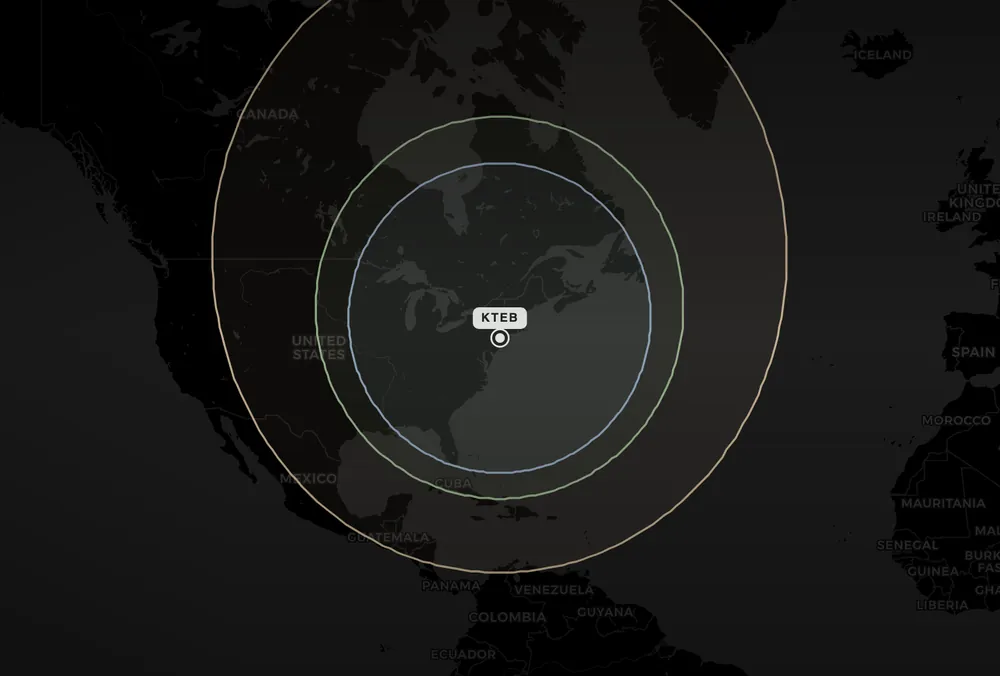
Teterboro Airport (TEB) fundamentally belongs in our analysis because elite private golf excursions frequently begin logistically long before approaching the destination. For New York-based groups venturing toward Augusta, Pinehurst, Hilton Head, or Scottsdale, TEB proudly operates as an indispensable luxury staging ground. It serves as the principal hub connecting Manhattan to the nation's premier private properties.
With several sprawling runways, highly trained executive flight support, and completely frictionless ground access from Manhattan, TEB elegantly facilitates seamless travel routing. These formidable resources make complex same-day departures or short-notice schedule alterations exceptionally straightforward. For high-level corporate groups effortlessly synchronizing busy individual schedules, this overarching reliability sits absolutely paramount.
The singular tradeoff involves premium pricing corresponding to this level of elite proximity. Teterboro landing fees and dedicated executive handling naturally rest slightly higher than remote secondary fields. However, for exclusive travelers deeply valuing substantial time savings and sophisticated service, TEB clearly justifies the premium.
Dallas Love Field (DAL) as a Golf Travel Hub
Dallas Love Field (DAL) commands a remarkably similar importance for Texas-based private travelers. It functions equally as a local arrival point for premier Dallas area outings and powerfully as a primary departure origin for national resort destinations. For clients seamlessly balancing downtown corporate meetings with premium hospitality and afternoon tee times, DAL successfully bridges both requirements.
Its extensively long runways and deep-rooted executive aviation support naturally cater to a vast spectrum of private jet categories. This vital location helps executive groups completely avoid the irritating friction commonly associated with massive sprawling commercial compounds farther out. Dallas departure points also provide excellent sequencing for multi-stop corporate air travel across state lines.
For high-profile executive retreats and luxury itineraries marrying business and golf smoothly into a single comprehensive journey, DAL remains securely one of the most practical hubs globally. Its tremendous value rests entirely in minimizing pre-departure delays without forcefully compromising any aspect of your preferred aircraft choice.
What Makes the Best Private Airports for Golf Travel in the US
The best private airports for golf travel in the US universally share essential operational traits. They ensure the ground transfer feels so abbreviated that the airfield itself functions as part of the destination. They showcase definitive runway numbers properly tailored to the actual physical demands of the flight, completely rejecting theoretical limits. They deploy highly dependable, premium FBO staff capable of expertly managing fragile club bags, sophisticated catering, waiting vehicles, and sudden weather-forced schedule adjustments.
That is why rigorous airport selection must consistently occur directly alongside aircraft selection. A 5,000-foot strip easily facilitates one lightweight foursome while utterly suffocating another group's required heavy-jet range. A substantially larger facility marginally farther away frequently eradicates performance headaches, thereby massively reducing your overall operating stress levels. The most exceptional answer routinely emerges as the one shielding the sanctity of the entire travel experience.
Planning Aircraft, Baggage, and Budgets for Private Jet Golf Airports 2026
Golf travel initially appears straightforward strictly on paper until significant baggage demands, sweeping weather fronts, and dense runway realities forcefully enter the planning logic. A standard foursome with basic overnight duffels and standard clubs fits seamlessly into one sleek cabin, whereas a slightly larger party requiring a shortened strip demands a significantly tailored strategy. Because of these rapid shifts, private jet golf airports 2026 planning strictly requires approaching the jet and the destination in total unison.
As a broad benchmark, turboprops and very light jets often begin around $1,500 to $3,000 per hour, while light jets average $2,500 to $4,000 per hour. Midsize aircraft typically range from $4,000 to $8,000 per hour, super-midsize jets span $5,000 to $10,500 per hour, and heavy or ultra-long-range aircraft start from roughly $8,500 per hour to $20,000 per hour or more. Those specific figures correctly represent estimated starting points rather than finalized trip totals. Taxes, landing fees, ramp charges, FBO handling, fuel adjustments, required crew expenses, and repositioning leg costs continually influence the final invoice.
If you want a deeper breakdown, our 2026 private jet charter cost guide for golf travel explains how precise aircraft categories, exact airport mapping, and true mission profiles interact in the real world. In premier golf itineraries, massive pricing variables emerge based directly on whether the absolute closest airport safely accepts the meticulously preferred aircraft. You must also consider whether an alternative secondary field expands operating margins elegantly or if steep tournament demand deeply compresses remaining parking availability.
How Amalfi Jets Plans Your Golf Itinerary
Golf travelers intimately manage substantially more moving variables than individuals attached to standard point-to-point corporate routes. Exact tee times, staggered resort check-in windows, curated dining reservations, heavy group baggage handling, and looping multi-city routing require precise execution. That is exactly where our dedicated brokerage architecture creates tremendous tangible value. Instead of blindly forcing every distinct trip into an arbitrary single-fleet profile, Amalfi Jets dynamically compares beautiful aircraft across a globally vetted operator network to flawlessly match your mission with the environment, season, and route.
For a specialized short-runway penetration into Hilton Head, that process may dictate favoring one distinct aviation strategy securely. For a blistering direct arrival deep into Augusta or Scottsdale, it points clearly toward another entirely. For an expansive West Coast circuit gracefully transitioning between Monterey and Bandon, we routinely optimize immediately around shifting atmospheric comfort and stringent schedule efficiency. If you want to dive deeper into our precise execution model, explore why Amalfi Jets represents the pinnacle of private flight, and when you are thoroughly ready to construct an itinerary, promptly request a private golf charter.
As an evergreen resource, this curated guide deliberately equips you to intelligently review the best private airports golf travel US planners reliably depend on, simultaneously supplying a sophisticated framework to enhance your upcoming decisions. For additional premier route inspirations, expansive destination profiling, and intricate planning guides, you can continually search our private aviation news and guides. We regularly elevate these specific insights to reflect sweeping aviation adjustments and refined seasonal travel methodologies.
Final Take on Private Golf Airports
If your absolute goal involves flying private to golf US airports with minimal conceivable friction, the correct solution remains rarely just the nearest airfield blindly populated onto a generic map. The right objective answer continuously proves to be the airport most closely matching the required course timeline, the given flight season, the specific passenger manifest, the total baggage footprint, and the absolute mission mandate. Iconic outposts spanning Augusta, Pinehurst, Pebble Beach, Bandon, Hilton Head, Scottsdale, Palm Beach, Los Angeles, New York, and Dallas heavily reward profound airport forethought, brilliantly paying out dividends measured distinctly in salvaged time, uncompromised safety, and an infinitely smoother journey.
For you as a reader evaluating GA airports near golf courses US travelers consistently frequent, this definitive guide fundamentally serves as a timeless reference pillar for 2026. For high-end luxury travelers utterly ready to translate mapping into a spectacular real-world experience, Amalfi Jets fluidly helps architect the jet sourcing, airfield mapping, and timeline maneuvering perfectly aligned around the golf scheduling itself. This bespoke approach undeniably ensures your transit feels just as artfully considered and remarkably polished as the legendary fairways you are traveling to conquer.