



A look inside Air Force One reveals a presidential workplace rather than simply an exceptional aircraft cabin. Beyond its recognizable exterior are spaces for decisions, confidential conversations, rest, and the people who support the presidency. Every part of the interior serves a mission that continues throughout the journey.
For private travelers, the most useful comparison is not one of status or scale. It is the relationship between a cabin’s layout and what its passengers need to accomplish. At Amalfi Jets, that same principle guides charter planning, while the distinction between presidential transport and a privately chartered aircraft remains essential.
Inside Air Force One: The Aircraft Behind the Call Sign
Air Force One is the call sign for any U.S. Air Force aircraft carrying the president. In familiar usage, it refers to the specially configured VC-25A aircraft associated with presidential travel. These are modified Boeing 747-200B aircraft, not conventional business jets.
That distinction explains much of the interior. Presidential transport must accommodate the president while supporting staff, security personnel, guests, and members of the press. The aircraft therefore combines private accommodation with the workspaces and support facilities needed by a traveling administration.
A charter aircraft is selected around a particular passenger group and itinerary. The VC-25A serves a broader government responsibility, with systems and spaces designed for presidential duties. Comparing the two is most useful when examining cabin function, rather than suggesting that their capabilities are interchangeable.
What Does the Air Force One Plane Interior Include?
The Air Force One plane interior includes private presidential accommodation, an office, a conference and dining room, delegation seating, medical facilities, and food preparation areas. Communications systems support the aircraft’s role beyond transporting its passengers. Together, these elements create an environment for work, rest, and presidential responsibilities in flight.
The defining feature is separation by purpose. A private conversation requires a different setting from a staff meeting, while sleeping quarters need distance from shared activity. Dedicated spaces allow those needs to coexist without asking one passenger area to serve every function.
This is more revealing than imagining the aircraft as one expansive lounge. Its interior is a collection of connected environments, each supporting a different part of the journey. The arrangement matters as much as the appearance of any individual room.
The Air Force One Interior: Presidential Sleeping Quarters
The presidential executive suite provides private accommodation, including a stateroom, dressing area, lavatory, and shower. A dedicated office supports work away from the shared conference space. Rest, personal preparation, and private discussions are treated as distinct requirements rather than secondary considerations.
The sleeping quarters are especially relevant to travelers comparing aircraft interiors. A separate room offers a different experience from a seat that converts into a sleeping position in a shared cabin. Neither arrangement should be assumed from an aircraft category or a photograph alone.
For a charter inquiry, the useful questions concern the actual sleeping configuration, who needs privacy, and whether other passengers will remain active during the flight. Our team at Amalfi Jets helps establish those priorities before narrowing the aircraft options. Any proposed arrangement must then be confirmed for the specific aircraft offered by our network of operators.
The Air Force One Cabin: Conference and Dining Spaces
The conference and dining room gives the president and accompanying party a shared setting for meetings and meals. Its importance lies in how it complements the private office and executive suite. Different conversations can take place in spaces suited to their participants and purpose.
Elsewhere, designated accommodation supports senior staff, guests, security personnel, and the press. These groups have different responsibilities, which helps explain why the aircraft requires more than a private bedroom and a conference table. The full layout reflects the needs of the traveling organization.
A private charter party may be smaller, but the planning principle still applies. If some passengers need to work while others dine or rest, distinct cabin zones can be more valuable than additional seats. An enclosed meeting room may matter for one journey, while separate seating areas may be sufficient for another.
Medical Support and the Spaces Behind the Scenes
The VC-25A includes a medical compartment with equipment and supplies to support its presidential mission. That facility belongs to the aircraft’s broader support infrastructure. It should not be treated as evidence that a large charter aircraft offers comparable medical capability.
Medical needs require a separate discussion during private travel planning. A spacious cabin, a reclining seat, or a customized interior does not establish what care can be provided onboard. Requirements should be addressed specifically, with suitable arrangements considered for the traveler and itinerary.
Food preparation and crew support spaces are equally important to understanding the presidential aircraft. Galleys, crew rest areas, and lavatories help sustain the people working and traveling onboard. They receive less attention than the presidential suite, but they are essential to a functioning airborne workplace.
Communications Beyond the Furnishings
Air Force One’s communications systems support presidential work while the aircraft is in flight. Secure communications and specialized infrastructure distinguish that role from an ordinary connected passenger cabin. An interior comparison based only on desks, seats, and meeting tables leaves out a central part of the aircraft’s purpose.
A charter aircraft’s connectivity should be considered on its own terms. An office-style cabin does not establish the availability, performance, or security of the systems behind it. Those details depend on the individual aircraft and must be discussed against the passenger’s requirements.
For business travelers, a useful brief starts with the work itself. Consider whether the journey involves routine correspondence, shared meetings, or sensitive discussions, and explain those needs before booking. Amalfi Jets can coordinate the relevant questions with the operator rather than treating the presence of a desk as a complete answer.
Is Air Force One a Private Jet? Comparing It With a BBJ
The phrase “Air Force One private jet” can create a misleading impression. Air Force One is government-operated presidential transport, not an aircraft available for private charter. A Boeing Business Jet, commonly called a BBJ, offers a different route to a spacious, individually configured business aircraft interior.
Depending on the aircraft, a BBJ layout may include lounges, a conference area, private rooms, a stateroom, and dedicated lavatories. These arrangements can echo the principle of separating work, dining, and rest. They do not make a BBJ equivalent to the presidential aircraft.
A charter BBJ should not be assumed to provide presidential communications, security infrastructure, medical facilities, or government support. Nor should a feature seen in one BBJ be expected in another. Interior configurations differ, and availability for private charter is a separate consideration from the existence of a particular design.
The practical comparison is therefore specific rather than symbolic. Does the available aircraft provide the rooms, seating, sleeping arrangements, and support facilities your party needs? The operator, route requirements, airport suitability, and actual cabin configuration must all align before an aircraft becomes a suitable option.
Choosing Cabin Function Over Scale
The strongest lesson from presidential aircraft design is not that a larger cabin is always better. Space becomes valuable when it supports a clear purpose. A separate bedroom matters when uninterrupted rest is essential, while a conference area matters when passengers need to work together.
Before comparing aircraft, consider how the journey will unfold. Some groups share the same schedule, while others need simultaneous space for sleeping, meals, and conversation. Understanding those patterns makes it easier to distinguish necessary features from appealing but unnecessary additions.
Our ultra-long-haul jets guide offers a starting point for exploring aircraft suited to long-distance travel. Cabin arrangements for work, dining, and rest should still be assessed at the individual-aircraft level. Passenger count, baggage requirements, route feasibility, and airport suitability remain part of that assessment.
A BBJ-style layout may be worth exploring when separate rooms are central to the brief. For another itinerary, an ultra-long-range business jet may provide the appropriate balance of cabin zones and operating suitability. As a charter broker, Amalfi Jets helps evaluate those choices without treating size as a substitute for fit.
Washington DC, New York, and Los Angeles: Planning Beyond the Cabin
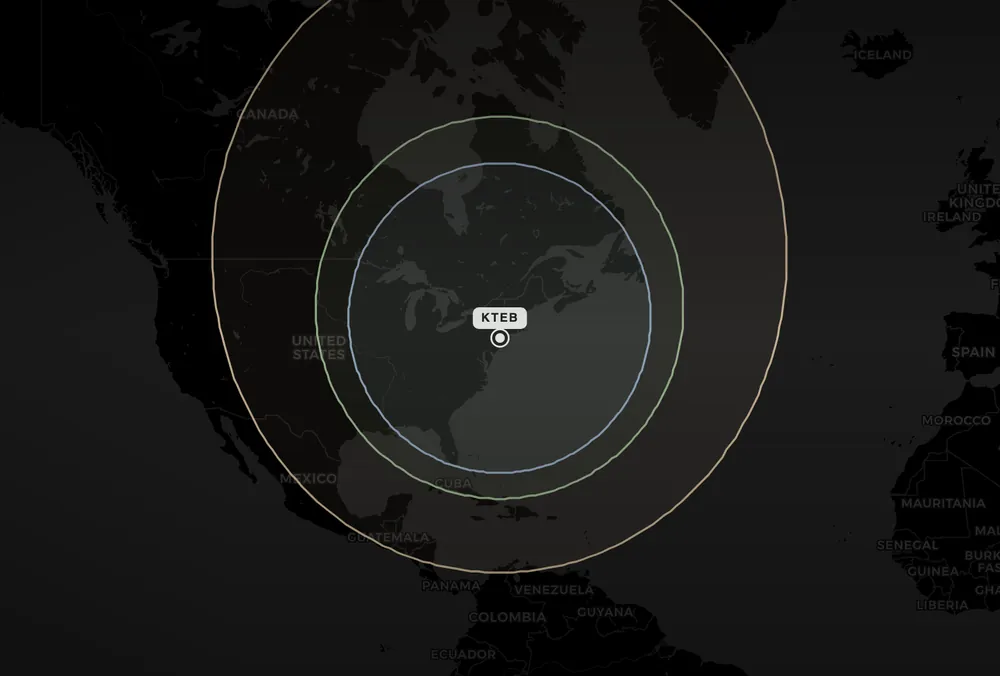
For Washington DC travel, Manassas Regional Airport (HEF) is a Virginia-side option to consider alongside the itinerary’s ground requirements. For New York, Teterboro Airport (TEB) is an established business-aviation gateway. Van Nuys Airport (VNY) is an option for Los Angeles-area travel, particularly when the ground destination is in the San Fernando Valley.
These airports are planning references, not automatic recommendations for every aircraft or trip. A suitable cabin still needs an appropriate airport plan, and not every aircraft category will be suitable for every airport. Aircraft-specific suitability and applicable operating requirements need to be assessed before an itinerary is confirmed.
The destination on the ground matters as much as the city name. Where passengers begin and end their journey can change which airport deserves consideration. Evaluating the cabin and airport plan together helps keep the overall itinerary aligned with the traveler’s priorities.
Planning a Charter Around Your Mission
Cabin photographs are a useful introduction, but they cannot establish every feature that matters to a trip. Sleeping arrangements, meeting privacy, lavatories, galley facilities, connectivity, and baggage accommodation deserve a closer discussion. The objective is to understand how the aircraft will function for your passengers, not simply how it looks.
The financial comparison should also reflect the actual itinerary. Our private jet charter cost guide explains the factors that can influence a quote, including aircraft category, routing, taxes, airport charges, crew logistics, and repositioning. These considerations are more useful than trying to compare a charter quote with an aircraft built for government responsibilities.
Amalfi Jets is a charter broker, not an aircraft operator. We source and coordinate charter options from aircraft operators, helping clients compare cabin characteristics with their travel requirements. Availability and suitability are assessed for the individual journey rather than assumed from an aircraft name.
Looking inside Air Force One ultimately reveals the value of designing travel around a clear mission. Your priorities will be different, but work, rest, privacy, and time together still deserve thoughtful consideration. Request a charter with Amalfi Jets to explore an aircraft and itinerary shaped around the way you want to travel.