




Private Aviation Market Data 2026: The Q1 Snapshot Charter Flyers Need
Spring 2026 has brought a definitive read on demand, capacity, and pricing power across private aviation. With Q1 reporting now complete, private aviation market data 2026 is no longer a set of abstractions or predictions. It is measurable behavior, and it shows sustained momentum in both global flight activity and customer adoption.
This matters whether you charter a few times a year or fly frequently between destinations like Los Angeles, New York, Miami, and Dallas. Market data helps you plan around aircraft availability, choose the right cabin category, and determine whether on-demand charter aligns perfectly with your schedule. In the sections below, each core statistic pairs directly with a practical takeaway you can apply to your upcoming flights.
Private Jet Charter Market Size in 2026: $17.67 Billion
Market sizing serves as an accurate proxy for the inventory, competition, and operational maturity happening behind the scenes. Industry analysts evaluate the current private jet charter services market at $17.67 billion in 2026, with a forecast to reach $25.79 billion by 2031 representing a 7.86% compound annual growth rate. This expanding scale gives charter clients access to deeper operator networks, more aircraft positioning options, and continued investment in client service infrastructure.
This growth directly introduces more product choice to the market. Discerning travelers constantly compare traditional charters, jet cards, and fractional memberships because there are now multiple credible ways to fly private depending on your preferred flexibility. The charter category has ultimately moved into a highly durable phase, which supports your long-term confidence in premium access.
From a planning standpoint, the most useful interpretation of this valuation is wonderfully straightforward. Market growth at this consistent pace typically compresses peak-day availability, making timing and sourcing expertise essential even across a massive global fleet. Partnering with a dedicated charter broker ensures you navigate this competitive landscape with precision and ease.
Private Jet Flight Activity in Q1 2026: Up 11% Year-Over-Year
The cleanest near-term indicator of global demand remains weekly flight activity. Late March reporting for Week 13 showed 80,921 total global private jet departures, representing an 11.3% increase versus the same week in 2025. The analysis also noted seven consecutive weeks of positive year-over-year growth, reinforcing that the Q1 trajectory represents a sustained market trend rather than a single-week anomaly.
When you translate these private jet industry statistics 2026 into a booking reality, the implication is not that flying private is becoming inaccessible. Rather, it means the ideal aircraft options get reserved earlier on the days that matter most to your schedule. High-demand periods in spring and early summer reliably cluster around long holiday weekends, major sporting events, and academic calendar breaks.
In a market growing organically by 11%, the difference between requesting a flight early versus late dictates whether you secure your preferred heavy jet or accept a smaller fallback option. This is exactly where our team's broker execution becomes tangible and invaluable. In a highly active week, a flawless itinerary requires matching aircraft performance to your mission profile, anticipating repositioning time, and coordinating realistic ground transfer timing.
Charter Market Growth 2026 in the United States
National data firmly positions the United States as the primary engine of global aviation activity. The report cites 57,313 domestic departures during Week 13, up 13% year-over-year, with truly notable gains concentrated in a handful of high-volume states. Texas recently posted a 27% surge in departures, Florida grew by 19%, and California expanded by 11%.
This geographic concentration explains why specific city pairs frequently feel more competitive than others during peak travel seasons. A market can grow consistently overall while still featuring select corridors where scheduling remains exceptionally tight, especially on popular short-haul routes. In practical terms, charter market growth 2026 has been heavily reinforced by state-level expansion that aligns directly with key private aviation hubs.
If you fly frequently throughout Texas and Florida, you should certainly assume that peak windows will book significantly faster than they did a year ago. If you travel primarily through California, the sustained growth adds incremental pressure at the most in-demand fixed-base operators. Securing your preferred departure times on Friday and Sunday requires proactive trip planning alongside a highly responsive aviation partner.
How Key Hubs in Los Angeles, New York, Miami, and Dallas Absorb Demand
For our clients, the most relevant interpretation of private aviation trends data is distinctly local. You do not experience the charter market in the abstract, but rather at specific airports, at specific times of day, and through specific ground access realities. When demand rises simultaneously across major transit hubs, the practical advantage of selecting the absolute right airport becomes increasingly pronounced.
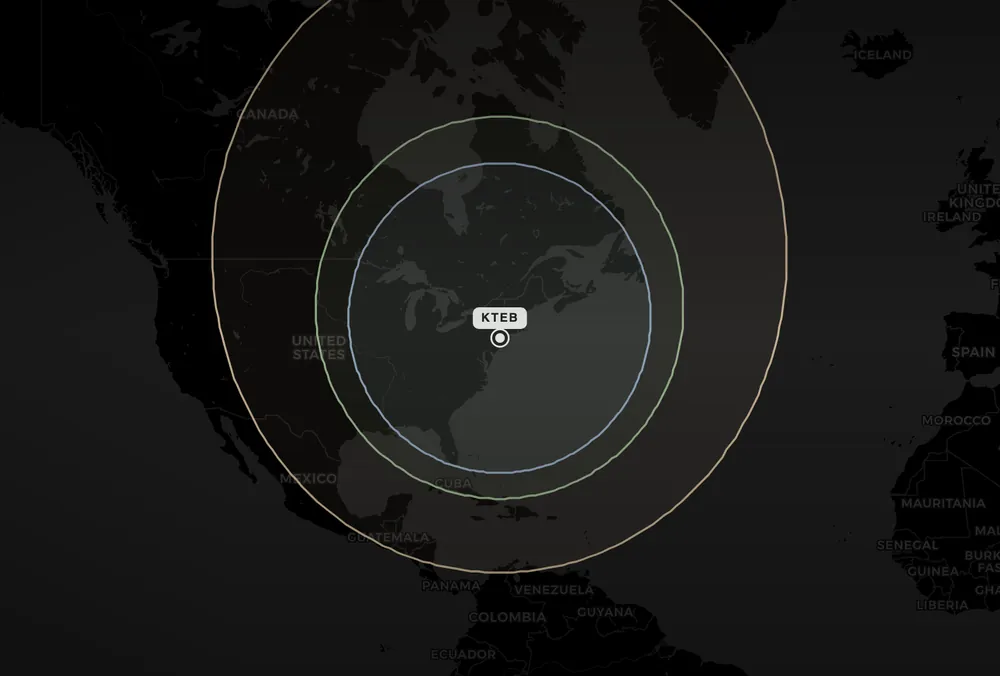
In Los Angeles, many flyers overwhelmingly prefer Van Nuys (VNY) for its dedicated private aviation infrastructure and seamless ground flow compared to the broader congestion at Los Angeles International (LAX). Better ground efficiency fundamentally protects your schedule just as much as the aircraft itself. Similarly, in the New York area, Teterboro (TEB) remains the premier choice for private operations serving Manhattan, where a well-planned departure window preserves the exact time utility that drives charter decisions.
Florida’s growth adds crucial context to why certain dates feel undeniably constrained around Miami, where Opa-locka Executive (OPF) serves as a necessary centerpiece for travelers connecting to the Caribbean. In Dallas, execution often comes down to how your broker sources and positions the aircraft for a schedule that might dynamically shift. Across all these active hubs, Amalfi Jets supports clients by operating entirely as an independent charter broker, sourcing across a broad global operator network rather than restricting your recommendations.
The Expanding Light Jet Segment and Trip Planning
Not every growth trend impacts the discerning traveler equally, and aircraft category shifts directly influence what airframes remain available for common missions. Market segmentation points to light jets as the fastest-growing category, projecting a 7.92% compound annual growth rate through 2031, even as large-cabin aircraft generate a massive share of total industry revenue. This pivotal development profoundly affects how you plan short-to-mid-range missions, especially when you prioritize ground speed and air efficiency.
Light jets expertly suit regional business trips, two-hour coastal corridors, and complex multi-city schedules where runway access and fast turnaround times heavily matter. They provide a stellar match when you want to keep the cabin appropriately sized for the passenger count instead of paying for excess range. Matching your explicit mission profile to the correct airframe inherently creates tremendous value for astute travelers.
Aircraft category acts as a primary pricing input, placed carefully alongside routing, repositioning considerations, crew scheduling, and day-of-week demand. For a grounded view of structured pricing by aircraft class, you can review our private jet charter cost 2026 guide to benchmark intelligently. Engaging with these dynamics before you request a quote leads to confident decisions because it solidly aligns your expectations with how the market accurately prices real trips.
Navigating Jet Cards, Subscriptions, and On-Demand Charter
The recent spring data also highlights an ongoing structural shift in how travelers opt to buy private aviation. On-demand charter maintains a formidable majority share of sector revenue, but subscription and jet card models are forecast to grow rapidly as recurring structures attract sustained interest. This growth persists even as many travelers report notably higher jet card pricing versus earlier years, suggesting that specific client profiles deeply value rigid predictability.
From a client perspective, the membership decision centers entirely on which operational constraints you are personally willing to accept. A prepaid card makes sense when you require highly standardized terms and fly frequently enough to use the flight hours efficiently. Conversely, on-demand charter stands as the definitively smarter choice when your schedule changes, your missions vary, or you desire the freedom to select entirely different aircraft types per trip.
Amalfi Jets is designed thoughtfully around that second dynamic reality. Operating proudly as a premium charter broker, our role is to keep your immediate options open while delivering decisive, data-backed flight recommendations. When the broader market sits exceptionally busy, this structural flexibility ensures you fly at your preferred time, from your exact preferred airport, and on the specific aircraft that serves your mission.
What These Private Jet Industry Statistics 2026 Mean for You
Travelers naturally wonder if continuous market expansion will make chartering substantially more expensive or perceptibly harder to book. The most accurate answer is that the booking effect remains uneven based on dates and routing, which marks exactly why engaging with reliable market data proves useful. When flight activity rapidly rises, the immediate pressure point rests entirely on peak-day availability in high-volume regions.
If you plan spring and summer travel through major gateways, it is remarkably wise to treat popular early morning departure windows as perishable inventory. Submitting early requests greatly expands your option set, serving as the simplest individual lever you control to ensure a flawless travel experience. The second pressure point represents operational friction, as broader market growth increases the immense premium on reliable trip execution, strict crew availability, and realistic aircraft positioning.
A data-informed broker gladly explains not only what aircraft currently exist, but exactly why a particular tail prices the way it does. You receive complete transparency regarding the minor trade-offs between cruising speed, cabin size, range capabilities, and schedule certainty. From there, our dedicated team quotes strictly based on your exact city pair, passenger count, and timing, delivering a delightfully bespoke aviation solution.
Using This Business Aviation 2026 Report When Booking
An insightful business aviation 2026 report proves truly valuable only if it actively enhances how you strategically plan your upcoming travel. The most effective passenger approach treats this quarterly market data as a direct, actionable scheduling advantage. If quarterly reporting tells us anything definitively, it is that premium market demand continues expanding and that prime dispatch windows inherently reward highly proactive planning.
If you already know your approximate future travel dates, the absolute best immediate step dictates securing your aircraft options early and refining final details as your schedule firms. You can easily initiate this simple, confidential process and request a charter with our dedicated global booking team today. We gladly provide transparent, unvarnished guidance on where different models create inherent trade-offs, ensuring you select the phenomenal path for your specific itinerary.
For discerning clients evaluating a potential new aviation partner, you can effortlessly explore exactly why Amalfi Jets delivers unparalleled value through independent sourcing and fiercely uncompromising standards. Furthermore, our complete archive of private aviation news offers ongoing quarterly updates alongside brilliant destination planning inspiration. The global aviation market clearly favors decisive travelers who pair their distinct requirements with a knowledgeable broker, turning industry data into perfectly executed flights.